Disclosure: this article contains affiliate links. If you buy through them, DIGITAL WOXTER TECHNEWS may earn a commission at no extra cost to you. Our picks are based on specifications, prices and published reviews, not on payments. As an Amazon Associate I earn from qualifying purchases.
The same room can be a sauna in July and a fridge in January. The newest climate gadgets try to fix both with sensors, apps and a bit of AI: a bladeless tower that heats, cools and cleans the air, a thermostat that learns your routine, and a purifier so quiet you forget it’s there. Here are three high-tech ways to stay comfortable at home in every season, with an honest look at what each one can and can’t do.
How we compared: we did not test these gadgets ourselves. This guide is based on manufacturer specifications and on published, hands-on reviews and lab tests by independent outlets (Tom’s Guide, TechRadar, Engadget, RTINGS and Shortlist), plus safety and energy advice from official bodies, all linked below. Price ranges: Budget = under $100, Mid-range = $100-300, Premium = over $300. Prices change often, so use the Amazon links in each section to see today’s price.
Quick picks
| Gadget | Our pick | Why it’s high-tech | Price range |
|---|---|---|---|
| Heat + cool + purify | Dyson Purifier Hot+Cool HP1 | Bladeless airflow, heater, HEPA and carbon filters, air-quality sensors, app and voice control | Premium |
| Smart thermostat | Google Nest Learning Thermostat (4th gen) | Learns your schedule, adjusts for the weather, radar motion sensing, Matter | Mid-range |
| Bedroom purifier | Dyson HushJet Purifier Compact | Jet-inspired quiet nozzle, fast particle sensor, filter rated for up to five years | Premium |
Specs come from the manufacturers and the reviews linked in each section.
Heat, cool and purify: Dyson Purifier Hot+Cool HP1
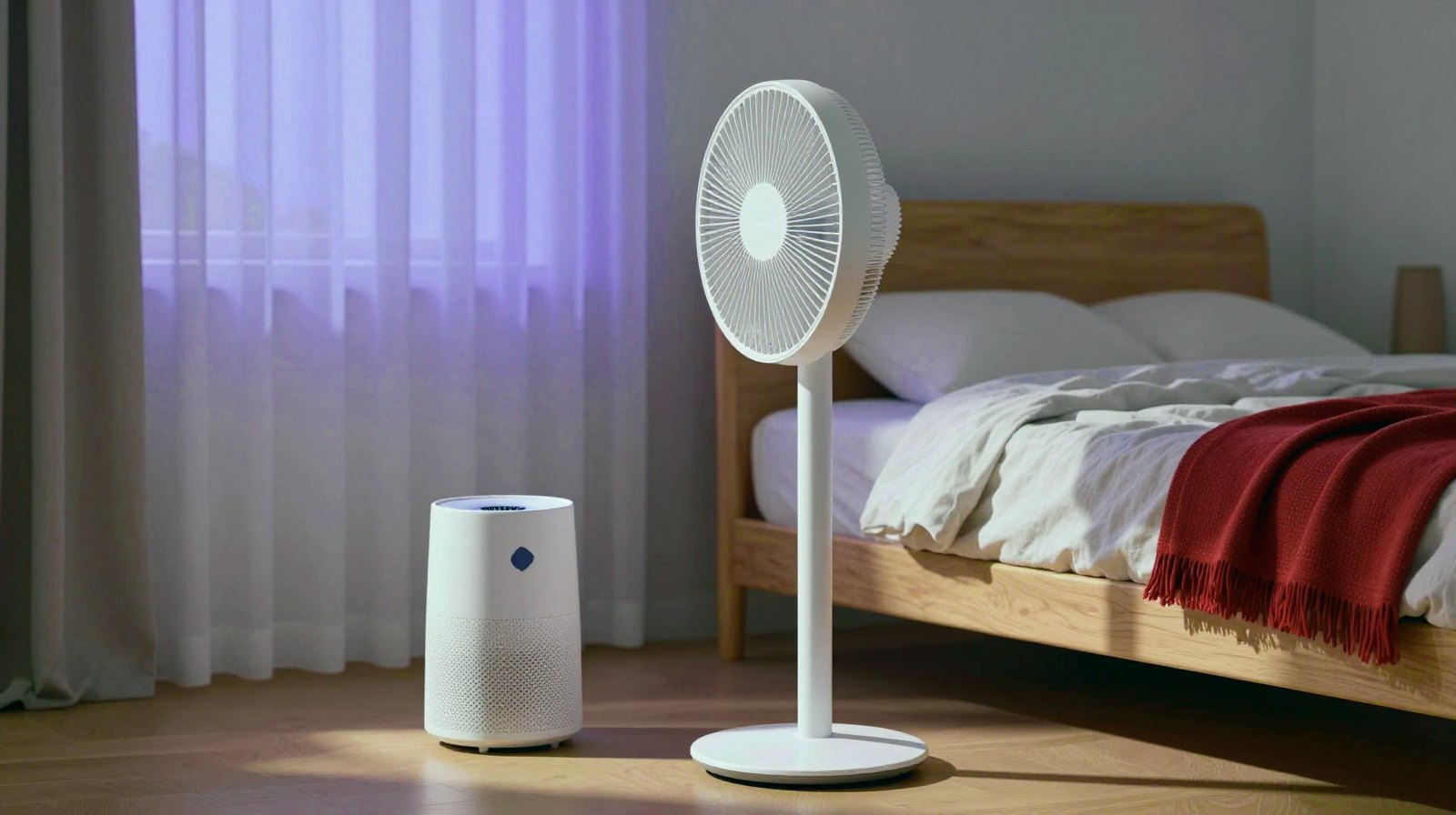
The Dyson Purifier Hot+Cool HP1 is three gadgets in one tower: a heater for winter, a bladeless fan for summer and an air purifier all year. It has no spinning blades you can see; air is pushed through a loop, and the whole tower can oscillate up to 350 degrees. Inside are a sealed HEPA filter and an activated carbon filter, and sensors track fine particles (PM2.5 and PM10) so Auto mode can speed up when the air gets worse. You can control it with a magnetic remote, the MyDyson app or your voice (Alexa, Google or Siri), and the heater switches off when the room reaches the temperature you set.
As a heater, it impresses reviewers. Tom’s Guide gave it an Editor’s Choice after it warmed a small living room within about five minutes, and Shortlist saw an office go from 15°C to 23°C in about 15 minutes, with even warmth. The lab is harder on the purifying side: RTINGS found its particle filtering weak and suited only to very small rooms, and noted the heater makes it much louder. Dyson itself says the heater suits only well-insulated rooms or occasional use.
Pros: heats a room quickly and evenly; one stylish device for winter warmth, summer breeze and cleaner air; excellent app with live air-quality data. Cons: very expensive; noisy, especially when heating; modest purifying power for normal-size rooms; the fan cools you with a breeze, it doesn’t lower the room temperature like air conditioning; reviewers saw the app drop its connection.
Who it’s for: anyone with a small or medium, well-insulated bedroom or home office who wants one smart device instead of a heater, a fan and a purifier. Not for: people who mainly want strong air cleaning, need real air conditioning, or have a large, draughty room.
Heater safety in plain language
Keep anything that can burn at least 3 feet (about 1 metre) from any heater, and switch it off when you leave the room or go to bed, as the US Fire Administration advises. Plug heaters straight into a wall outlet, never an extension cord or power strip, as Mississippi State University’s safety experts also warn.
Smart thermostat: Google Nest Learning Thermostat (4th gen)
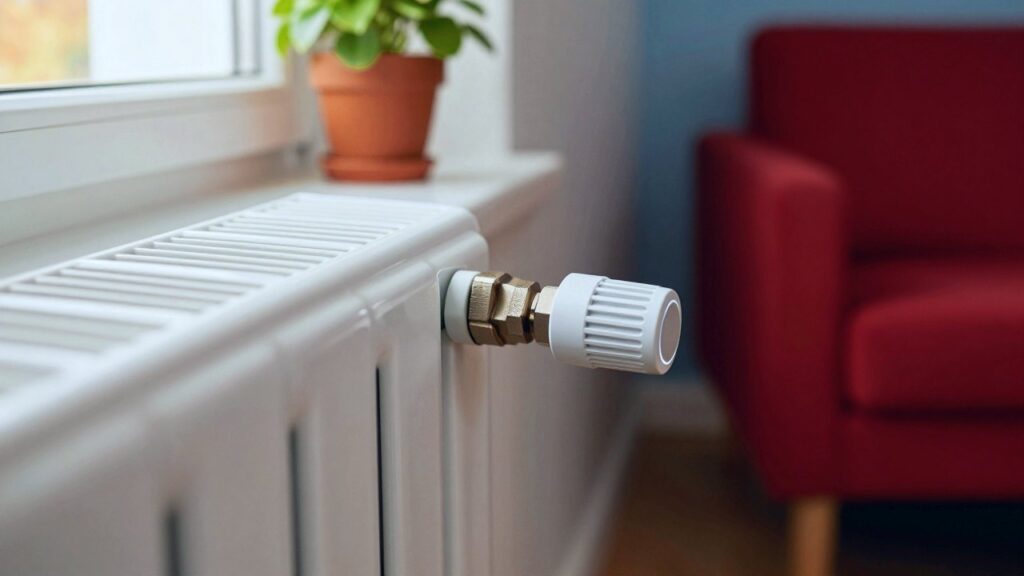
Heating and cooling make up almost half of a typical US home’s energy bill, according to Energy Star, so the thermostat is where a smart gadget can really pay off. The Nest Learning Thermostat (4th gen) is Google’s most advanced: it suggests schedules based on your habits (you accept or decline them), takes the outdoor weather into account, uses a small radar sensor to notice when you walk up, and comes with a separate Nest Temperature Sensor so it can prioritise the room you’re actually in. It supports Matter, so it also works with Apple Home, Alexa and SmartThings.
It works with most 24-volt US systems, including gas, electric, oil, forced air, heat pumps and radiant heating, and Google says only a small minority of homes need an extra C-wire or its Power Connector. Use Google’s compatibility checker before you buy. Tom’s Guide gave it an Editor’s Choice as a meaningful upgrade with smarter features and simpler installation, and TechRadar praised its design, 15-20 minute install and weather-aware suggestions. Both reviews are from late 2024; it is still Google’s current flagship.
Pros: the best-looking smart thermostat, with a big clear display; learning suggestions and an included room sensor; Matter means you aren’t locked to Google. Cons: one of the most expensive smart thermostats; not plug-and-play if you’re upgrading from an older Nest.
Who it’s for: homeowners with standard 24-volt heating and cooling who want a thermostat that adapts to them. Not for: renters who can’t change the thermostat, or homes with high-voltage (line-voltage) heaters, which fall outside Google’s 24-volt compatibility.
Savings tip: savings are a promise only if the schedule runs. US energy officials say turning the thermostat back 7-10°F for about 8 hours a day can save up to around 10% a year on heating and cooling, as the Maryland Energy Administration and the US Department of Energy explain.
Bedroom purifier: Dyson HushJet Purifier Compact
If you want clean air without the noise, the Dyson HushJet Purifier Compact is the most advanced small purifier of 2026. It’s a purifier only, with no fan or heater mode. A star-shaped nozzle inspired by jet-engine aerodynamics is designed to cut airflow noise, a 360° electrostatic filter catches fine particles, an activated carbon filter tackles odours and gases, and a particle sensor drives Auto mode. Dyson rates the main filter for up to five years, with the carbon filter changed about once a year.
Reviewers love how quiet and quick it is. Tom’s Guide measured just 24 dB in Sleep mode, roughly a whisper. TechRadar said its Auto mode reacted faster than anything the reviewer had used, detecting a burnt match within three seconds. Engadget named it the best purifier for small rooms, and RTINGS rated it highly for bedrooms. The limit is size: RTINGS found its clean-air output too low for bigger spaces, and Dyson’s own room-coverage claim isn’t borne out by the testers.
Pros: very quiet, ideal for bedrooms; fast-reacting sensor; long-life main filter; polished app. Cons: expensive for a purifier-only device; bigger than the “compact” name suggests (about 47 cm tall); few buttons on the device itself; not enough for large living rooms.
Who it’s for: light sleepers and allergy sufferers who want a quiet, smart purifier for a bedroom, nursery or home office. Not for: large open-plan rooms or tight budgets.
Buying tips
- Size the purifier to the room. The US Environmental Protection Agency suggests a clean air delivery rate (CADR) of about 65 cfm per 100 square feet for a standard 8-foot ceiling, as its guide to air cleaners explains.
- Budget for filters. No purifier removes every pollutant, and filters must be replaced to keep working; carbon filters are what handle odours and gases.
- A fan isn’t an air conditioner. Fans make you feel cooler with moving air; they don’t lower the room’s temperature.
- Check thermostat compatibility first, with the maker’s online checker, before you take the old one off the wall.
FAQ
Can the Dyson HP1 replace my heating? No. Dyson says it suits well-insulated rooms or occasional use. Think of it as a smart extra heater and fan with light air cleaning.
Does a smart thermostat save money? It can, if the schedule actually runs: official US guidance puts typical savings at up to around 10% a year on heating and cooling with regular setbacks.
Which purifier for a big living room? Not the HushJet: testers found it best in small to medium rooms. Look for a higher CADR.
Read next
- Camping gadgets worth packing: power, solar, water and light
- Car gadgets worth buying: jump starter, dash cam and inflator
- Boiling coolant inside chips: a safer way to tame AI heat
Show sources (16)
- Dyson Purifier Hot+Cool HP1 review – Tom’s Guide, 24 September 2025
- Dyson Purifier Hot+Cool HP1 review – Shortlist, 23 October 2025
- Dyson Purifier Hot+Cool HP1 review – RTINGS, 12 March 2026 (updated May 2026)
- Heating fire safety – US Fire Administration
- Space heater safety – Mississippi State University, January 2022
- Smart thermostats – Energy Star
- Nest Learning Thermostat (4th gen) tech specs – Google Store
- Nest Learning Thermostat (4th gen) review – Tom’s Guide, 6 August 2024 (updated September 2024)
- Nest Learning Thermostat (4th gen) review – TechRadar, 22 December 2024
- Thermostats – Maryland Energy Administration
- Programmable thermostats – US Department of Energy
- Dyson HushJet Purifier Compact review – Tom’s Guide, 8 May 2026
- Dyson HushJet Compact review – TechRadar, 16 May 2026
- The best air purifiers – Engadget, 9 March 2026
- Dyson HushJet review – RTINGS, 5 May 2026 (updated June 2026)
- Guide to air cleaners in the home – US Environmental Protection Agency