Disclosure: this article contains affiliate links. If you buy through them, DIGITAL WOXTER TECHNEWS may earn a commission at no extra cost to you. Our picks are based on specifications, prices and published reviews, not on payments. As an Amazon Associate I earn from qualifying purchases.
Three small gadgets can turn the most annoying car moments into a five-minute fix: a battery that won’t wake up on a cold morning, a tyre that looks a bit flat before a long trip, and the “he said, she said” after a fender bender. A pocket jump starter, a dash cam and a cordless tyre inflator are the car gadgets worth buying in 2026, and none of them needs a mechanic to use.
Why it matters: a flat battery or a soft tyre usually means waiting for roadside help or hunting for a petrol station air pump that works. With these three in the boot or glovebox, you can solve the most common problems yourself, and the dash cam keeps a clear record if something goes wrong on the road.
How we compared: we did not test these gadgets ourselves. This guide is based on manufacturer specifications and on published, hands-on tests by independent outlets (Car and Driver, TechGearLab, TechRadar, Tom’s Guide and the UK’s CAR magazine), all linked below. Price ranges: Budget = under $100, Mid-range = $100-300, Premium = over $300. Prices change often, so use the Amazon links in each section to see today’s price.
Quick picks
| Gadget | Our pick | Key specs | Price range |
|---|---|---|---|
| Jump starter | NOCO Boost GB40 | 1,000 A peak, petrol engines up to 6.0 L, diesel up to 3.0 L, about 1.1 kg | Mid-range |
| Dash cam | Garmin Dash Cam X310 | 4K at 30 fps with HDR, 140° view, built-in glare filter, GPS, touchscreen | Premium |
| Tyre inflator | AstroAI Cordless Tire Inflator (20 V) | Up to 160 PSI, auto stop, 20 V battery plus 12 V car plug | Budget |
Specs come from the manufacturers and the reviews linked in each section.
Jump starter: NOCO Boost GB40
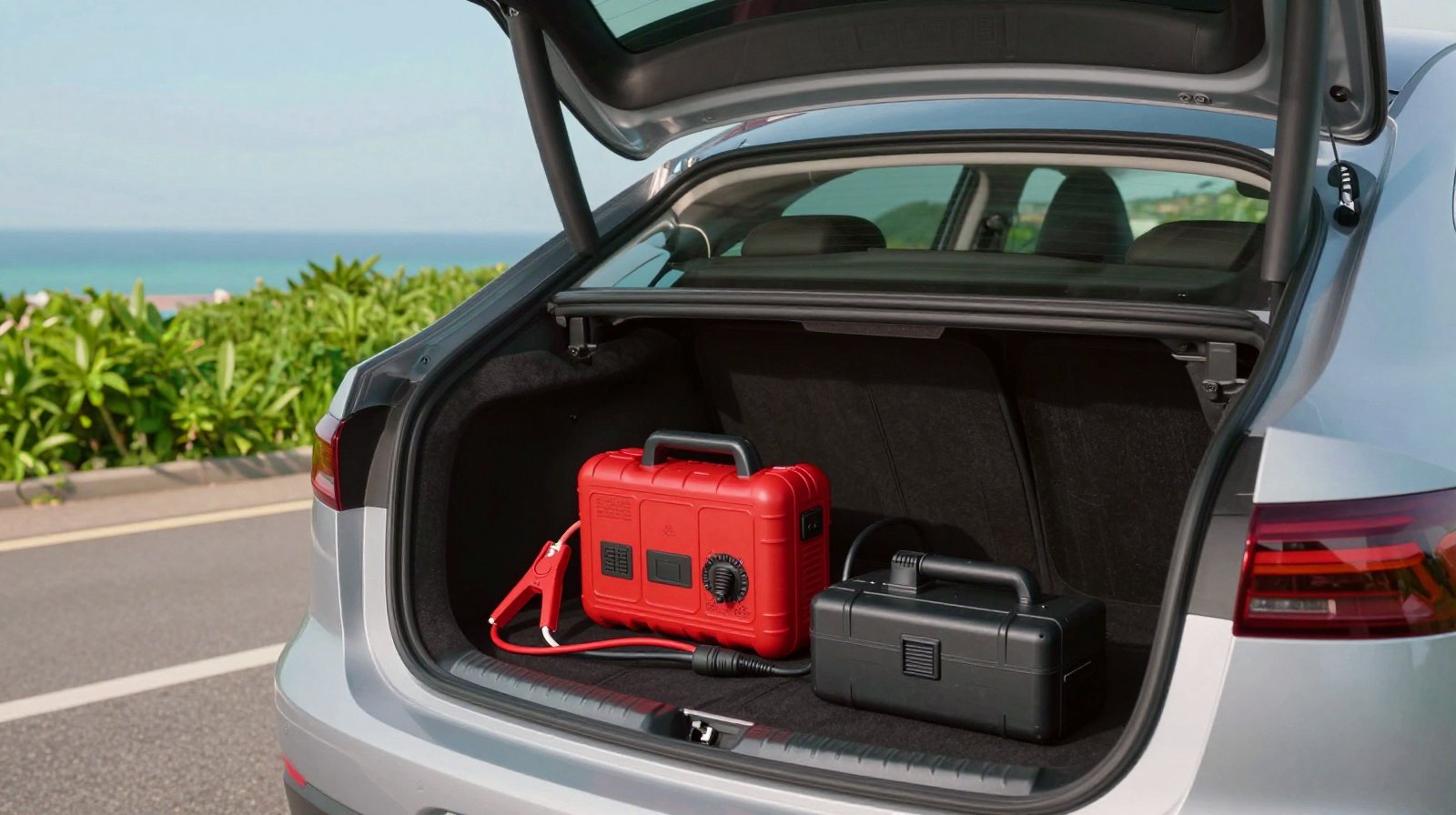
A jump starter is a lithium battery pack with a pair of clamps. Instead of begging a stranger for jump leads, you clip it to your own car battery and start the engine. The NOCO Boost GB40 is small enough for a glovebox and rated for petrol engines up to 6.0 litres and diesels up to 3.0 litres, which covers most cars and many SUVs.
It keeps doing well in independent tests. Car and Driver named it the most compact model in its jump starter test: the smallest unit they tried, with an easy interface. TechGearLab made it its “Best Compact Model” after it started a 4-litre V6 with a drained battery three times in a row in cold weather. TechGearLab also praised the IP65 rating (protected against dust and water jets), the spark-proof, reverse-polarity protection, and a Boost mode for completely flat batteries.
Pros: tiny and light (about 1.1 kg), safety protections built in, proven in several tests. Cons: short cables and stiff clamps (Car and Driver); a modest battery that TechGearLab measured at about 15.6 Wh against the 24 Wh claimed, so it only tops up a phone once or twice; slow USB ports. Peak amps are a marketing number for every brand, so don’t buy on that figure alone.
Who it’s for: anyone with a normal car, especially if it sits unused for days or lives outside in winter. Not for: big V8 pick-ups or large diesels; look at a bigger model for those.
Jump starter safety in plain language
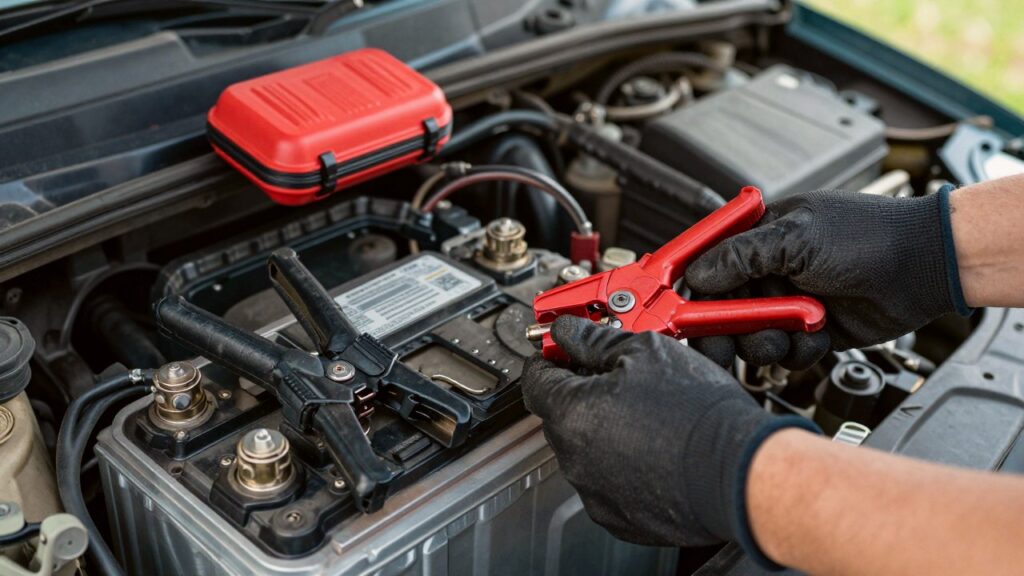
- Red first, black second. Clip the red clamp to the battery’s positive (+) terminal, then the black clamp to a bare metal part of the engine or chassis, away from the battery, as both the RAC and Battery Tender explain. Your car’s handbook has the final word.
- Take them off in reverse. Once the engine runs, remove the black clamp first, then the red one, and never let the two clamps touch.
- Don’t use it on a damaged battery. If the car battery is cracked or leaking, stop and call for help, the RAC warns. Take off rings and metal jewellery too.
- Heat is the enemy of lithium. Don’t leave the pack baking on the dashboard in summer sun; the boot or glovebox is better. Temperature extremes reduce the power available, Battery Tender notes. If the pack ever swells, smells odd or gets very hot, stop using it.
- Keep it charged. A flat jump starter is a paperweight. Check it every few months; TechGearLab suggests at least every six.
Dash cam: Garmin Dash Cam X310
A dash cam is a small camera stuck to the windscreen that records the road ahead on a loop and saves a clip automatically when it feels a bump. If you have an accident, that clip can settle who did what. The Garmin Dash Cam X310 records in 4K (very sharp video) at 30 frames per second with HDR, a mode that keeps detail in both bright sky and dark shadows.
Both TechRadar and Tom’s Guide gave it an Editor’s Choice award. TechRadar called it fantastic, small and easy to use, and liked the built-in polarising filter, which works like polarised sunglasses to cut reflections from the windscreen. Tom’s Guide highlights the 2.4-inch touchscreen, GPS (so each clip records where and when) and voice control, in a camera that weighs only about 90 g.
Pros: sharp 4K video, glare filter, tiny body, touchscreen, easy setup without creating an account. Cons: it only films forwards, with no rear camera option (Tom’s Guide); the 140° view is narrower than some rivals; it’s expensive, and the microSD card isn’t in the box (TechRadar). Parking Guard needs a constant-power cable, and live view and cloud storage need a paid subscription, according to Tom’s Guide.
Who it’s for: drivers who want a small, simple, high-quality front camera from a big brand. Not for: anyone who needs rear or cabin recording (taxi and ride-share drivers, for example) or wants to spend less. In its 2026 test, Car and Driver favoured multi-camera models such as the Viofo A329S if you need more coverage.
A word on the law: recording the road for your own protection is generally fine, but rules on where you can mount a camera and on sharing footage vary by country. In Spain, for example, keeping your own footage is fine, but posting clips online where people or number plates can be identified may break the EU’s GDPR privacy rules, Motorpasión explains. Blur them, or keep the video for your insurer.
Tyre inflator: AstroAI Cordless Tire Inflator
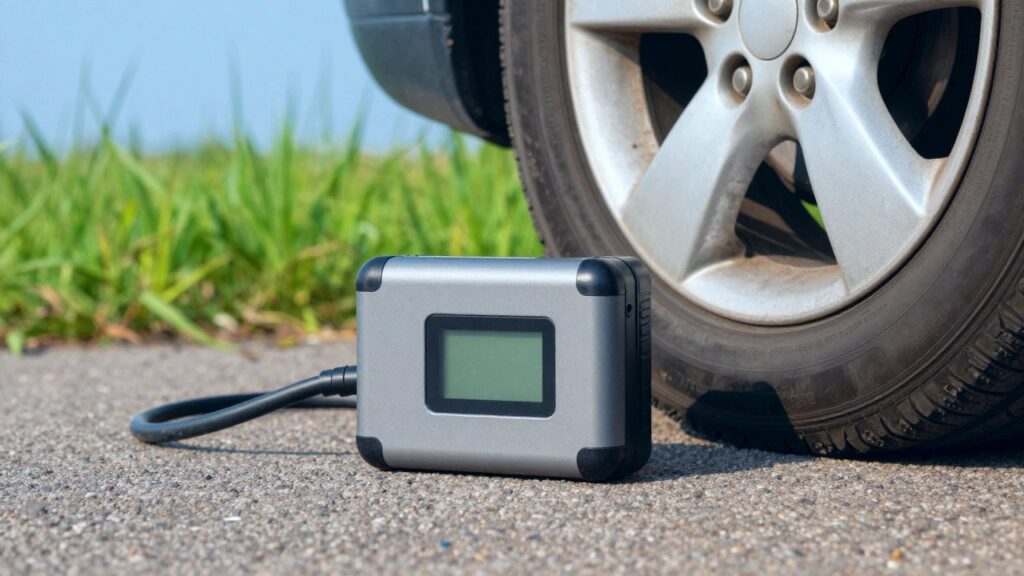
Tyres lose a little air every month, and under-inflated tyres wear faster and waste fuel. A cordless inflator is a battery-powered air pump: you type in the pressure you want, attach the hose to the valve and it stops by itself when it gets there. The AstroAI Cordless Tire Inflator runs on a 20-volt rechargeable battery and also comes with a 12-volt plug for the car socket, so it still works if the battery is empty.
Two independent tests liked it. In Car and Driver’s 2024 test (syndicated on Yahoo), its times to 30 and 45 PSI were faster than most units on test, and the testers said it “busted” the idea that cheap means bad. In 2026, the UK’s CAR magazine called it the most complete inflator in its group test: it topped a tyre up from around 30 to 33 PSI in under a minute, was easy to set up and comes with a torch and several adaptors for balls and bikes.
Pros: two power sources, auto stop, fast for its price, carry case. Cons: loud (both tests say so) and bulkier than palm-sized pumps; Car and Driver found a rival, the Avid Power, more than a minute faster in the same test. AstroAI’s own figures (up to 160 PSI, about four minutes for a 195/65 R15 tyre from empty, 20 minutes of continuous running) are maker claims.
Who it’s for: anyone who checks tyre pressures at home or wants a backup for a slow puncture. Not for: people who only have glovebox space; a smaller pump will fit better but inflates more slowly.
Buying tips
- Check tyres when they are cold. Driving warms the air inside and gives a falsely high reading, as CAR and Which? both advise. The right pressure is on a sticker in the driver’s door frame or in the handbook.
- Match the jump starter to your engine. Look at the litres it covers, not just the amps. Diesels need more power than petrol engines of the same size.
- Budget for a good memory card. Dash cams record all the time, so choose a “high endurance” microSD card made for constant recording.
- Charge everything on the same day. Gadgets that live in the car are easy to forget. Pick a date, say every time you wash the car, and top up the jump starter and inflator together.
- Mount the dash cam out of your view. Behind the rear-view mirror is ideal: it must never block what you see of the road.
FAQ
Can a jump starter damage my car? Modern lithium packs like the GB40 have spark-proof clamps and reverse-polarity protection, which stops them working if the clamps are on the wrong way round. Follow the red-then-black order and the car’s handbook.
Can I leave these gadgets in the car all year? The inflator and dash cam, yes. For the jump starter, avoid direct sun in summer and check its charge every few months.
Do I need a 4K dash cam? Not always. Sharper video makes it easier to read number plates, but the lens, sensor and night performance matter as much as the resolution.
Will a cordless inflator fix a puncture? No. It can keep a slow leak going long enough to reach a tyre shop, but a real puncture needs a repair or the spare.
Read next
- Tesla renames Full Self-Driving to ‘Assisted Driving’ in Europe
- Zinc-air batteries that recharge: new catalyst runs 300 hours
- Build your own AI gadget: Meta’s Muse kit for ESP32 and Pi
Show sources (11)
- Best Portable Jump-Starters, Tested – Car and Driver, updated 14 May 2026
- NOCO Boost Plus GB40 Review – TechGearLab, 29 April 2026
- How to jump start a car – RAC, 10 September 2026
- How to use a jump starter safely – Battery Tender, 2026
- Garmin Dash Cam X310 review – TechRadar, 28 October 2024
- Garmin X310 dash cam review – Tom’s Guide, 22 October 2024
- The Best Dash Cams of 2026, Tested – Car and Driver, updated 31 July 2026
- ¿Puedes usar una dashcam en España? – Motorpasión, 25 August 2025
- Best Portable Tire Inflators of 2024, Tested – Car and Driver (via Yahoo Autos), 31 July 2024
- The best cordless tyre inflators tried and tested by CAR – CAR magazine, updated 10 April 2026
- Best car tyre inflators 2026 – Which?, 27 July 2026