Disclosure: this article contains affiliate links. If you buy through them, DIGITAL WOXTER TECHNEWS may earn a commission at no extra cost to you. Our picks are based on specifications, prices and published reviews, not on payments. As an Amazon Associate I earn from qualifying purchases.
Three small gadgets can make every bike ride safer: a radar tail light that warns you about cars coming from behind, a smart helmet that flashes turn signals and can text a friend if you crash, and a hidden tracker that helps you find your bike if someone steals it. This guide picks one well-reviewed option for each job and explains who it suits, and who can skip it.
Why now? Bikes keep getting faster (hello, e-bikes) and roads keep getting busier. In Spain, a reform of the traffic rules that came into force on 1 October 2026 made helmets compulsory for every cyclist on roads outside towns, with no more exceptions, as the DGT (Spain’s traffic authority) and Diariomotor report. Gadgets don’t replace good habits, but they can buy you a few precious seconds.
How we compared: we did not test these products ourselves. This guide is based on manufacturer specifications and on published tests by independent reviewers, all linked below. Price ranges: Budget = under $100, Mid-range = $100-300, Premium = over $300. Prices change often, so use the Amazon links in each section to see today’s price.
Quick picks
| Job | Pick | Key facts | Price range |
|---|---|---|---|
| See cars coming from behind | Garmin Varia RearVue 820 | Radar range over 170 m, USB-C, up to 24 h in day flash (claimed), 90 g | Premium |
| Be seen and signal turns | Livall EVO21 smart helmet | 270° rear light, turn signals, auto brake light, crash alert via phone, about 350 g | Mid-range |
| Find a stolen bike | Knog Scout alarm and finder | Apple Find My tracking, 85 dB alarm, IP66, up to 6 months per charge (claimed) | Budget |
Specs come from the manufacturers and the reviews linked in each section.
1. Radar tail light: Garmin Varia RearVue 820
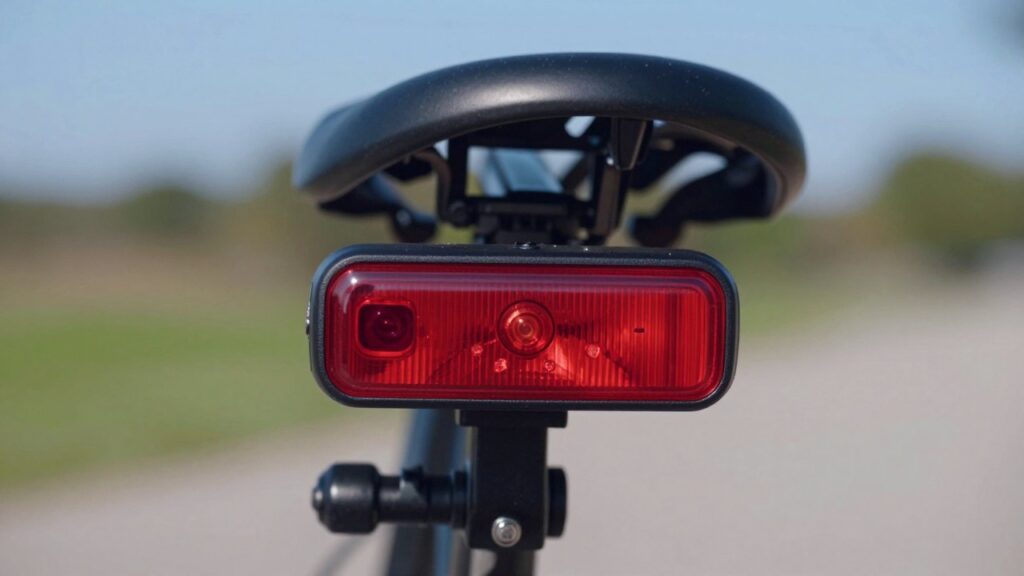
A bike radar is a rear light with a tiny radar inside (the same idea as the sensors that help cars park, only aimed backwards and much further). When a vehicle approaches, it sends an alert to a bike computer, a compatible Garmin watch or the free Varia phone app, so you know a car is coming before you hear it.
The Garmin Varia RearVue 820, announced on 3 February 2026, replaces the long-popular RTL515, according to Escape Collective. What’s new: a wider radar beam, a brighter light, an automatic brake light, USB-C charging (finally!), and a radar that tries to tell you whether the vehicle behind is small, medium or large, and whether it is moving over to pass.
What the tests say: in his in-depth review, DC Rainmaker called it the best cycling radar he has tested, with real-world detections well beyond the claimed 170 m and no missed vehicles in his rides. Battery life also jumps: Garmin claims 24 hours in day flash mode, up from 16 on the RTL515. Cyclists Hub also found almost no false alerts and gave it its highest radar score.
Pros: excellent detection range and reliability; brighter light; longer battery life; user-replaceable battery; USB-C. Cons: premium-priced, well above the older RTL515 it replaces; 90 g, heavier than before; vehicle-size labels can get confused in rain; the lane and size features need a recent Garmin Edge computer (x40 or x50 series), while other devices get the classic radar alerts; Cyclists Hub found the mount bulky on aero seatposts.
Who it’s for: road cyclists and commuters who ride on fast roads and want the best radar available. Who can skip it: riders who stay on bike lanes and quiet city streets, or anyone on a tight budget; reviewers point to cheaper radars from Wahoo and Sigma, and the older RTL515 if you can still find it.
2. Smart helmet: Livall EVO21
A smart helmet puts lights where drivers look: at head height. The Livall EVO21 has a small front light and a large rear light that wraps around the back and sides, orange turn signals you trigger from a small handlebar remote, and a brake light that switches on by itself when you slow down. Paired with your phone, it can also detect a fall and send a text alert with your location to a contact you choose.
What the tests say: BikePerfect found it well built and packed with features for the price, ideal for urban riding. Its crash alert worked in simulated drops, though not every single time. road.cc liked the eye-catching rear light at night and the clever “chasing” pattern of the indicators, and its simulated crashes triggered the alert with decent success. The helmet is certified to the European EN 1078 and US CPSC 1203 safety standards, is rated IPX5 against rain and lasts about 10 hours per charge, according to road.cc.
Pros: very visible at night; turn signals and brake light at eye level for drivers; crash alert; good build quality. Cons: about 350 g, heavier than a regular helmet; the rounded shape doesn’t fit every head; road.cc found the lights not bright enough to stand out in daylight; the remote’s small buttons don’t light up; it charges with a proprietary magnetic cable; the crash alert needs your phone and the Livall app.
Who it’s for: commuters and evening riders in town who want to be seen and to show their intentions clearly. Who can skip it: sporty road riders who care about weight and ventilation. Remember: helmet lights add to your bike lights, they don’t replace them. Try one on before buying if you can.
3. Anti-theft tracker: Knog Scout
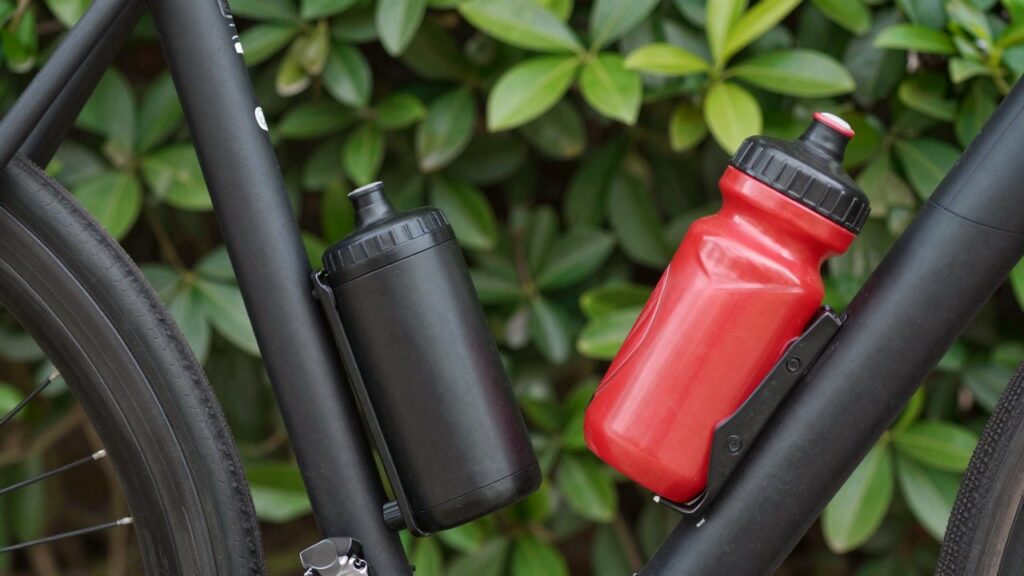
The Knog Scout is a slim box (about 25 g) that hides under your bottle cage and does two jobs. First, it is a motion alarm: arm it, and if someone moves the bike it sounds an 85 dB alarm (roughly as loud as a busy street). Second, it uses Apple’s Find My network, the same system as an AirTag: nearby iPhones anonymously relay its position, so you can see it on a map.
What the tests say: road.cc praised the easy setup, the loud alarm and tracking accurate to about 5 m in its test, and noted that an AirTag offers similar tracking but no alarm. The Gadgeteer found it easy to install and hide, with alarm sensitivity about right, though it wished the alarm were louder. Knog claims up to six months per charge, or about two months if you arm it every day, and it charges via USB-C. It is rated IP66, so rain is no problem.
Pros: alarm plus tracker in one; hidden under the bottle cage with anti-tamper screws; long battery life; no subscription. Cons: iPhone only (no Android support); you must be within Bluetooth range to arm or disarm it; no precise “find nearby” arrows, just a map position; road.cc found the screws too short for some bottle cages.
Who it’s for: iPhone users who park their bike in the city and want a deterrent plus a way to find it. Who can skip it: Android users, and riders who never leave the bike out of sight. And remember: a tracker helps you find a bike, a good lock stops it from being taken in the first place.
Buying tips
- Lights first, gadgets second. In Spain, bikes must carry a white front light and a red rear light at night, in tunnels and in poor visibility, plus a red rear reflector, as the DGT’s magazine and Diariomotor explain. A radar light covers the rear; you still need a good front light.
- Check what your devices support. The radar works with Garmin bike computers, many Garmin watches and the phone app, but the newest features need recent Garmin Edge models. The Scout needs an iPhone.
- Helmet fit beats helmet tech. A smart helmet that doesn’t fit protects less. Measure your head and check the size chart (EVO21: M 54-58 cm, L 58-62 cm).
- Charge habits matter. All three run on batteries. Make charging part of your routine, like your phone.
- Keep your eyes and ears open. Reviewers stress that radar alerts and turn signals support your attention; they don’t replace looking over your shoulder or hand signals.
FAQ
Do I need a bike computer for the radar? No. The Varia app on your phone shows approaching vehicles and can send alerts to Bluetooth headphones, DC Rainmaker notes. A Garmin computer gives you the full set of features.
Is a helmet compulsory in Spain? Since 1 October 2026, yes for every cyclist on interurban roads (roads outside towns), with the old exceptions removed. Under-16s must wear one everywhere, and delivery riders too, according to the DGT and Interempresas. The same reform asks drivers to slow down by at least 20 km/h and keep 1.5 m of space when overtaking a cyclist outside towns.
AirTag or Knog Scout? Both use Apple’s Find My network. An AirTag is cheaper but has no alarm, road.cc notes; the Scout adds a motion alarm and a mount designed for bikes.
Will the crash alert call emergency services? According to the reviews, the EVO21 sends a text with your location to your chosen contact through the Livall app, so your phone must be with you and connected.
Read next
- Tesla renames Full Self-Driving to ‘Assisted Driving’ in Europe
- Self-powered glasses sensors read your pulse, blinks and bites
- Washable circuit fibres: threads that glow, compute and sense
Show sources (12)
- Entra en vigor la reforma del Reglamento de Circulación para reforzar la protección de los usuarios vulnerables – DGT, 30 September 2026
- La DGT hará obligatorio el casco para ciclistas en carretera en 2026 – Diariomotor, 24 June 2026
- Estos son los cambios que introduce el nuevo Reglamento General de Circulación para los ciclistas – Interempresas, 2026
- 20 normas que todo ciclista debe conocer – Revista DGT, 30 September 2021
- Así son las normas de alumbrado para ciclistas – Diariomotor, 20 December 2020
- Garmin announces new Varia RearVue 820 rear radar – Escape Collective, 3 February 2026
- Garmin Varia RearVue 820 in-depth review – DC Rainmaker, 10 February 2026
- Garmin Varia RearVue 820 review: is it worth the premium price? – Cyclists Hub, updated 2 May 2026
- Livall EVO21 Smart Helmet review – BikePerfect, 19 June 2023
- Livall EVO21 helmet review – road.cc, 22 October 2021
- Knog Scout bike alarm and finder review – road.cc, 18 October 2022
- Knog Scout bike alarm and tracker review – The Gadgeteer, 23 April 2025