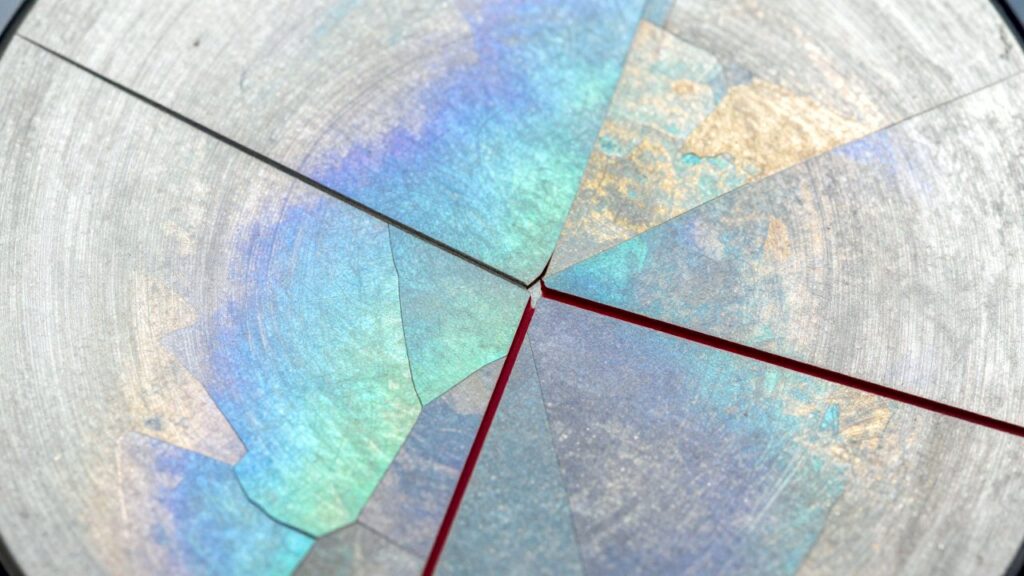
Cool some metals far enough and a sharp knock can crack them like glass. Many metals lose their bendiness when they get very cold. Now a team from UC Berkeley, Lawrence Berkeley National Laboratory and the University of Oxford has shown two experimental niobium-titanium alloys that stay tough at -253°C (20 kelvin, just 20 degrees above absolute zero), with no sign of turning brittle. The work was published in Nature on 14 October.
Why it matters: -253°C is roughly the temperature of liquid hydrogen, the fuel of many rockets and a candidate for cleaner planes, ships and trucks. Tanks, pipes and valves for that fuel must not crack in the cold. Metals that keep their toughness down there, and that belong to a family famous for handling high heat too, give engineers new options for hydrogen, space and fusion hardware.
Why cold makes metals snap
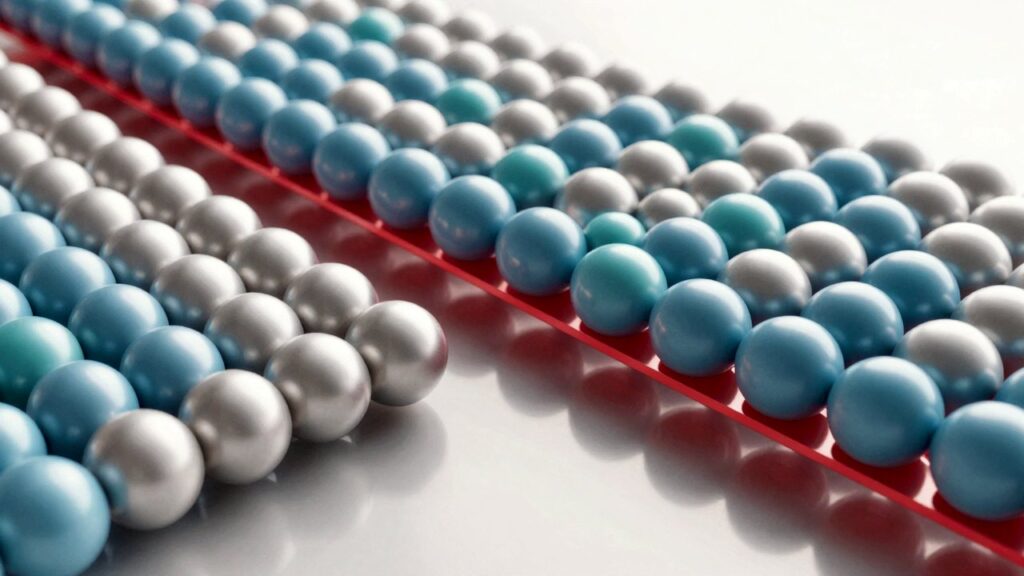
Metals are made of tiny crystals. How a metal behaves depends a lot on how its atoms are stacked inside those crystals. One very common stacking is called body-centred cubic, or bcc: picture a cube of atoms with one extra atom right in the middle. Iron, chromium and tungsten are bcc metals.
When you bend a metal, it does not tear atom by atom. Instead, tiny faults in the crystal called dislocations slide through it, a bit like a ruck travelling across a carpet when you push it. In bcc metals those rucks get stuck as the temperature drops. Below a certain point, known as the ductile-to-brittle transition, the metal can no longer bend to relieve stress, and a crack simply runs straight through it. For decades this has been seen as a basic limit of bcc metals.
What the team found
The researchers tested two bcc alloys based on niobium and titanium: a simple mix of two metals and a more complex blend of several (a so-called medium-entropy alloy). According to the University of Oxford’s release, neither showed a measurable switch to brittle behaviour, even at the lowest temperature tested. The paper reports that their strength and toughness level off as the temperature falls, instead of collapsing.
“What surprised us is that these alloys remain remarkably damage tolerant even at 20 kelvin,” said Professor Dong Liu of Oxford, the study’s corresponding author.
The trick: making new defects on demand
So why don’t these alloys crack? Under the microscope the team saw two things happening at the nanoscale. Small regions of crystal flip into a mirror-image arrangement, called twins, and in places the crystal briefly changes into a different atomic structure. Where these new features run into the borders between crystals, they concentrate stress and create fresh dislocations right there.
In other words, when the old “rucks” are frozen in place, the metal keeps making new ones where they are needed. That lets it keep stretching and absorbing energy instead of breaking. As Tech Xplore summarises it, it is like traffic finding new side roads when the main road is blocked. Lead author David Cook, at UC Berkeley during the study and now at the University of Cambridge, says the field may need to look beyond how easily existing dislocations move, and pay attention to how readily new ones are born at interfaces.
How you test a metal at -253°C
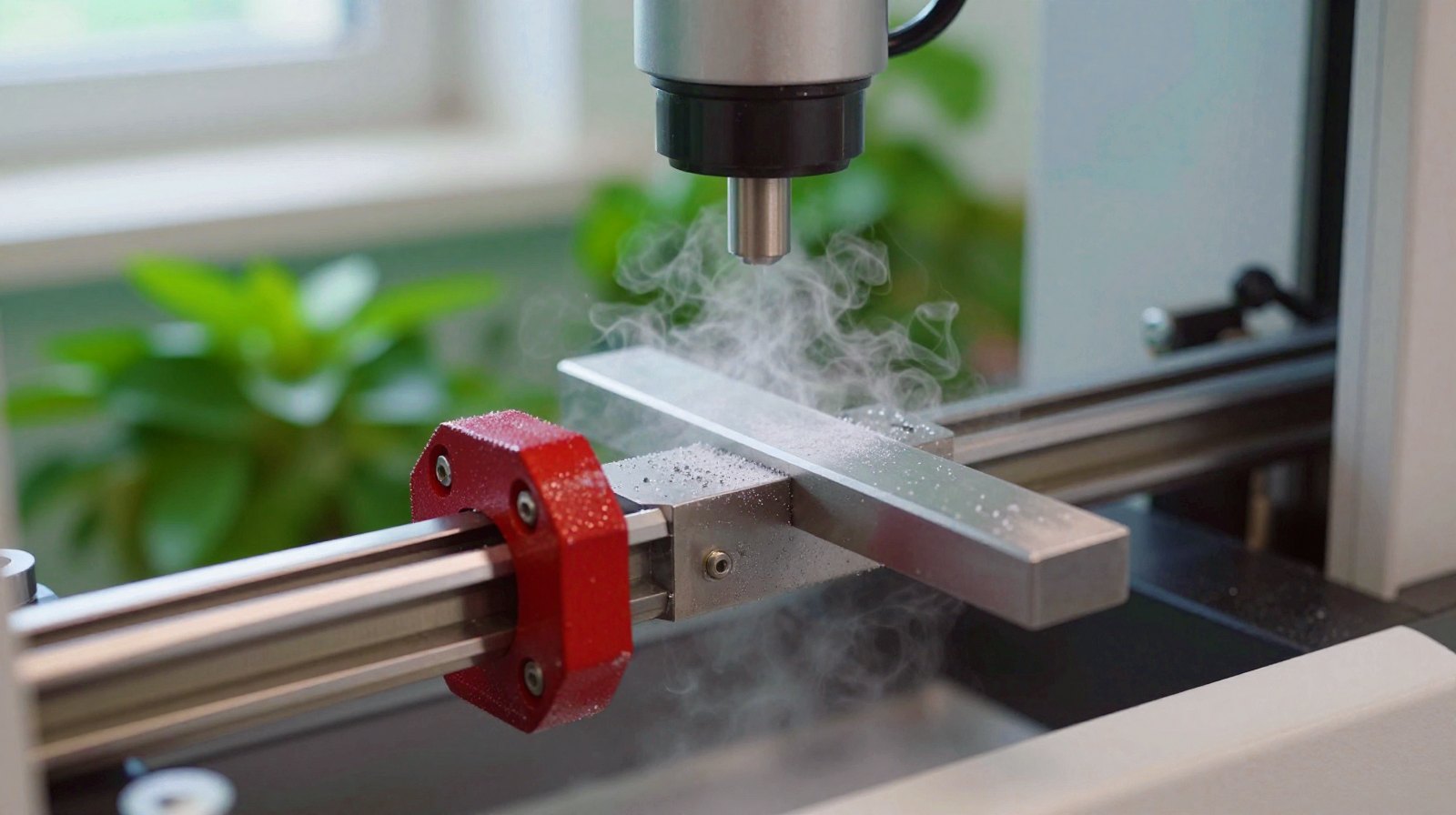
The samples were cooled with helium gas and pulled apart on the Engin-X instrument at the ISIS Neutron and Muon Source in Oxfordshire, UK. While the machine stretched them, a beam of neutrons passed through the metal, revealing how its crystals strained from the inside. Electron microscopes then imaged the area around the cracks, an atom-probe technique mapped where each element sat, and computer models checked how the mechanisms worked together.
The same research circle has form here. In 2022, a team including Liu and Berkeley’s Robert Ritchie reported in Science that a chromium-cobalt-nickel alloy reached the highest fracture toughness ever recorded, also at 20 kelvin. That alloy has a different crystal stacking, one that is naturally good in the cold. The new result matters because it shows the “difficult” bcc family can be tough in the deep freeze too.
A dose of realism
This is lab science, not a tank you can buy. Only two experimental alloys were tested, as small samples, mainly at one extreme temperature. Some coverage, such as Interesting Engineering, talks of a whole “new class” of metals, but the paper itself is about these two. Nobody has yet shown how they behave when welded, made into large parts, or cooled and warmed thousands of times, nor what they would cost to produce at scale. The uses in energy, transport and aerospace are the authors’ suggestions, not demonstrations.
What happens next
The biggest gain may be the recipe rather than the two alloys. If engineers design metals that can make new defects at their internal borders, they could create a wider range of cold-proof bcc alloys. Watch for follow-up tests on bigger parts and repeated cooling cycles, and for interest from hydrogen-fuel, rocket and fusion-energy projects, where parts must survive brutal cold, and sometimes brutal heat, in the same machine.
Read next
- Zinc-air batteries that recharge: new catalyst runs 300 hours
- Washable circuit fibres: threads that glow, compute and sense
- First nuclear clocks: thorium atoms now keep time by themselves
Sources
- Competing mechanisms toughen bcc binary and medium-entropy alloys at 20 K – Cook, Liu et al., Nature, 14 October 2026 (DOI 10.1038/s41586-026-11065-7)
- Metal defies the deep freeze, staying tough at -253°C – University of Oxford via EurekAlert!, 14 October 2026
- Metal alloys defy the deep freeze, staying tough at -253°C – Tech Xplore, 14 October 2026
- New class of tough metals avoids cold-weather fractures – Mrigakshi Dixit, Interesting Engineering, 14 October 2026
- Exceptional fracture toughness of CrCoNi-based medium- and high-entropy alloys at 20 kelvin – Liu, Ritchie et al., Science, 2 December 2022