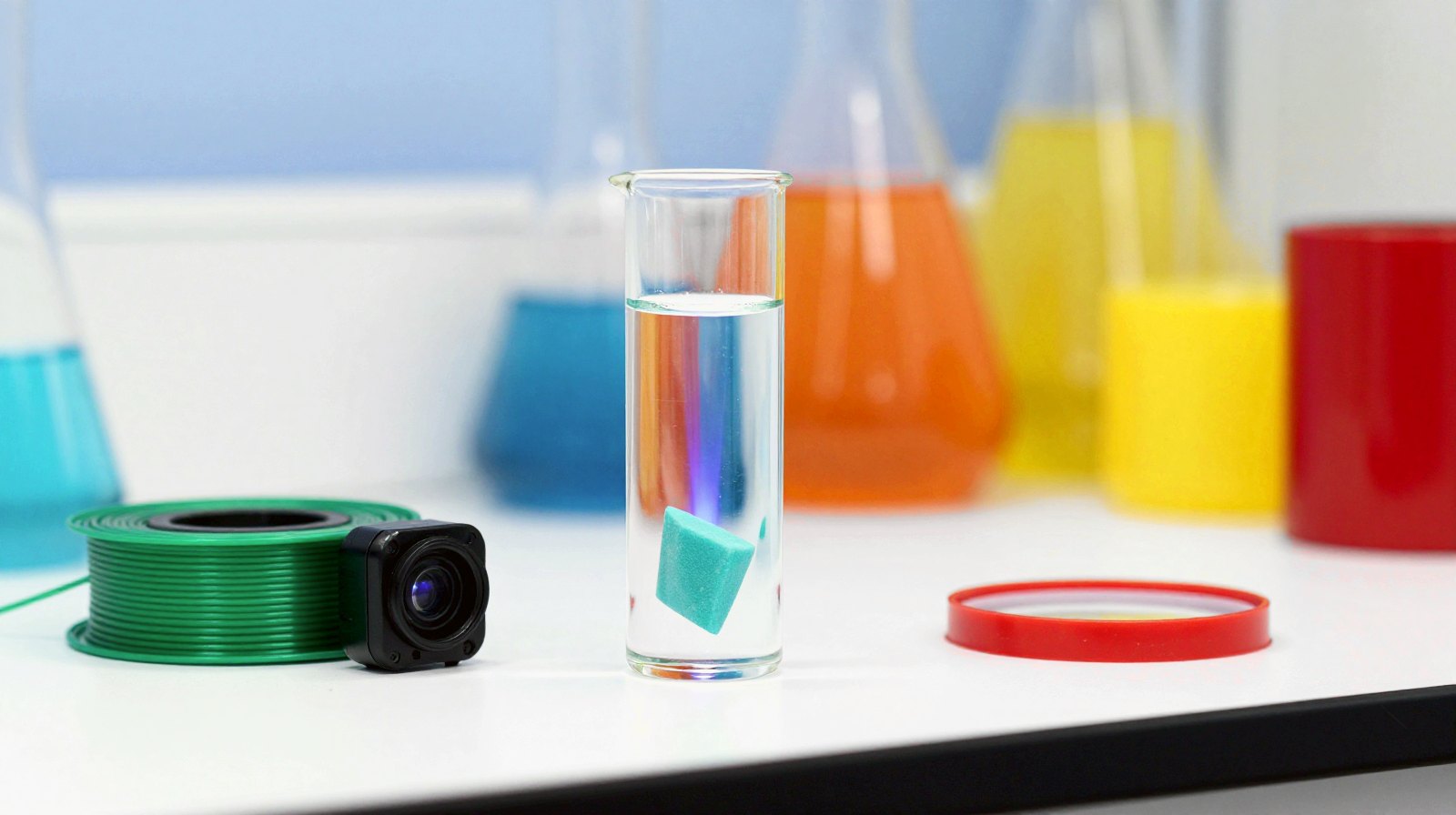
Our OpenCAL article explained the open-source printer that forms a whole object in about 90 seconds. Here’s where to start if you want to build one. Be warned: this is a serious project with dozens of different parts, and Amazon can’t supply all of it. These are the five parts that matter most.
How we chose: we did not build this printer. Our picks come from the project’s own parts list and build guide, which put the whole machine at about $1,600 (June 2026). Price ranges: Budget = under $100, Mid-range = $100-300, Premium = over $300.
The five key parts
| Part | Must match? | Our pick | Price range |
|---|---|---|---|
| Projector | Yes, exact model | NexiGo Nova Mini (PJ08) | Premium |
| Brain | 2 GB or more | Raspberry Pi 5 | Mid-range |
| Fresnel lens | Yes, 200 mm wide, 200 mm focal length | Project’s listed lens | Budget |
| Filament for the printed parts | Any black PETG | ELEGOO black PETG, 4 kg | Budget |
| Motor | NEMA 17, tested 17HE19-2004S | Project’s listed motor | Budget |
The projector: NexiGo Nova Mini
This is the heart of the machine and the biggest cost. The project is built around the NexiGo Nova Mini (PJ08), a laser projector. Buy the plain unit: bundles add stands you don’t need, and the Nova Mini Lite is a different model. The optics guide shows that another projector means redesigning five printed parts and measuring everything again. Before you mount it, turn off auto focus and Wi-Fi.
The brain: Raspberry Pi 5
The firmware asks for a Pi 5 with 2 GB or more, so there’s no need to overbuy. This Raspberry Pi 5 with 4 GB gives you some margin. You’ll also need a microSD card and a USB stick for print files, which the parts list doesn’t include.
The lens: 200 mm Fresnel
The parts list says both numbers must match: 200 mm diameter and 200 mm focal length. This Fresnel lens is the project’s choice. Watch out for near-identical listings with a 100 mm focal length.
The filament: black PETG
The project’s printed parts are in PETG, with TPU for the feet. Any black PETG works, and this ELEGOO black PETG 4 kg pack is what the project lists. You’ll need a 3D printer with a bed of at least 200 × 200 mm.
The motor: NEMA 17
The stepper turns the vial. The tested model is the 17HE19-2004S. This NEMA 17 motor is the project’s link, but we couldn’t confirm the exact model on it, so check before you buy.
What Amazon can’t supply
- The resin. OpenCAL’s special clear resin is made by Formlabs and sold through Prusa. In the US, that means Printed Solid. Ordinary resin printers’ resin isn’t a substitute.
- The motor driver. The current design uses a Pololu Tic T249. Older articles mention a different driver, so follow the current guide.
- Laser-cut acrylic panels. You’ll need a laser cutter or a cutting service.
Stay safe
The project asks for nitrile gloves and good ventilation when handling resin, and isopropyl alcohol is the usual wash. We’d add eye protection. Keep the enclosure closed and never look into the beam. Mains wiring should be done by someone competent, and leftover resin and solvent must never go down the sink.
Read next
- OpenCAL: an open-source 3D printer that prints in 90 seconds
- How to make 3D models with ChatGPT and AI tools (2026 guide)
Show sources (8)
- OpenCAL bill of materials – OpenCAL, consulted 4 November 2026
- BOM page – OpenCAL, consulted 4 November 2026
- Optics guide – OpenCAL, consulted 4 November 2026
- OpenCAL firmware – GitHub, consulted 4 November 2026
- Materials overview – OpenCAL, consulted 4 November 2026
- Instant Prints – Make:, 30 June 2026
- UC Berkeley releases OpenCAL – VoxelMatters, 19 October 2026
- Tic T249 – Pololu, consulted 4 November 2026
The week's best tech stories, free
One email a week with the stories that matter, explained simply. No spam.
Disclosure: this article contains affiliate links
If you buy through them, DIGITAL WOXTER TECHNEWS may earn a commission at no extra cost to you. Our picks are based on specifications, prices and published reviews, not on any payments. As an Amazon Associate I earn from qualifying purchases.