Updated October 2026. We first published this article in November 2023; it has been completely rewritten with what we know today.
Three years ago, “artificial general intelligence” sounded like science fiction with a business plan. Today the biggest AI labs talk about it on stage, a contract between two of the largest tech companies was built around it, and a single benchmark result this autumn sparked a new round of “are we there yet?”. So how close are we really? Here is a clear look at what AGI means, what the latest tests show, and what experts expect.
First, what is AGI?
Artificial general intelligence (AGI) is usually described as an AI that can learn and do most thinking tasks at least as well as a person, across many different areas, not just one. Today’s AI is often superb at narrow jobs, such as writing code or summarising documents, but can still fail at simple puzzles a child would solve.
The problem is that nobody agrees on an exact definition. In 2023, Google DeepMind proposed “Levels of AGI“, a ladder from “emerging” to “superhuman” based on how well and how broadly a system performs; under that scheme, chatbots like ChatGPT counted as only “emerging AGI”, as The Decoder reported. Others use an economic test: AI that outperforms humans at most economically valuable work. Which definition you pick changes the answer completely.
The test that humbled AI, and a sudden jump
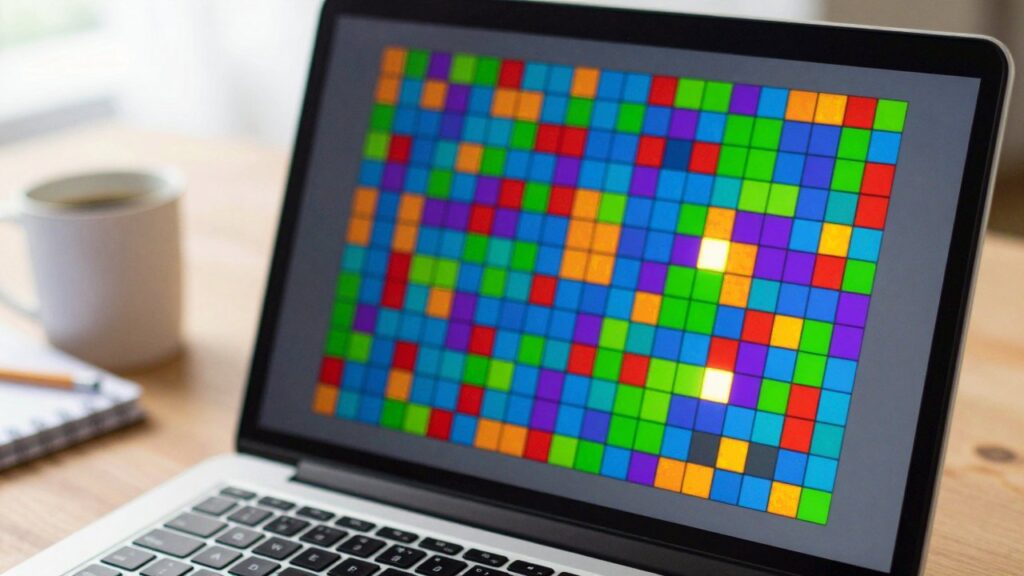
One of the best-known yardsticks is the ARC-AGI benchmark, built to measure something AI finds hard: figuring out brand-new problems from just a few examples, the way people do. In March 2026 its makers launched ARC-AGI-3, a set of small interactive game-like worlds. Untrained human testers solved every environment, while the best frontier models scored below 1%, according to the ARC Prize technical report and The Decoder.
Then, in September, OpenAI released GPT-6 Astra. The ARC Prize Foundation reports that it scores 62.7% on ARC-AGI-3 under its standard, shared test setup, and far higher with a setup tailored to OpenAI’s model, as its own analysis and Tech and Business explain. That is a huge leap in six months. But the benchmark’s makers are careful to add that these closed, game-like tests do not establish artificial general intelligence on their own.
Today’s most powerful models
GPT-6 Astra launched on 3 September 2026 with a staged rollout. OpenAI says it is the first model to reach the “Critical” level for cybersecurity under its own safety framework, which is why access started with a limited group of organisations, according to Constellation Research and Forklog. Most of its benchmark results come from OpenAI itself, and on some tests rival models from other labs still score higher.
In other words, the frontier is moving fast and these systems can now handle long, multi-step tasks on a computer. Yet they still lean heavily on the tools and “harnesses” built around them, and the same model can look brilliant or helpless depending on how it is set up.
What the experts expect
Forecasts vary enormously:
- Demis Hassabis, who leads Google DeepMind, gave roughly a 50/50 chance of AGI by 2030 at Davos in January 2026, according to Towards AI and Futura.
- Yann LeCun, the former chief AI scientist at Meta, argues that simply making today’s large language models bigger will not produce human-level intelligence, because they have fundamental limits, and that new “world model” approaches are needed, as TechNews Taiwan and AI Business reported.
- AI researchers as a group are more cautious than lab leaders. In the largest survey so far, 2,778 researchers who publish at top AI conferences put a 50% chance on machines beating humans at every possible task by 2047, and a 10% chance by 2027. That date was 13 years earlier than in the same team’s survey a year before, according to the study published in the Journal of Artificial Intelligence Research. The survey ran in October 2023, before the latest jumps.

Even business deals stopped betting on a date
For years, Microsoft’s partnership with OpenAI contained an unusual “AGI clause”: if OpenAI’s board declared AGI, some of Microsoft’s rights to its technology would change. In April 2026 the two companies amended their deal and removed that clause, as Simon Willison and Mezha, citing The Verge, reported. It’s a telling sign: when even the contract lawyers can’t pin down when AGI arrives, nobody can.
So, how close are we?
Closer than in 2023, and in some areas surprisingly close. The best AI now scores 62.7% on a test where every model scored under 1% in March, and it can handle complex work on a computer for long stretches. But there is still no agreed definition, the best results depend heavily on how the AI is set up, and key human abilities, such as learning continuously, remembering over time and understanding the physical world, remain open problems.
The honest answer for 2026: AGI is no longer a distant dream, but it isn’t here either. The most useful question for most of us is not “when?”, but “what can these systems reliably do today?”, and that answer changes every few months.
Read next
- GPT-6 in ChatGPT: what Intelligent UI does and how to use it
- Can AI be conscious? How scientists try to tell, and why we doubt
- AI agents now find zero-days, for attackers and defenders
The week's best tech stories, free
One email a week with the stories that matter, explained simply. No spam.
Sources
- Levels of AGI for Operationalizing Progress on the Path to AGI – Google DeepMind (arXiv), November 2023
- ChatGPT is an emerging AGI according to Google DeepMind – The Decoder, November 2023
- ARC-AGI-3: A New Challenge for Frontier Agentic Intelligence (technical report) – ARC Prize Foundation, March 2026
- ARC-AGI-3 offers $2M to any AI that matches untrained humans, yet every frontier model scores below 1% – The Decoder, March 2026
- OpenAI’s GPT-6 Astra on ARC-AGI-3 – ARC Prize Foundation, September 2026
- ARC-AGI reports GPT-6 Astra results under two test harnesses – Tech and Business, September 2026
- OpenAI launches GPT-6 Astra – Constellation Research, September 2026
- OpenAI opens limited access to GPT-6 Astra – Forklog, September 2026
- In Davos, Demis Hassabis bets 50/50 AGI arrives in five years – Towards AI, January 2026
- L’AGI pourrait arriver en 2030… mais pas avec les IA actuelles – Futura, 2026
- 不是把模型做更大就是 AGI,楊立昆直指大型語言模型的根本極限 (Making models bigger is not AGI: LeCun on the fundamental limits of LLMs) – TechNews (Taiwan), 4 February 2026
- Meta’s LeCun debunks AGI hype, says it is decades away – AI Business
- Thousands of AI Authors on the Future of AI – K. Grace et al. (arXiv), January 2024
- Thousands of AI Authors on the Future of AI – Journal of Artificial Intelligence Research
- Tracking the history of the now-deceased OpenAI Microsoft AGI clause – Simon Willison, 27 April 2026
- Microsoft and OpenAI waive AGI in partnership agreement – Mezha (citing The Verge), April 2026