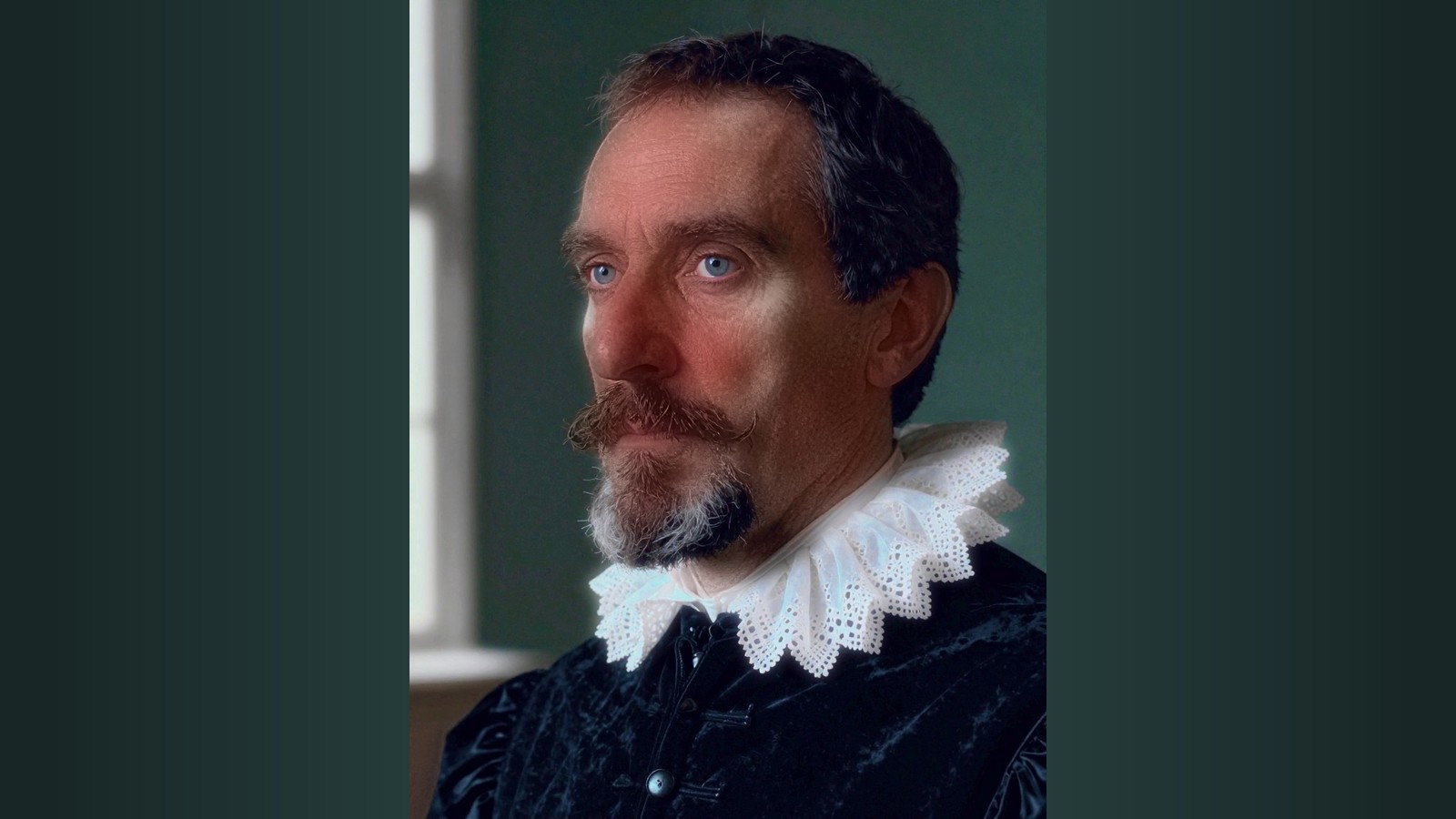
The next episode of our documentary series SPANISH GENIUSES is about a man who sent a diver under a river for an hour in 1602 and drew steam machines almost a century before England’s. Historian Nicolás García Tapia, who rediscovered him, calls Jerónimo de Ayanz “the Spanish Leonardo”. Chapter 6, “Jerónimo de Ayanz: the Spanish Leonardo”, is coming soon.
A soldier famous for his strength
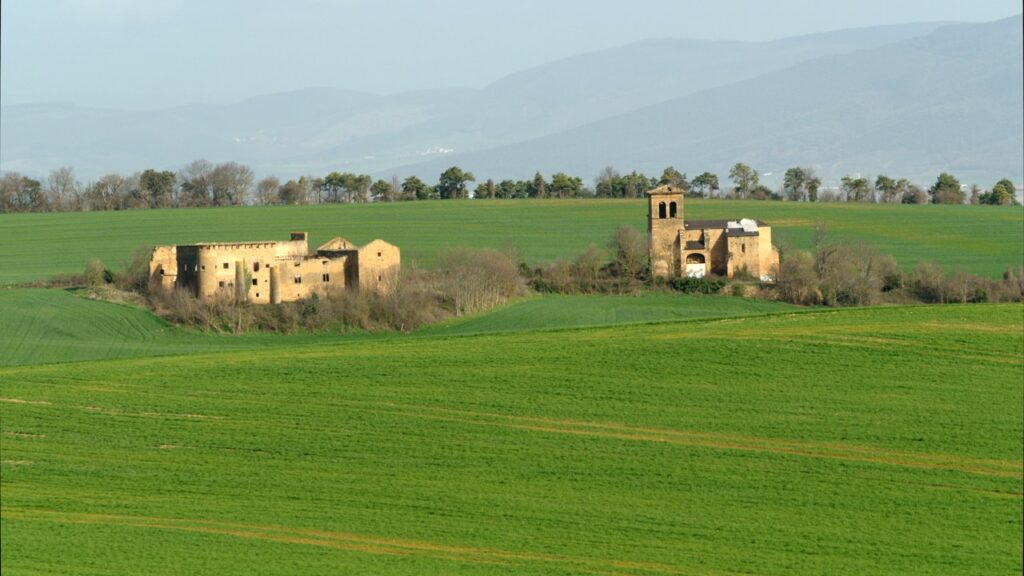
Ayanz was born in Navarre in 1553 and grew up at his family’s manor of Guenduláin, near Pamplona. At 14 he went to Madrid as a page to King Philip II, where pages were also taught mathematics. Then he became a soldier: he fought in Tunis, Italy, Flanders, where he was badly wounded, and Portugal, and became a knight of the Order of Calatrava, as García Tapia tells in the history journal Asclepio. People told stories about his strength, and the playwright Lope de Vega wrote verses about him.
Down 550 mines
In 1597 the king made him administrator general of all the mines of Spain. He went down about 550 of them and nearly died from the bad air underground. Those two problems, water flooding the galleries and air that could kill, became the focus of his inventions, explains a special issue of the University of Murcia magazine Centum devoted to him.
An hour under the Pisuerga
In August 1602 the royal court was in Valladolid. King Philip III sailed down the river Pisuerga in his galleys to watch Ayanz’s diving equipment: a man went under the water and breathed through tubes, while bellows pumped in fresh air and valves let the used air out. In his own account, Ayanz wrote that after about an hour the king ordered the diver to come up, and the diver answered from under the water that he felt fine and did not want to come out yet, according to García Tapia in Revista de Indias. The diving bells of the time ran out of good air after 15 or 20 minutes.
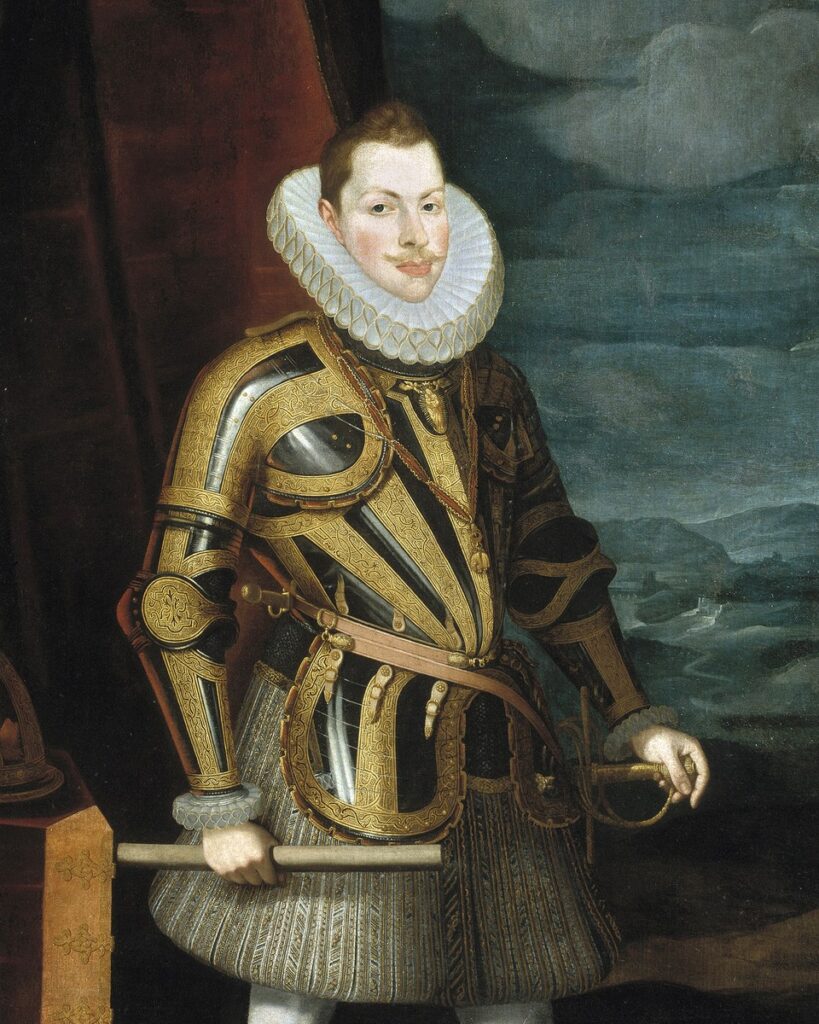
Nearly fifty inventions and a steam pump
In 1606 Philip III granted him a royal privilege, the patent of the time, giving him the sole right for 20 years to nearly fifty inventions, illustrated with 48 drawings. The document is kept at the Archivo General de Simancas. Among them is a machine that used the pressure of steam to push water out of flooded mines, with two tanks working in turn. Spain’s patent office calls it the first known industrial use of steam, long before Thomas Savery’s English patent of 1698, in its exhibition Great Inventors.
Historian Anton Howes adds an important detail in Age of Invention: Ayanz’s machine pushed water with steam alone, so it was not the “atmospheric” engine that later powered the Industrial Revolution. The privilege also describes a steam ventilator to clear bad air from mines, which could send cool air into a room if its pipe ran through snow or cold water, a precedent of air conditioning in García Tapia’s words. There are also precision scales, fuel-saving furnaces, a still to make sea water drinkable, new windmills and designs for two underwater boats.
Forgotten for almost 400 years
Around 1608 Ayanz tried to reopen the flooded silver mine of Guadalcanal, near Seville. Whether his steam pumps ever worked there is not known. He died in Madrid on 23 March 1613, and his remains rest in a chapel of Murcia Cathedral. His inventions were forgotten until García Tapia found the 1606 privilege in Simancas, a story he tells in the journal of the Orotava Foundation for the History of Science. In August 2027 it will be 425 years since the dive in the Pisuerga.
How to watch the series
Chapter 6 arrives soon on our YouTube channel and on the series page, told with real archive images and every fact checked against reliable sources. Until then you can watch Chapter 1, Leonardo Torres Quevedo, Chapter 2, Emilio Herrera, Chapter 3, Juan de la Cierva, Chapter 4, Isabel Zendal, and Chapter 5, Ramón y Cajal, or see every episode on the SPANISH GENIUSES page. Subscribe to TechNews on YouTube and turn on notifications so you don’t miss it.
Read next
- New series Spanish Geniuses: Ramón y Cajal, the man who drew the brain
- New series Spanish Geniuses: Isabel Zendal and the first international vaccine
- New series Spanish Geniuses: Autogiro: the “parachute” plane
The week's best tech stories, free
One email a week with the stories that matter, explained simply. No spam.
Sources
- Ciencia en el Barroco español: nuevas fuentes documentales de Jerónimo de Ayanz – Nicolás García Tapia, Carlos Jiménez Muñoz and Andrés Martínez de Azagra, Asclepio 68, CSIC, 2016 (in Spanish)
- En busca de tesoros bajo el mar: invenciones de equipos para bucear en América – Nicolás García Tapia, Revista de Indias LV, CSIC, 1995 (in Spanish)
- Ingeniería e invención en el Siglo de Oro: el caso de Jerónimo de Ayanz – Nicolás García Tapia, Seminario «Orotava» de Historia de la Ciencia (in Spanish)
- Jerónimo de Ayanz. Ciencia y Tecnología a finales del siglo XVI – Revista Centum 5, Universidad de Murcia, 2016 (in Spanish)
- Grandes Inventores: Jerónimo de Ayanz y Beaumont – Oficina Española de Patentes y Marcas, 2007 (in Spanish)
- Age of Invention: The Spanish Engine – Anton Howes, 2020
- La minería – Julio Sánchez Gómez, in Técnica e Ingeniería en España I: El Renacimiento, Real Academia de Ingeniería, 2008 (in Spanish)