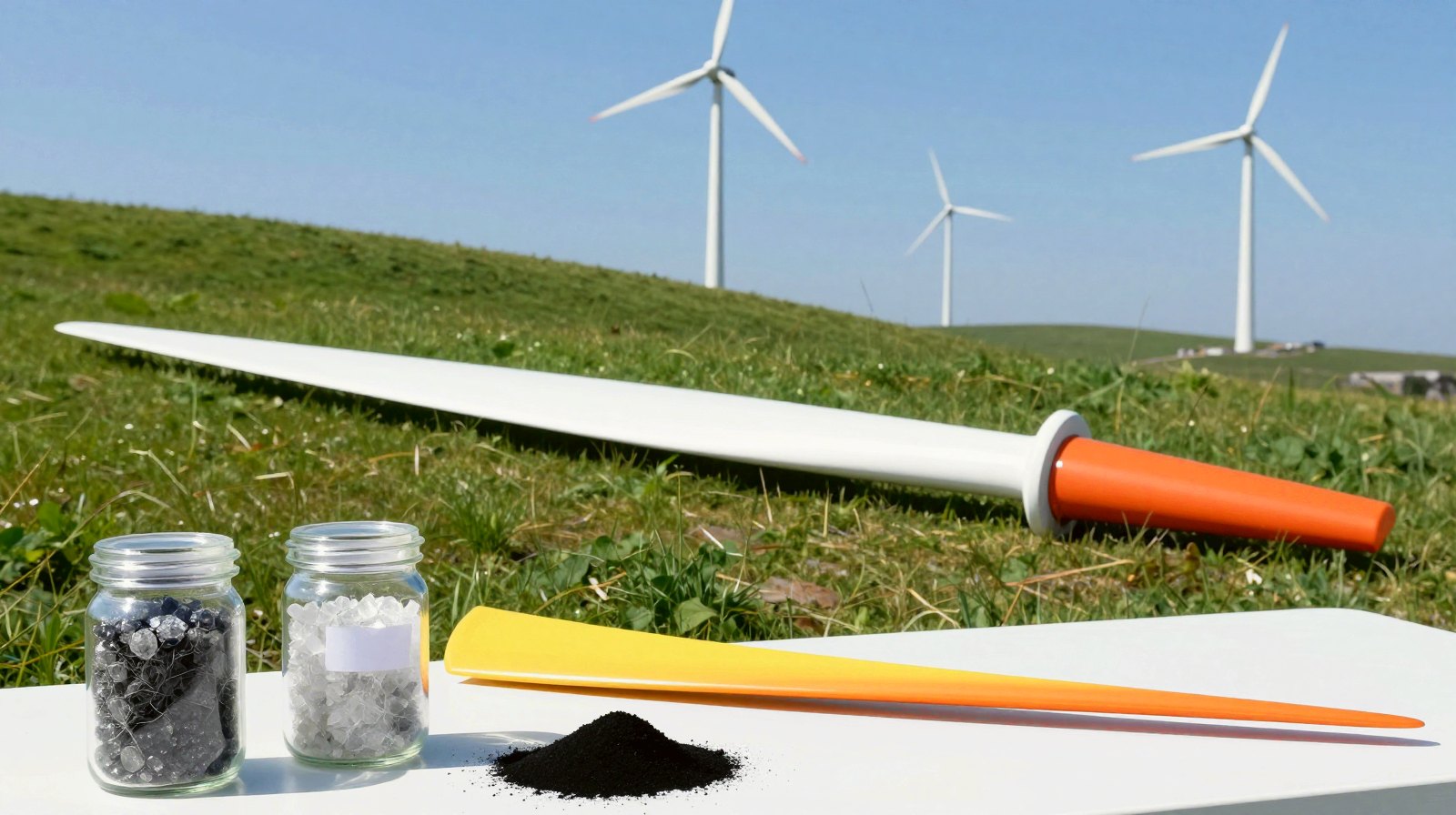
Old wind turbine blades are a headache: they’re built to survive storms, sun and lightning, so they’re very hard to recycle. A team at Tsinghua University in China has found a way to turn them into two valuable materials, silicon carbide and graphene, with a flash of heat lasting just seconds. Their study appeared on 6 November in the journal Chem Circularity.
Why it matters: wind power is clean, but its blades last about 20 years, and many old ones end up in landfills. Turning that waste into useful materials could make wind energy even greener.
How a flash of heat does it
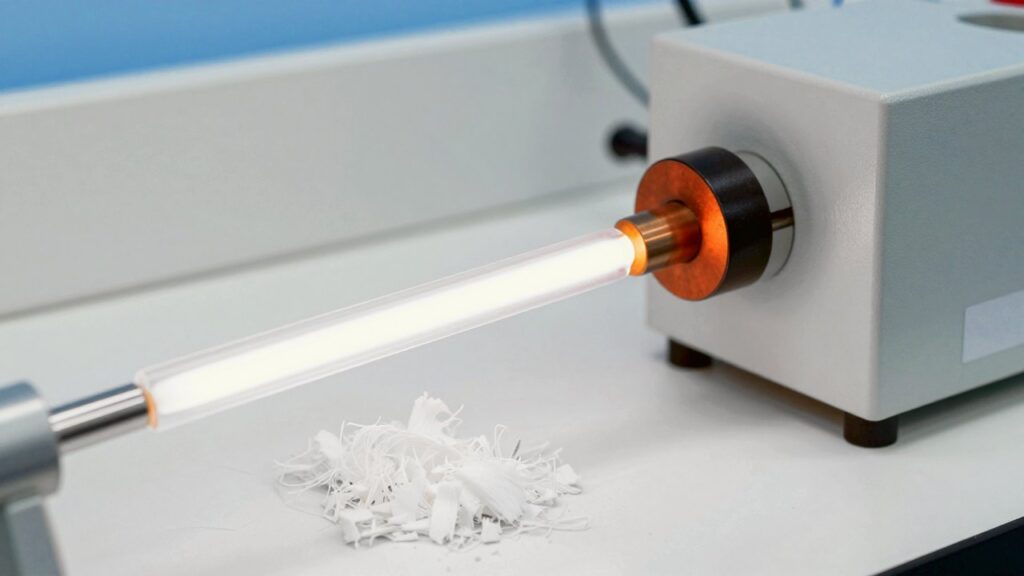
Blades are mostly fibreglass, which contains silica, held together by carbon-rich plastic resin. The team used a method called flash Joule heating, which heats the shredded waste to about 2,000 °C in seconds. At that heat, two things happen at once:
- Carbon reacts with silica and becomes silicon carbide, a very hard material that stands up to heat.
- The leftover carbon rearranges into graphene, famous for its strength and for carrying heat and electricity well.
Back into new plastic parts
The team then mixed tiny amounts of the recovered material back into resin, the plastic used to build blades. With just 0.3% by weight, the resin resisted stretching 27% better and bending 9% better. With 0.1%, it spread heat 41% faster. “This is more than recycling. It’s upcycling,” says senior author Bing Deng.
Cheaper and cleaner, on paper
| Method | Result per tonne of blade waste |
|---|---|
| Chemical dissolution | Costs about $1,800 |
| Pyrolysis, slow heating without air | Costs about $460 |
| Flash heating | Could earn about $80 |
Figures from the researchers, reported by Gizmodo. The $80 profit is their estimate for commercial scale, not a measured result.
The team also estimates up to 83% to 92% lower greenhouse gas emissions than those older methods.
What happens next
This is still lab work. Lead author Hao Bi says a bigger reactor must heat the material evenly and give the same quality every time, and the team hopes to work with industry partners to scale it up. If it works, the materials could go back into new blades, cars, electronics and buildings.
Read next
- Biodegradable plastic that breaks down even in the deep sea
- Spanish team builds a rechargeable battery with vitamin B12
The week's best tech stories, free
One email a week with the stories that matter, explained simply. No spam.
Sources
- Scientists give hard-to-recycle wind turbine blades a second life – Cell Press via EurekAlert!, 6 November 2026
- Scientists give hard-to-recycle wind turbine blades a second life – Tech Xplore, 6 November 2026
- Scientists found a better way to recycle wind turbine blades – Gizmodo, November 2026
- 3632°F heat turns old wind turbine blades to silicon carbide, graphene – Interesting Engineering, November 2026