Imagine a toothbrush that makes its own electricity while you brush, with no battery and no plug, and uses it to fight the bacteria behind plaque. Researchers at Peking University in China have built exactly that, and tested it on more than 100 people. Their study appeared on 4 November in Science Advances.
Why it matters: plaque leads to cavities and gum disease, and most of us don’t brush perfectly. A brush that does a little extra work on its own could help, though it’s still an experiment.
How the bristles make electricity
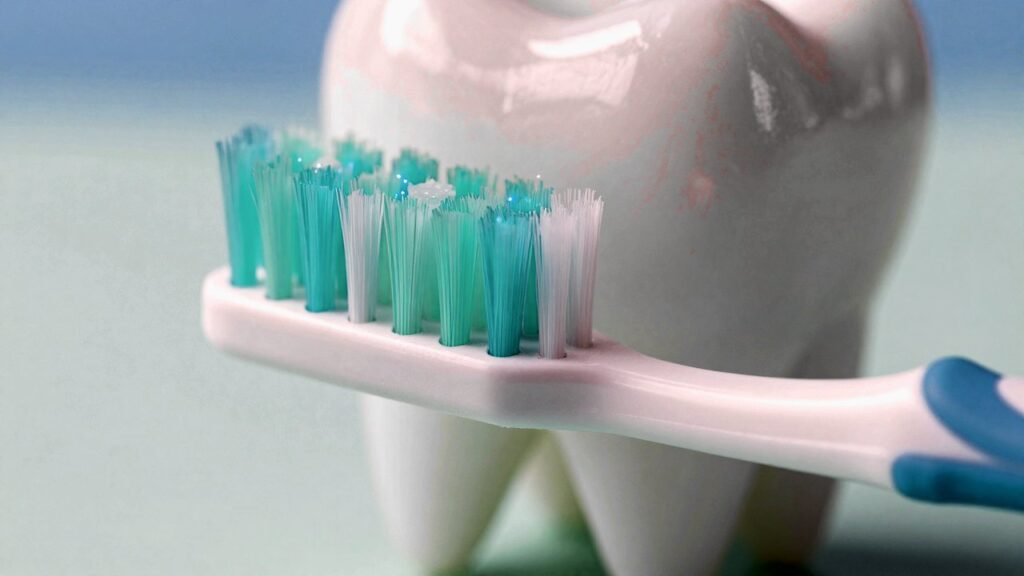
The bristles are made of PVDF, a plastic that produces a small electric charge when it bends, an effect called piezoelectricity. Every brushing stroke flexes the bristles, so they charge themselves. That charge creates reactive oxygen species, short-lived molecules that damage bacteria and the sticky film they build on teeth.
What the tests found
- In the lab: the charged bristles cut two plaque-linked bacteria by 45% to 78%, while ordinary nylon bristles managed less than 10%. On cow teeth, they removed more than 99% of the bacterial film.
- In people: 115 adults with plaque and inflamed gums used either the new brush or a regular one for three months. Those with the new bristles had less plaque, less gum inflammation and less bleeding.
- Durability: after three months of simulated use, the bristles kept their shape and their electrical properties.
What we don’t know yet
- Cavities: less plaque over three months doesn’t prove fewer cavities or less gum disease over years. That needs longer studies.
- Real brushing is short: in lab tests, bacteria sat on the bristles for hours. In your mouth, each bristle touches a tooth for a moment, an outside expert told Live Science.
- Not in shops: it’s an experimental brush, with no product or price announced.
This is not medical advice: keep brushing twice a day and seeing your dentist as usual.
What happens next
The idea is attractive because the bristles need no battery, chemicals or charger. The next step is longer trials to see whether the early benefits really mean healthier teeth.
Read next
- First touchscreen woven into clothing: a sleeve that plays video
- Electronic implant turns excess blood sugar into waste, in mice
The week's best tech stories, free
One email a week with the stories that matter, explained simply. No spam.
Sources
- Toothbrush produces electricity to battle plaque-making bacteria – EurekAlert!, 4 November 2026
- Your teeth could soon be protected by a futuristic force field – New Atlas, 4 November 2026
- This self-powered toothbrush makes electricity to kill cavity-causing bacteria – Live Science, November 2026
- Chinese scientists make a toothbrush that uses mild electric shocks to reduce plaque – South China Morning Post, November 2026