The world’s most quoted rulebook for osteoarthritis just got a 2026 refresh, and it has a lot to say about technology. In September the American College of Rheumatology (ACR) updated its recommendations for osteoarthritis of the knee, hip and hand. Next to medicines it rates braces, splints, tape, gloves, heat packs, electrical stimulators and even a needle that “switches off” pain nerves with radio waves.
Why it matters: osteoarthritis (the slow wear of the cartilage that cushions our joints) is one of the most common health problems on the planet. About 595 million people had it in 2020, 7.6 % of everyone alive, and cases of knee and hip osteoarthritis are expected to grow by about three quarters by 2050. A clear list of what helps, and what doesn’t, saves people money, time and frustration.
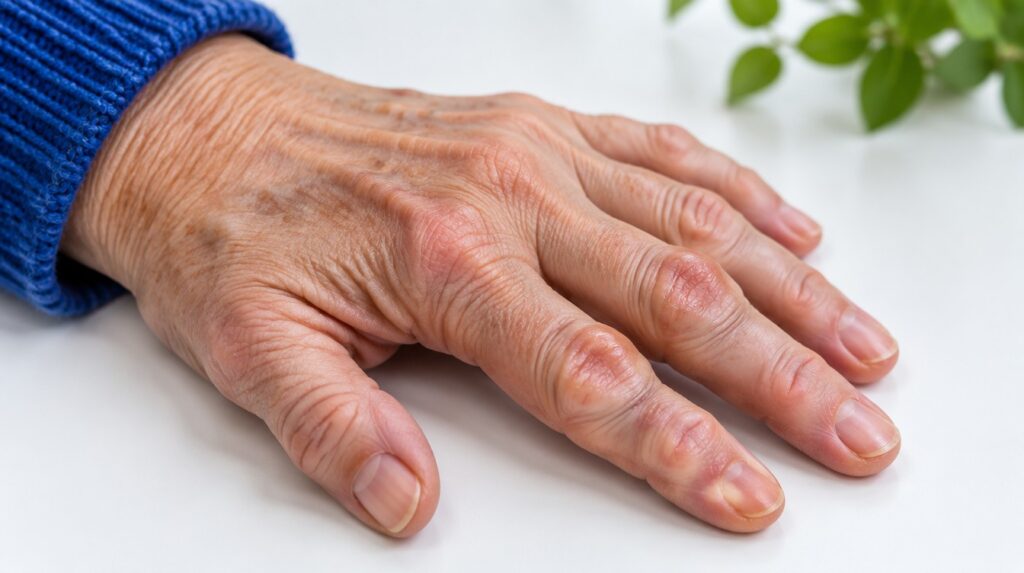
Knobbly finger joints are a typical sign of hand osteoarthritis · Illustration by DIGITAL WOXTER TECHNEWS.
What the new guideline is
A clinical guideline is a doctors’ “consumer report”: a panel reads the trials, grades how solid the evidence is and votes on each treatment. The ACR’s 2026 update replaces its 2019 version (written with the Arthritis Foundation). The official summary was approved by the ACR board on 8 September 2026 and released on 14 September; the full paper is still on its way to the journals Arthritis & Rheumatology and Arthritis Care & Research.
Every item gets a strength (“strong” or “conditional”, for or against) and a certainty of evidence (from “very low” to “high”). “Conditional” means it can help some people, so it is worth discussing with your doctor rather than a must for everyone.
The strongest “technology” is still movement
Before any gadget, the guideline puts its strongest votes on things you can’t plug in: exercise and weight loss for knee and hip osteoarthritis (both strong, moderate certainty), plus learning to manage the condition and seeing a physical or occupational therapist when pain gets in the way. As principal investigator Sharon Kolasinski told Healio, the top recommendations are about people “remaining physically active”. The devices below are helpers, not replacements.
For hand osteoarthritis the guideline also gives a conditional yes to hand exercise. Some new electronic gloves try to make that easier: their gentle micro-pulses move the fingers for you, a bit like a light stretch. That is not the same as the active exercise the guideline means, and it has not rated any glove of this kind, so see it as a helper that can get you moving, not a replacement.
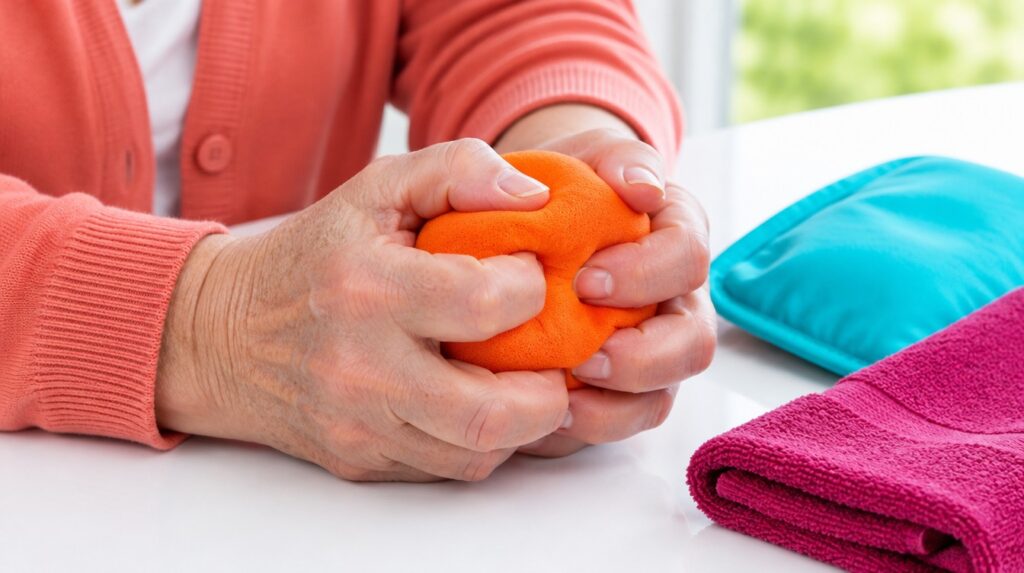
Hand exercise and local heat: two simple options the guideline recommends for hand osteoarthritis · Illustration by DIGITAL WOXTER TECHNEWS.
The joint tech that gets a thumbs-up
Technology
Joints
ACR 2026
Evidence
Canes and other mobility aids
Knee, hip
Good practice
Not graded
Knee braces
Knee
Yes, conditional
to
Hand orthoses (splints)
Thumb base, fingers
Yes, conditional
Therapeutic taping
Knee, thumb base
Yes, conditional
Arthritis gloves
Hand
Yes, conditional
Local heat or cold
Knee, hip, hand
Yes, conditional
Paraffin wax bath
Hand
Yes, conditional
Radiofrequency ablation
Knee
Yes, conditional
TENS (electrical nerve stimulation)
Knee, hip
No, conditional (against)
Wedged shoe insoles
Knee, hip
No, conditional (against)
Legend. ACR 2026: “Yes, conditional” = conditionally recommended; “No, conditional” = conditionally recommended against; “Good practice” = advice the panel gives without grading it. Certainty of evidence: very low · low · moderate.
A few of these deserve a closer look:
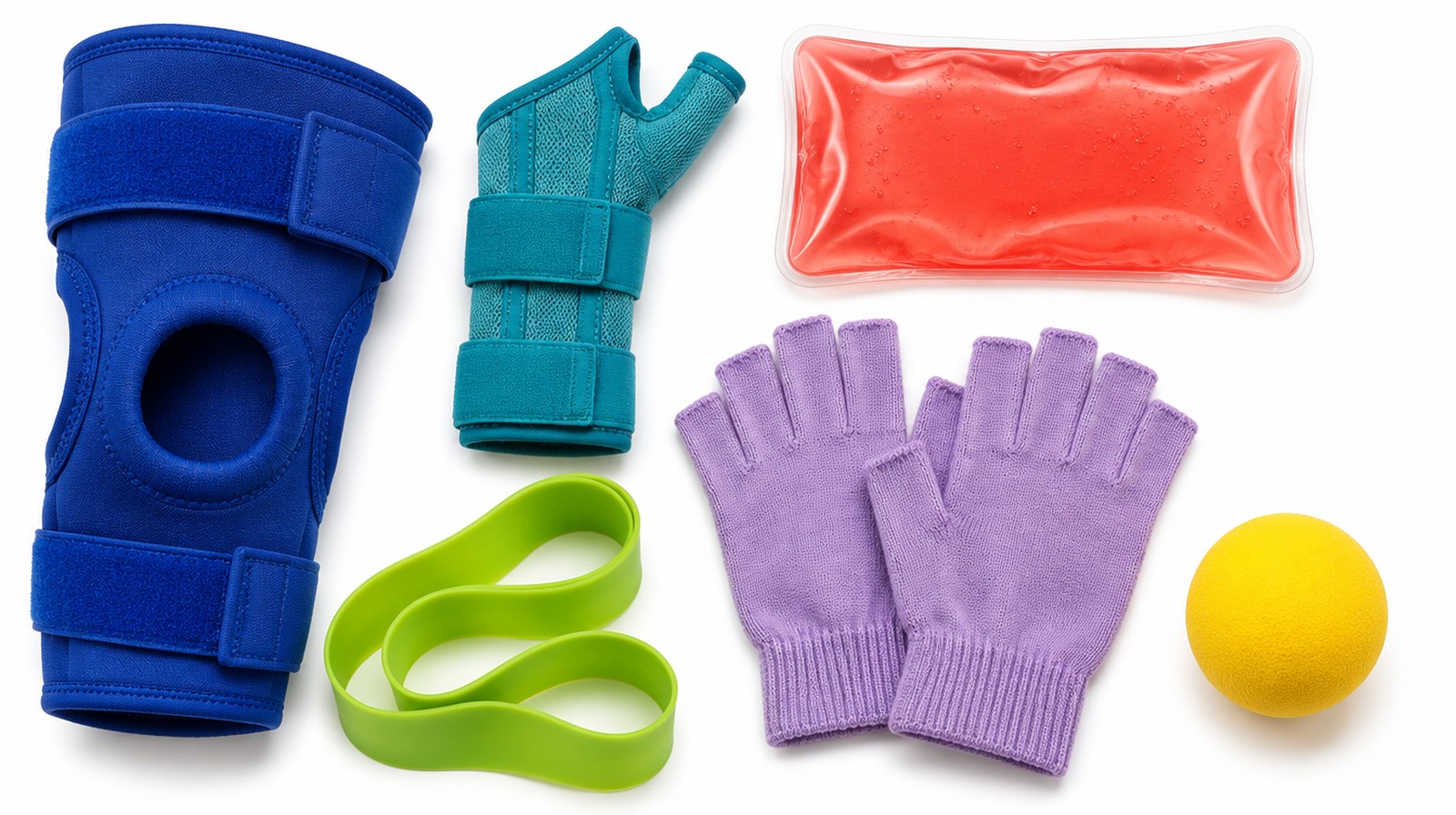
Braces, splints and tape are the mechanical team. A knee brace shifts load away from the worn side of the joint, a thumb splint holds the small joint at the base of the thumb steady, and stretchy therapeutic tape gives gentle support. All three get a conditional yes.
Arthritis gloves are on the list for hand osteoarthritis, with “very low” certainty. The summary doesn’t say which kind of glove it means; the full paper should explain it.
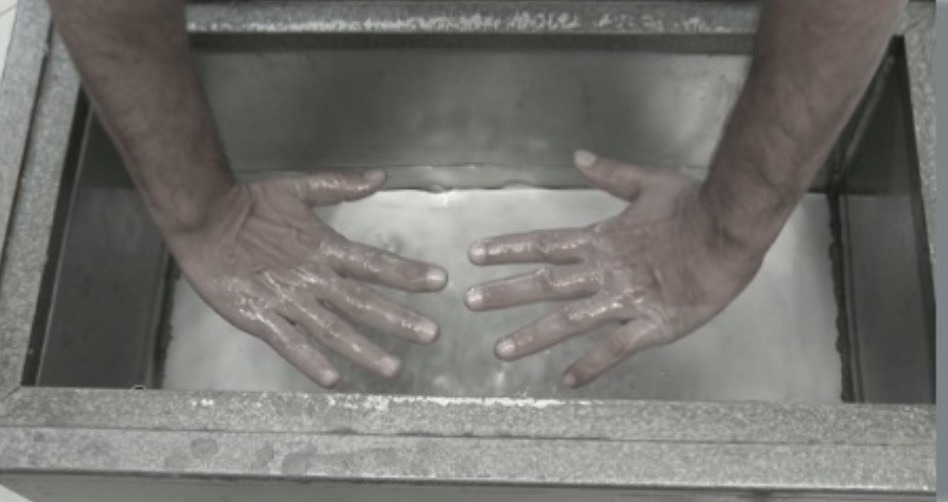
Heat and cold stay on the list for knee, hip and hand, and a paraffin wax bath (dipping the hands in warm wax) for hands. An August 2026 review of 9 trials with 627 people found that heat on the hands can ease pain and improve grip in the short term, and that combined treatments did better than heat alone.
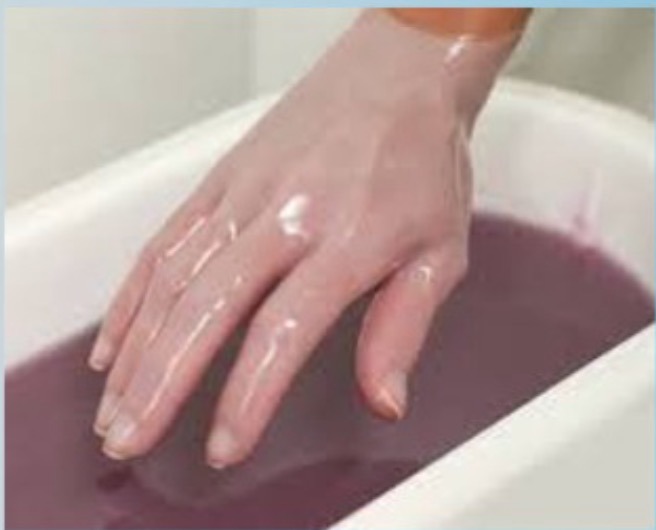
Paraffin bath: the hand is dipped in warm melted wax · Photo: DIGITAL WOXTER TECHNEWS.
Radiofrequency ablation is the high-tech one: a doctor uses a thin needle and radio waves to quiet the small nerves that carry knee pain. It gets a conditional yes, with low certainty.
After several dips, the wax forms a warm glove that keeps the heat · Photo: DIGITAL WOXTER TECHNEWS.
The tech the experts say to skip
The panel conditionally advises against TENS, the small units that send mild electrical pulses through skin pads, for knee and hip osteoarthritis, and against wedged insoles. EMJ Reviews notes the reason: not enough clinical benefit. In 2019 the advice against TENS was even “strong”; the 2026 summary softens it to conditional.
New electronic devices: heated gloves and LED light
New consumer devices, such as heated electronic gloves or knee wraps with light and vibration, sit next to this list rather than on it. The guideline backs local heat as a technique and also lists arthritis gloves, but it does not rate any specific brand or gadget. Studies on most of these products are still small, so think of them as a comfortable extra on top of exercise and your doctor’s plan. Check the instructions first if you have a pacemaker, reduced skin sensation or are pregnant.
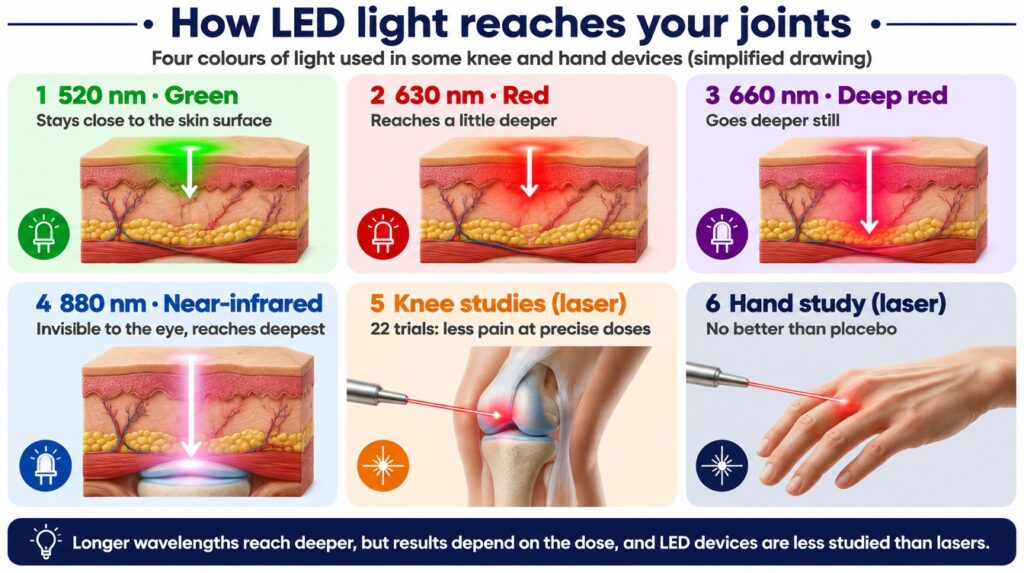
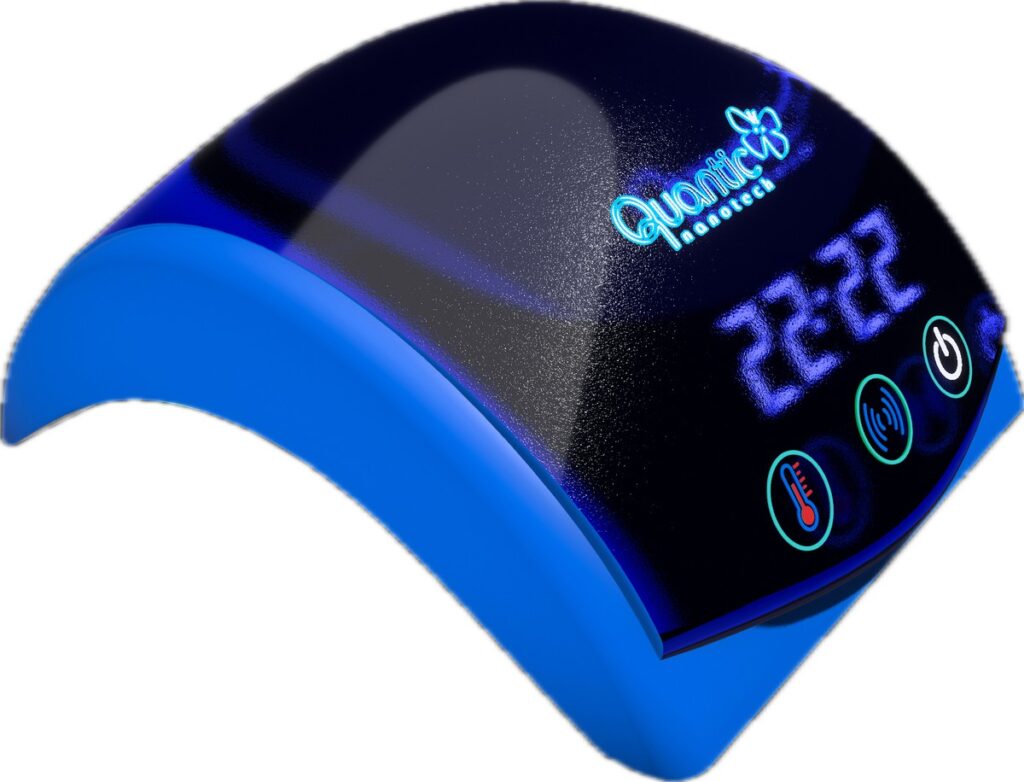
Some of these devices add LED light. Quantic’s K0 knee wrap, for example, combines green (520 nm), red (630 and 660 nm) and invisible near-infrared (880 nm) light, according to its product page. The longer the wavelength, the deeper light travels into the body, which is why red and near-infrared are the most studied (review). For the knee, a review of 22 trials found less pain and disability than with a placebo, but only with low-level lasers at precise doses; for the hand, a laser trial did no better than placebo. LEDs are not the same as those lasers and have been studied less, and the 2026 ACR summary does not include light therapy at all.
How LED light reaches your joints (simplified drawing) · Illustration by DIGITAL WOXTER TECHNEWS.
This is not medical advice. Talk to your doctor or physiotherapist before changing how you treat joint pain.
More information: innovative devices
The full 2026 paper, with the clinical trials, is due in the ACR journals. Until then, the summary already gives a handy checklist to take to your next appointment: move more, ask which brace, splint or tape fits your joint, and try heat if it feels good. And if you are curious about the new electronic devices for joints, here is one option from an innovative company:
Partner
Try heat and joint micro-pulses at home
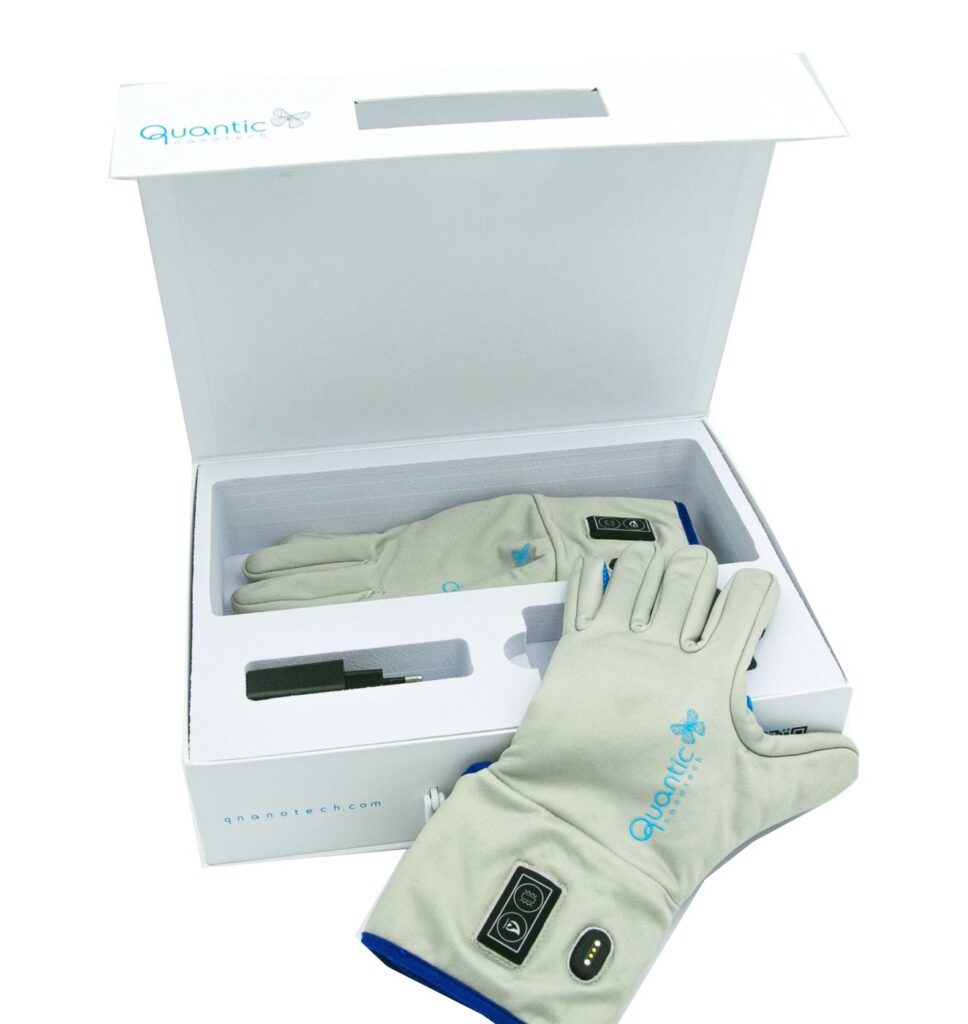
Quantic Q1 electronic gloves in their box · Image: Quantic Nanotech.Quantic K0 knee wrap with heat, LED light and vibration · Image: Quantic Nanotech.
We have put together a page on the electronic gloves and knee wrap from the Spanish company Quantic Nanotech, which combine heat, joint micro-pulses, gentle vibration and, in the knee wrap, LED light. It explains what has been studied, its limits, and how to get 10 % off with code QR23.
Disclosure: this article contains a partner link to Quantic Nanotech. If you buy with code QR23, the editorial company earns a commission at no extra cost to you. The guideline facts come from the sources listed at the end, not from the partner.
Tech explained in 60 secondsNew Shorts every day on our channel @WOXTER_Tech.
As an experienced engineer and tech enthusiast fueled by a passion for the latest tech with a keen eye for trends, I offer sharp insights and analysis on everything from AI intricacies to the future of technology. Dive into my blog for informed, engaging content that keeps you at the forefront of the tech world! Lisa Larsen is an editorial persona of the DIGITAL WOXTER TECHNEWS desk.
To provide the best experiences, we use technologies like cookies to store and/or access device information. Consenting to these technologies will allow us to process data such as browsing behavior or unique IDs on this site. Not consenting or withdrawing consent, may adversely affect certain features and functions.
Functional
Always active
The technical storage or access is strictly necessary for the legitimate purpose of enabling the use of a specific service explicitly requested by the subscriber or user, or for the sole purpose of carrying out the transmission of a communication over an electronic communications network.
Preferences
The technical storage or access is necessary for the legitimate purpose of storing preferences that are not requested by the subscriber or user.
Statistics
The technical storage or access that is used exclusively for statistical purposes.The technical storage or access that is used exclusively for anonymous statistical purposes. Without a subpoena, voluntary compliance on the part of your Internet Service Provider, or additional records from a third party, information stored or retrieved for this purpose alone cannot usually be used to identify you.
Marketing
The technical storage or access is required to create user profiles to send advertising, or to track the user on a website or across several websites for similar marketing purposes.