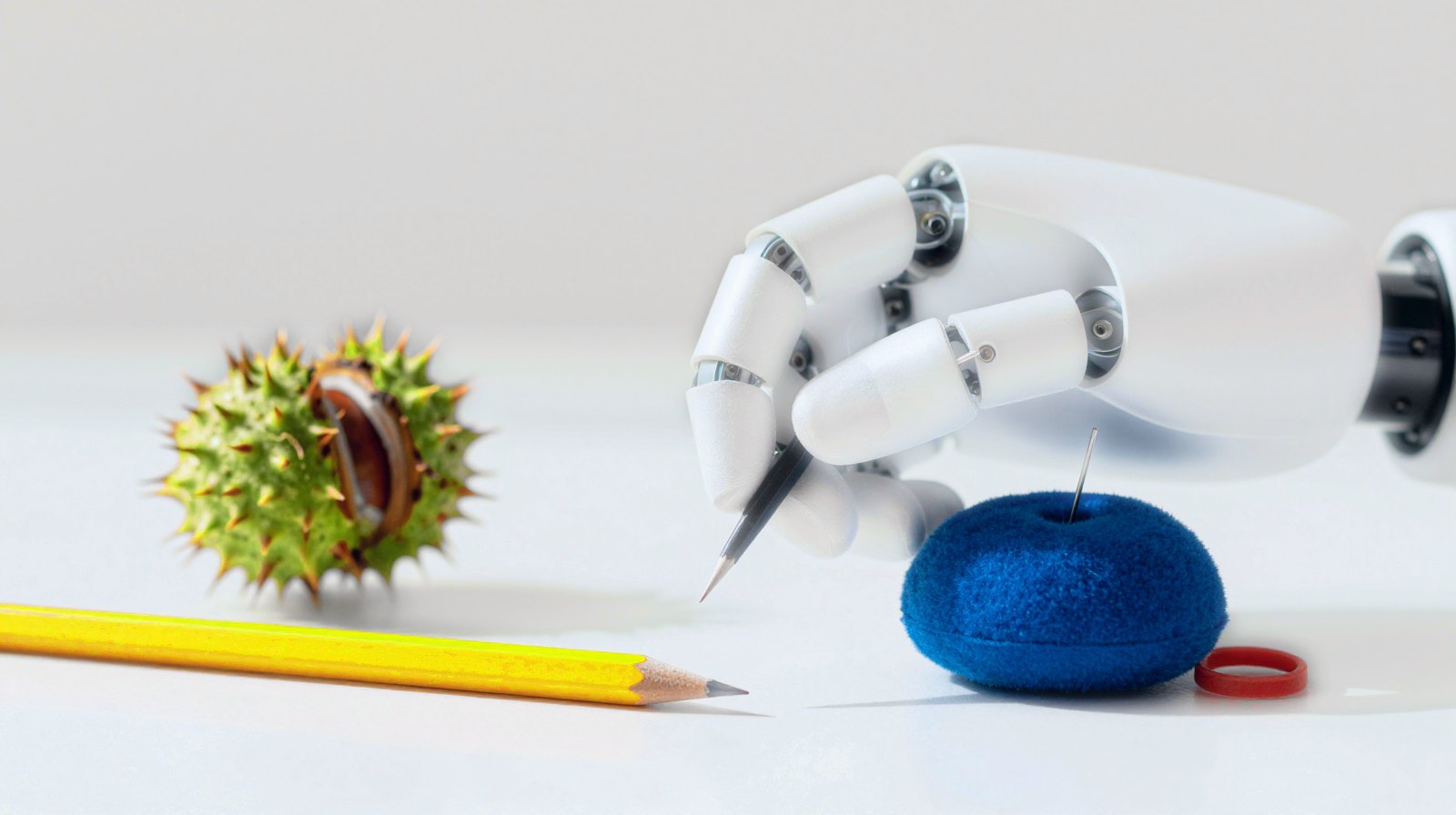
A robot hand has learned to say “ouch”. Researchers at the Southern University of Science and Technology (SUSTech) in Shenzhen, China, and partner institutions have built an artificial skin with more than 10,000 touch sensors that lets robotic fingers hold a 0.5 mm pencil lead without snapping it, and pull back from a needle before it pierces them, according to their paper in Nature Machine Intelligence.
Why it matters: robots are great at strength and terrible at gentleness. To help in a kitchen, a hospital or a warehouse full of fragile things, they need fingers that feel, and react fast. This skin does both, and it even protects itself.
A skin made of gel and tiny charged particles
The skin is “iontronic”: a soft gel full of ions (electrically charged particles) sits on flexible electrodes. When something presses on it, the electrical response where gel meets electrode changes, and that change tells the robot how hard it is being touched, Tech Xplore explains.
The hard part was never making one sensor. It was reading thousands at once. Most robot skins check their sensors one by one, like a teacher calling the register, so the more sensors you add, the slower and noisier the skin gets. The paper describes exactly this bottleneck: delays, crosstalk (neighbouring sensors interfering with each other) and too much data.
Each sensor senses on its own frequency
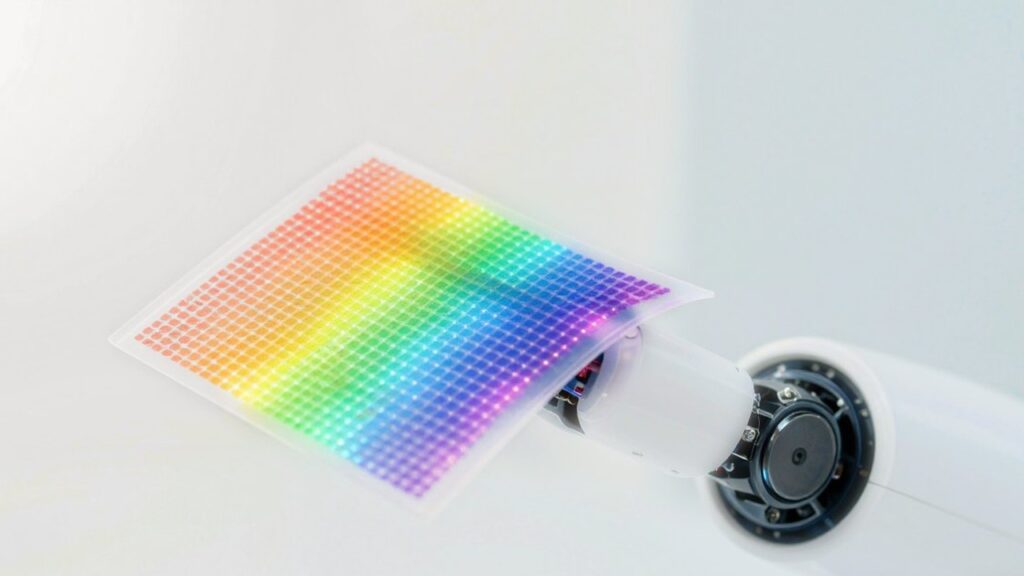
The SUSTech team’s trick is a bit like radio. Inside each bundle of sensors, every point is given its own signal frequency, so the robot can listen to all of them at the same time and still tell them apart: the frequency says where the touch is, the signal strength says how hard. The circuitry also keeps neighbouring sensors from talking over each other.
The result, according to the paper:
- More than 10,000 sensing elements, read 100 times per second.
- Up to 1,110 sensors per square centimetre in the densest version, enough to map the face of a coin.
- About 23 milliseconds from touch to understanding: much quicker than the blink of an eye.
A “spinal cord” that shrinks the data
Your brain doesn’t receive every tiny signal from your skin. Nerves and the spinal cord bundle and filter the information first. The robot copies that idea with an in-between stage that squeezes the data 268 times smaller before the “brain” software interprets it. Even with that much compression, the system recognised 10 kinds of everyday objects with 98.2 % accuracy, Electronics For You reports.
Pencil lead, solder wire and a spiky chestnut
The demos are the fun part. Robotic fingers covered in the skin:
- held a 0.5 mm pencil lead steadily, without breaking it;
- gripped soft solder wire just 0.2 mm thick, and when a person bent the wire, the fingers shifted to keep it from dropping;
- loosened their grip on a spiny chestnut, and pulled away from a needle.
That last trick comes from an artificial “pain” signal. The robot works it out from three clues: how hard something presses, how concentrated the pressure is (a needle point versus a flat palm) and how quickly the pressure changes. It is a little like your own reflex when you touch a cactus: you pull back before you have really thought about it. When the researchers switched the protective reflex off, the fingers kept pushing towards the needle and some sensing areas were damaged, Tech Xplore notes.
What it means, and the catch
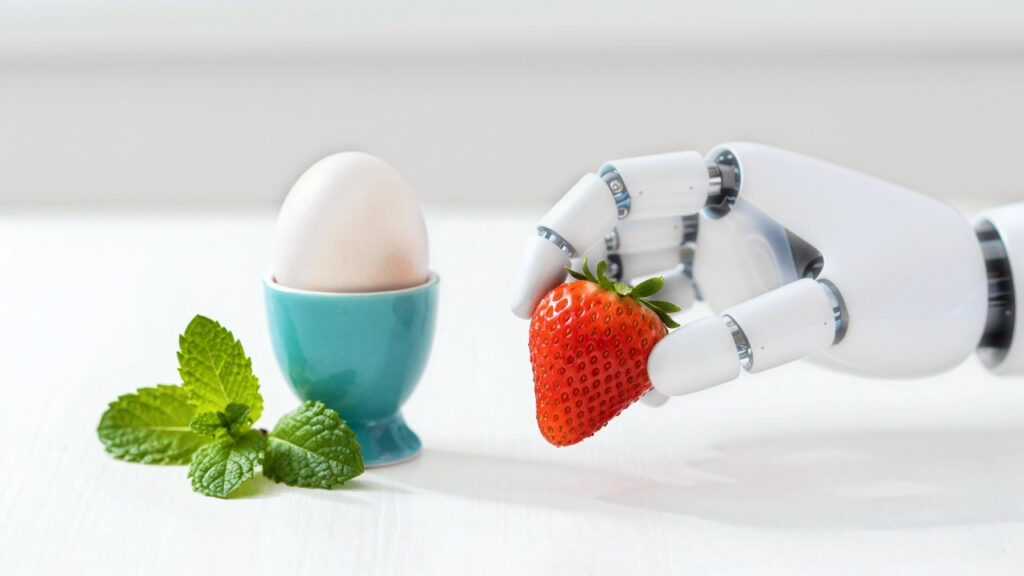
A robot that can feel a pencil lead and flinch from a needle is a robot you could trust with an egg, a ripe peach or, one day, a patient’s arm. Self-protection matters too: skin that knows when it is being hurt lasts longer.
The catch is size. The researchers write that their encoding and decoding electronics are “relatively bulky”, so they can’t yet be built into the skin itself. Their next step is custom chips that would sit right next to the soft covering. Touch is having a big year in research: we have also seen robots powered by lab-grown muscle and a touchscreen woven into a sleeve.
What happens next
Watch for the same skin on whole robot hands and humanoid arms, with the electronics shrunk onto chips. The paper says humanoid robots wearing it can already sense harmful touches and protect themselves; the next test is doing that all day, outside the lab.
Read next
- Lab-grown muscle robots now jump, walk, swim and grab
- Robot AI that imagines the scene before it moves
- First touchscreen woven into clothing: a sleeve that plays video
The week's best tech stories, free
One email a week with the stories that matter, explained simply. No spam.
Sources
- Large-scale iontronic skins with neural-hierarchical processing architecture – Zhibin Li et al., Nature Machine Intelligence, October 2026
- Artificial skin helps robots grasp pencil lead and pull away from needles – Tech Xplore, 27 October 2026
- Artificial Skin Gives Robotic Fingers a Sense of Touch – Electronics For You, 28 October 2026