A feather-light white “blanket” could help roofs stay cool in the midday sun without using any electricity. Engineers at City University of Hong Kong made a white aerogel (a solid that is mostly air) that sits on top of a cooling roof coating, and in outdoor tests it made that coating up to 5.2 °C cooler, Tech Xplore reports.
Why it matters: air conditioning is one of the biggest energy bills in hot places, and it gets worse every summer. A roof that cools itself, for free, all day, means less work for the AC, lower bills and less strain on the power grid on the hottest afternoons.
First, how can a roof cool itself?
The trick is called radiative cooling. Every warm object gives off heat as invisible infrared light. Most of that light gets trapped by the air, but one band of infrared slips straight through the atmosphere and out into cold space. Scientists call that band the “atmospheric window”.
Special white coatings take advantage of it. They bounce back almost all sunlight, and at the same time they shine their own heat out through that window. Done well, a surface can end up colder than the air around it, even at noon. The experts call that “sub-ambient daytime radiative cooling”, or simply a roof that is cooler than the weather.
The catch: one surface doing two jobs
Until now, the same exposed surface had to do everything: reflect the sun and send heat to the sky. But as soon as it gets colder than the air, the warm air around it starts heating it back up, like an ice cube on a summer table. The researchers call this “parasitic heat gain”, and it limits how cold these roofs can get.
The new idea is to split the jobs. The cooling coating stays underneath and keeps sending its heat out. On top goes the new layer, which the team calls WITA (white infrared-transparent aerogel). It works like a sunshade that is also a window:
- It reflects 96.6% of sunlight, so the sun’s heat stays out.
- It lets up to 94.5% of the infrared in the atmospheric window pass straight through, so the heat underneath can still escape to the sky.
- Being mostly air, it insulates very well (a thermal conductivity below 0.035 W/m·K, in the range of common insulation foams), so warm outside air can’t creep back in, CityUHK explains.
What the tests showed
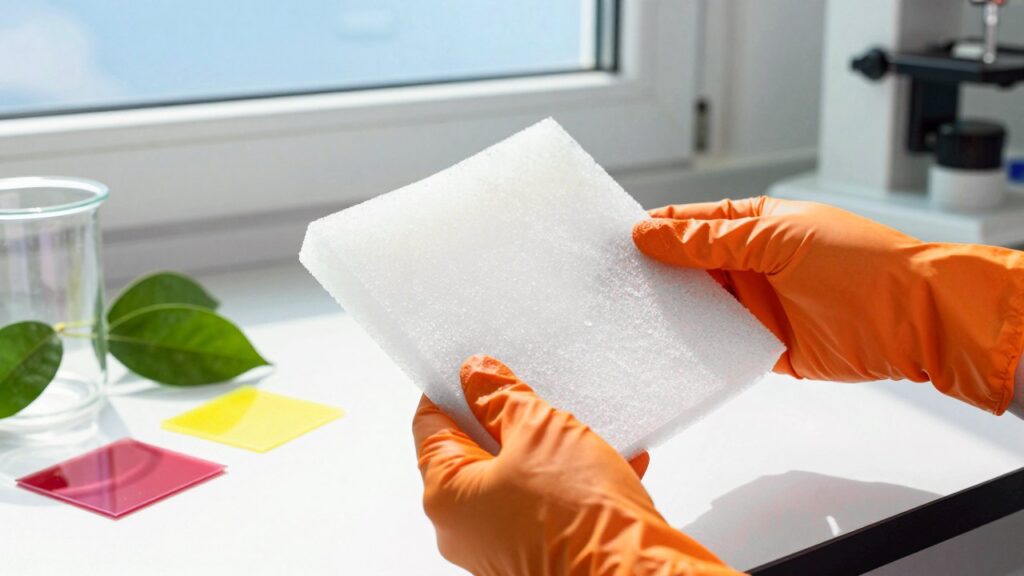
The aerogel is made in a single step from ultra-high-molecular-weight polyethylene, a super-tough cousin of everyday plastic bags. In outdoor tests in Hong Kong it boosted the cooling of a standard radiative-cooling coating by up to 5.2 °C. The team says it even let ordinary roofs do better than existing cooling materials on their own.
On a computer model of a four-storey apartment block in Abu Dhabi, a cooling-coated roof already saved 14.6 gigajoules of energy a year compared with a normal roof, roughly 4,000 kWh. Adding the aerogel on top raised those savings by about 55%.
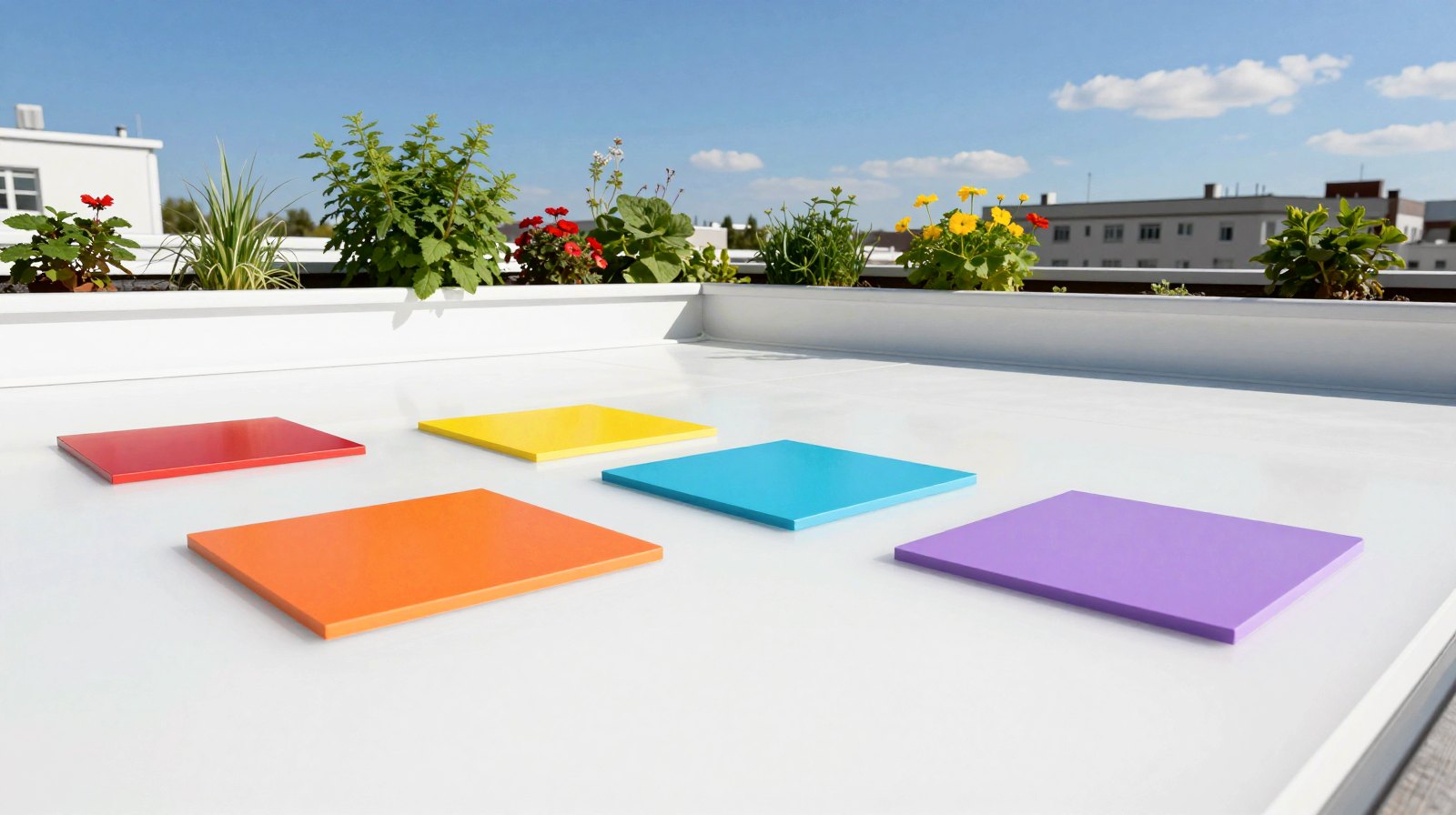
It also looks tough. After 75 days of strong artificial UV light at 40 °C, which the team says equals about two years of Hong Kong sunshine, it reflected and let heat through almost exactly as before. With a water-repellent treatment it sheds water and keeps itself clean, it didn’t catch fire in a flame test (it only shrank), and there are red, yellow and blue versions that keep working. So cool roofs don’t have to be plain white.
What it can’t tell us yet
The 5.2 °C is a best case on top of a cooling coating, not a promise that your attic will be 5 °C cooler. The 55% figure comes from a building simulation, not from real apartments. And the team hasn’t said yet what it would cost or how to make it by the square kilometre. The study, led by Professor Edwin Tso Chi-yan with first author Wenqi Wang and partners at Xi’an Jiaotong University, is published in the journal Energy & Environmental Science.
What you can do today
Aerogel roofs aren’t something you can order yet. But the basic idea works now: light-coloured “cool roof” paints, good insulation and shading all keep heat out in the first place. And if you want smarter control of the cooling you already have, our home climate gadgets guide looks at a fan that also heats and purifies, and a thermostat that learns your routine.
Clever materials are having a moment: we have also covered a plastic that breaks down even in the deep sea and alloys that stay tough at -253 °C.
Read next
- Why the power grid hiccups every minute: batteries on a clock
- Biodegradable plastic that breaks down even in the deep sea
- Home climate gadgets: Dyson hot+cool, Nest and a silent purifier
The week's best tech stories, free
One email a week with the stories that matter, explained simply. No spam.
Sources
- Infrared-transparent aerogel boosts performance of subambient daytime radiative cooling materials by up to 5.2°C – City University of Hong Kong via Tech Xplore, 2 November 2026
- Professor Chi Yan Tso leads breakthrough study on white infrared-transparent aerogels – City University of Hong Kong, School of Energy and Environment, 2026
- Decoupling solar reflection and thermal emission enables deep subambient radiative cooling for building energy savings – Wenqi Wang, Edwin Tso Chi-yan et al., Energy & Environmental Science, 2026, DOI 10.1039/d6ee03588d