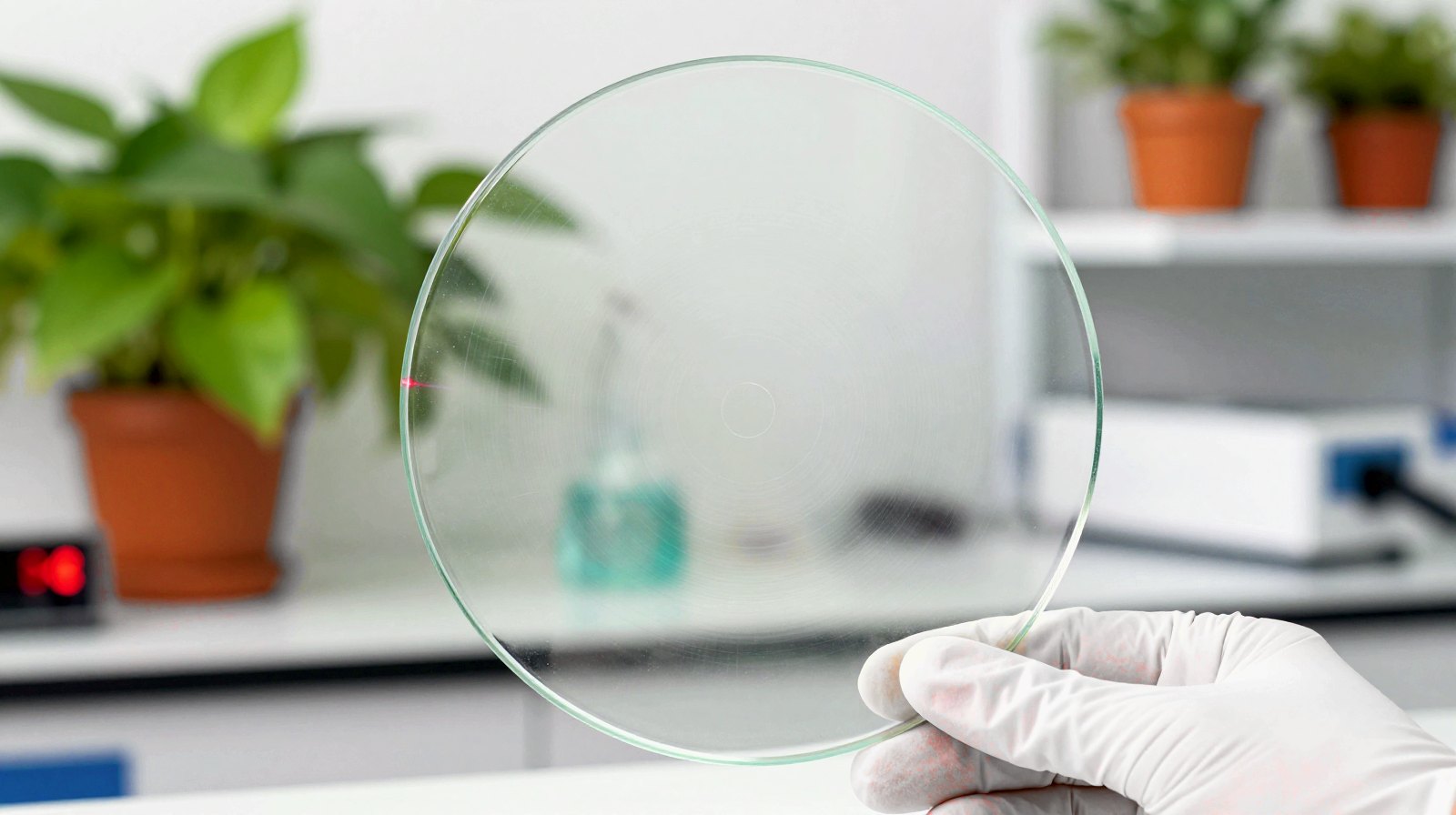
Imagine holding a glass disc about the size of a CD that could, in theory, carry 360 terabytes: roughly the space of 360 large laptop drives, and data that should outlast the hard drives, tapes and phones we use today by a very long way. That is the promise of the “5D memory crystal”, a glass storage technology born at the University of Southampton that its spin-off SPhotonix is now trying to turn into a real product for data centres.
Why it matters: the world keeps more and more “cold data”, files we rarely open but must keep for years, such as medical scans, legal records, scientific results and family photos. SPhotonix’s own comparison gives hard drives a five-year design life and says tape is typically copied to new media every seven to ten years. A medium that does not decay could save a lot of energy, money and copying. But the 360 TB figure is a ceiling, not something you can buy today.
How you write data into glass
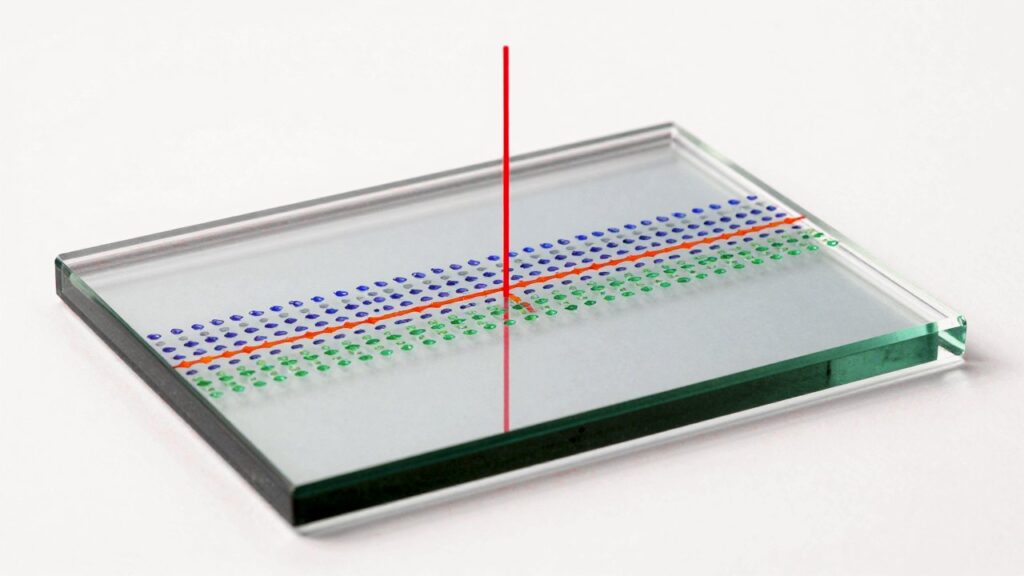
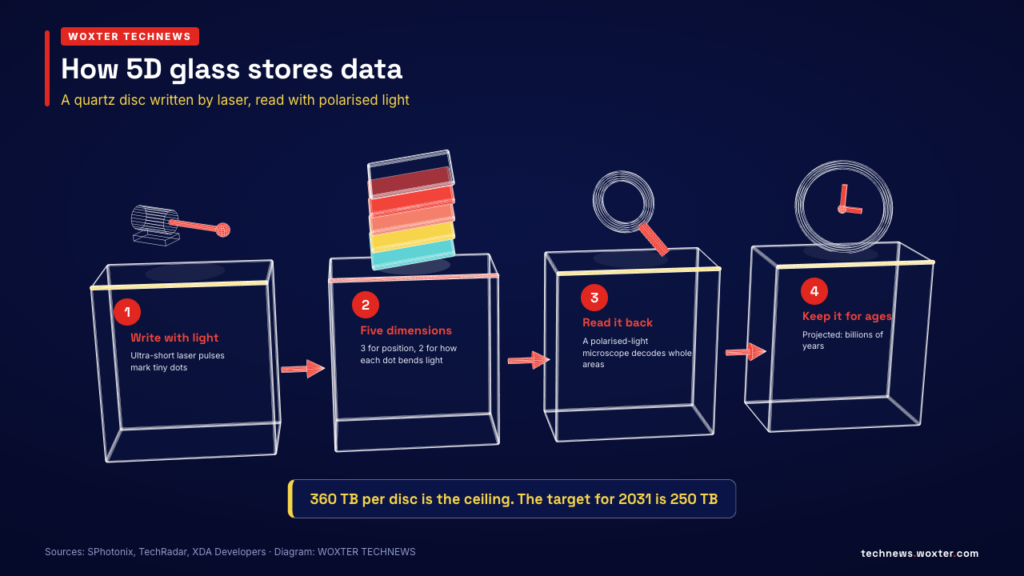
The disc is made of fused silica, a very pure quartz glass. A femtosecond laser (one that fires pulses lasting a millionth of a billionth of a second) writes tiny structures called voxels, 3D pixels, inside the glass, layer after layer, SPhotonix explains in its technical FAQ and as TechRadar reports.
Where does “5D” come from? Each voxel stores information in five ways. Three are simply its position: across, down and how deep in the glass. The other two are optical: how strongly the little structure bends polarised light and in which direction it points, according to SPhotonix. It is a bit like writing with dots that also have a colour and an angle, so every dot carries more than a simple yes or no. To read the data back, a microscope with polarised light photographs whole areas at once and software decodes them.
360 TB: what is real today and what is a target
Here the details matter. SPhotonix’s own FAQ says 360 TB per 5-inch (12.7 cm) disc is the theoretical maximum, and that its commercial target for 2031 is 250 TB per disc. It states clearly that these figures are “not currently available product capacity”. Some headlines skip that part: TechRadar’s summary says the crystal can “reliably store up to 360TB”, while XDA Developers describes it as capable of storing “up to” 360 terabytes.
Speed is the other honest limit. Current prototypes reportedly write at about 4 MB/s and read at about 30 MB/s, TechRadar reports. At 4 MB/s, filling a single terabyte would take roughly three days. The company’s goal is around 500 MB/s within three to four years. That is fine for archives, where waiting a few seconds for a file is acceptable, but this is not a replacement for the drive in your laptop.
Billions of years? Read the small print
You may have seen “13.8 billion years”, the age of the universe. TechRadar and XDA both report the claim that data could survive that long, with TechRadar linking it to storage at up to 190 °C and noting the figure comes from material science, not from real-world operating history. SPhotonix’s FAQ itself says accelerated ageing tests project “billions of years” at room temperature and that the glass withstands up to 1,000 °C, water, radiation and magnetic fields.
The fair reading: glass is extremely stable, and the projections are impressive, but nobody has watched one of these discs for even a century yet. “Projected” is the key word.
When could it be used?
Do not expect it in shops. In December 2025, SPhotonix said a field-ready reader was about 18 months away, with early price estimates of around $6,000 for a reader and about $30,000 for a writer, according to TechRadar and XDA. On its website the company plans data-centre pilots with industry partners in 2028 and industrial-scale systems by 2031. It also says it already writes and reads discs for customers at its facility in Switzerland.
What happens next
The milestones to watch are a reader you can actually install, a demonstrated density far above today’s, and speeds that make writing a full disc practical. If those arrive, our most precious data could one day sit on a quartz disc you can hold in one hand, in a drawer, for longer than any civilisation has existed. Until then, it is a brilliant idea on a long road from the lab to the data centre.
Read next
- Raspberry Pi vs Arduino: which makes the best home NAS?
- Beyond EUV: nanoimprint and the new technologies breaking frontiers for next-gen silicon
- Inkjet printing makes chip-scale atomic clocks easier to tune
The week's best tech stories, free
One email a week with the stories that matter, explained simply. No spam.
Sources
- 5D optical data storage: frequently asked questions – SPhotonix, consulted 28 November 2026
- 5D Memory Crystal and FemtoEtch roadmap – SPhotonix, consulted 28 November 2026
- 5D memory crystal storage could last until the end of the universe – TechRadar, 16 December 2025
- This glass 5D memory crystal could make data last for 13.8 billion years – XDA Developers, 15 December 2025