
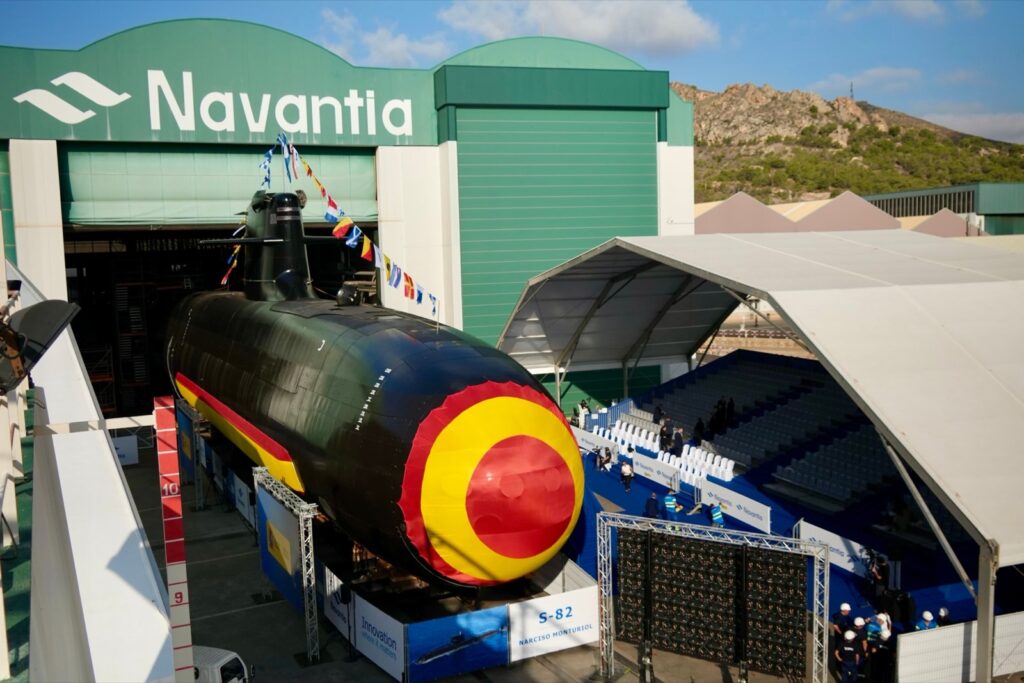
The new chapter of our documentary series SPANISH GENIUSES tells the story of a printer from Figueras who, in 1859, sealed himself and four other men inside a fish-shaped wooden boat and spent two hours and twenty minutes cut off from the air outside. His name was Narciso Monturiol. Chapter 7, “Narciso Monturiol: the Submarine Dreamer”, is out now: watch it here. Today his name is carried by one of the Spanish Navy’s most modern submarines, the S-82 Narciso Monturiol.
A printer from Figueras
Monturiol was born in Figueras in September 1819. He studied law in Barcelona but never practised, and in Madrid he learned the trade of typesetting, as Carles Puig-Pla and Antoni Roca Rosell explain in Contributions to Science.
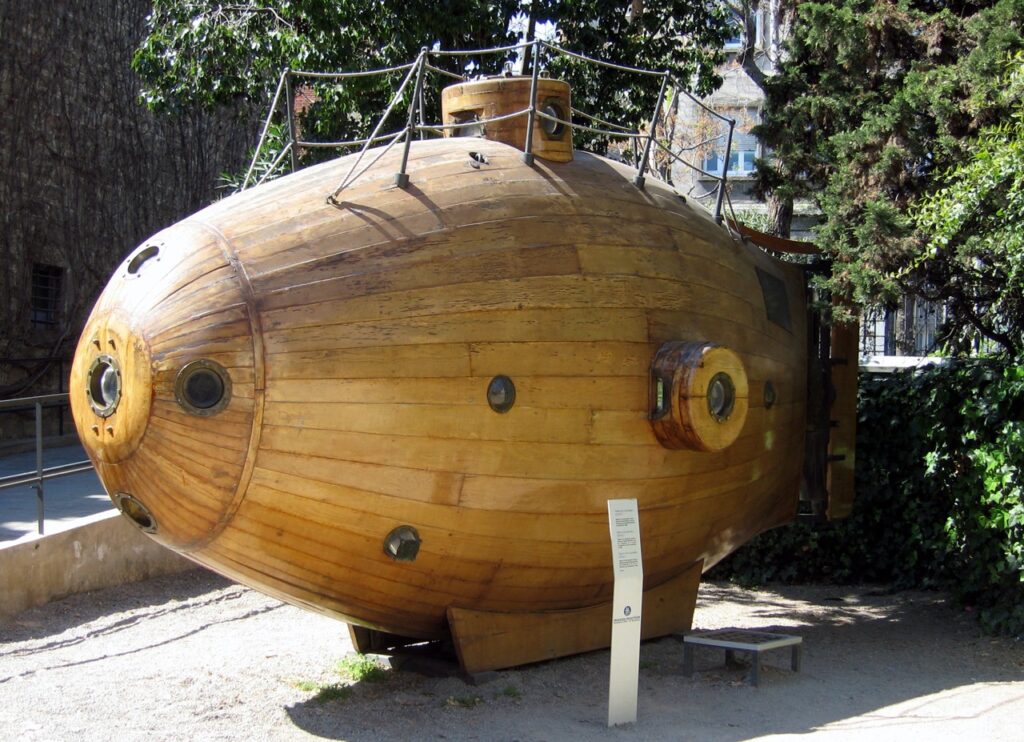
In 1855 he settled in Cadaqués, where he made a living painting portraits. There he saw the hard, dangerous work of the coral harvesters and began to imagine a boat that could sail under the water. He called it the Ictíneo, from the Greek words for fish and ship.
Two hours and twenty minutes under the harbour
The first Ictíneo was built in Barceloneta and launched on 28 June 1859. It was seven metres long, had a double hull and was driven by four men cranking a propeller by hand. It moved more slowly than a person out for a walk. But on 23 September, in front of a crowd on the quay, it went down to about ten metres, and its crew of five spent two hours and twenty minutes cut off from the atmosphere, as the Diario de Barcelona reported in a text reprinted in Monturiol’s own 1860 report.
A submarine paid for by the people
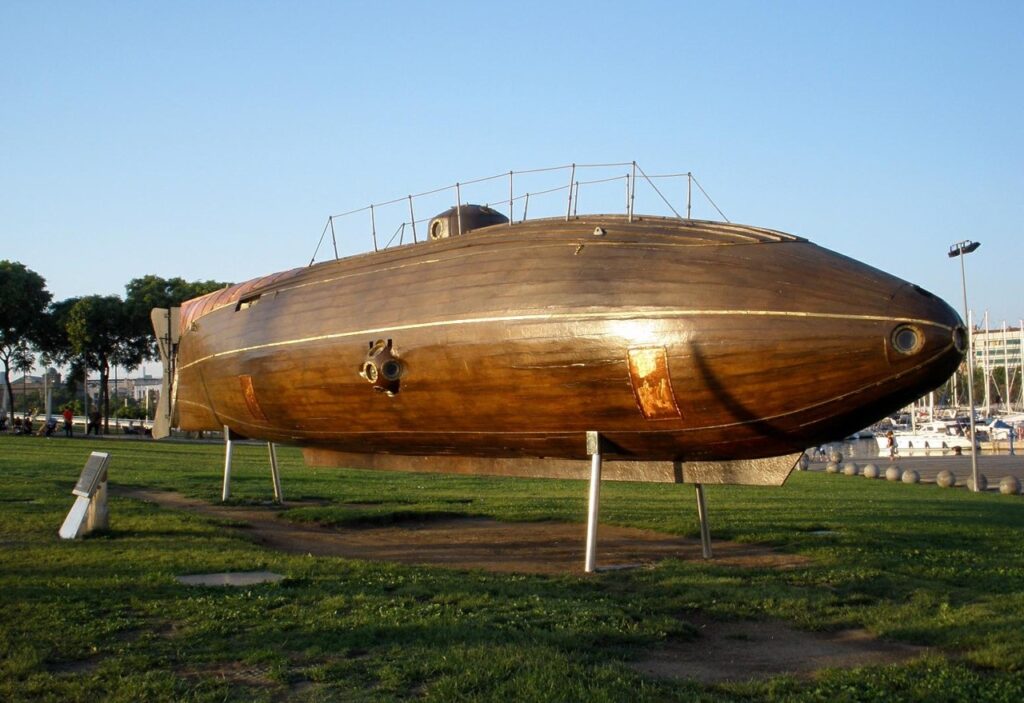
The official trial at Alicante in May 1861 did not win over the Government. So Monturiol asked the public for the money: there were concerts, plays and a national subscription, as Roca Rosell details in the journal Scripta Nova (in Spanish). That money finished the second Ictíneo, 17 metres long, launched on 2 October 1864. He looked for buyers abroad too: in July 1866 he offered the Ictíneo by letter to the United States Navy, as Barcelona Metropolitan recalls, but nothing came of it.
An engine built to run without air
Under arm power the boat was far too slow. So Monturiol turned to steam, and for underwater, where there is no air, he devised a chemical mixture that gave heat and also released oxygen. He tested it at the end of 1867, but historians disagree on how well it worked. The money ran out: in February 1868 his boats were seized, and that year the Ictíneo was broken up. Monturiol died in 1885. Today his name is back at sea on the submarine S-82 Narciso Monturiol, floated out at Cartagena in 2025, according to Spain’s Ministry of Defence (in Spanish).
How to watch the series
Chapter 7 is now on our YouTube channel and on the series page, told with real archive images and every fact checked against reliable sources. You can also watch Chapter 1, Leonardo Torres Quevedo, Chapter 2, Emilio Herrera, Chapter 3, Juan de la Cierva, Chapter 4, Isabel Zendal, Chapter 5, Ramón y Cajal, and Chapter 6, Jerónimo de Ayanz, or see every episode on the SPANISH GENIUSES page. Subscribe to TechNews on YouTube and turn on notifications so you don’t miss the next episode.
Read next
The week's best tech stories, free
One email a week with the stories that matter, explained simply. No spam.
Sources
- Narcís Monturiol (1819–1885), pioneer of submarine navigation – Carles Puig-Pla and Antoni Roca Rosell, Contributions to Science 5 (2), Institut d’Estudis Catalans, 2009
- La ingeniería y el proyecto del Ictíneo de Monturiol (1857-1868) – Antoni Roca Rosell, Scripta Nova VI, 119 (96), University of Barcelona, 2002 (in Spanish)
- Memoria sobre la navegación submarina – Narciso Monturiol, Barcelona, 1860 (in Spanish)
- Narcís Monturiol i Estarriol – Gran Enciclopèdia Catalana (in Catalan)
- Narciso Monturiol y la navegación submarina – Carmen Torres López, Cátedra de Historia y Patrimonio Naval (in Spanish)
- Robles asiste a la puesta a flote del S-82 “Narciso Monturiol” – La Moncloa, 3 October 2025 (in Spanish)
- Exploring the Depths – Nick Lloyd, Barcelona Metropolitan