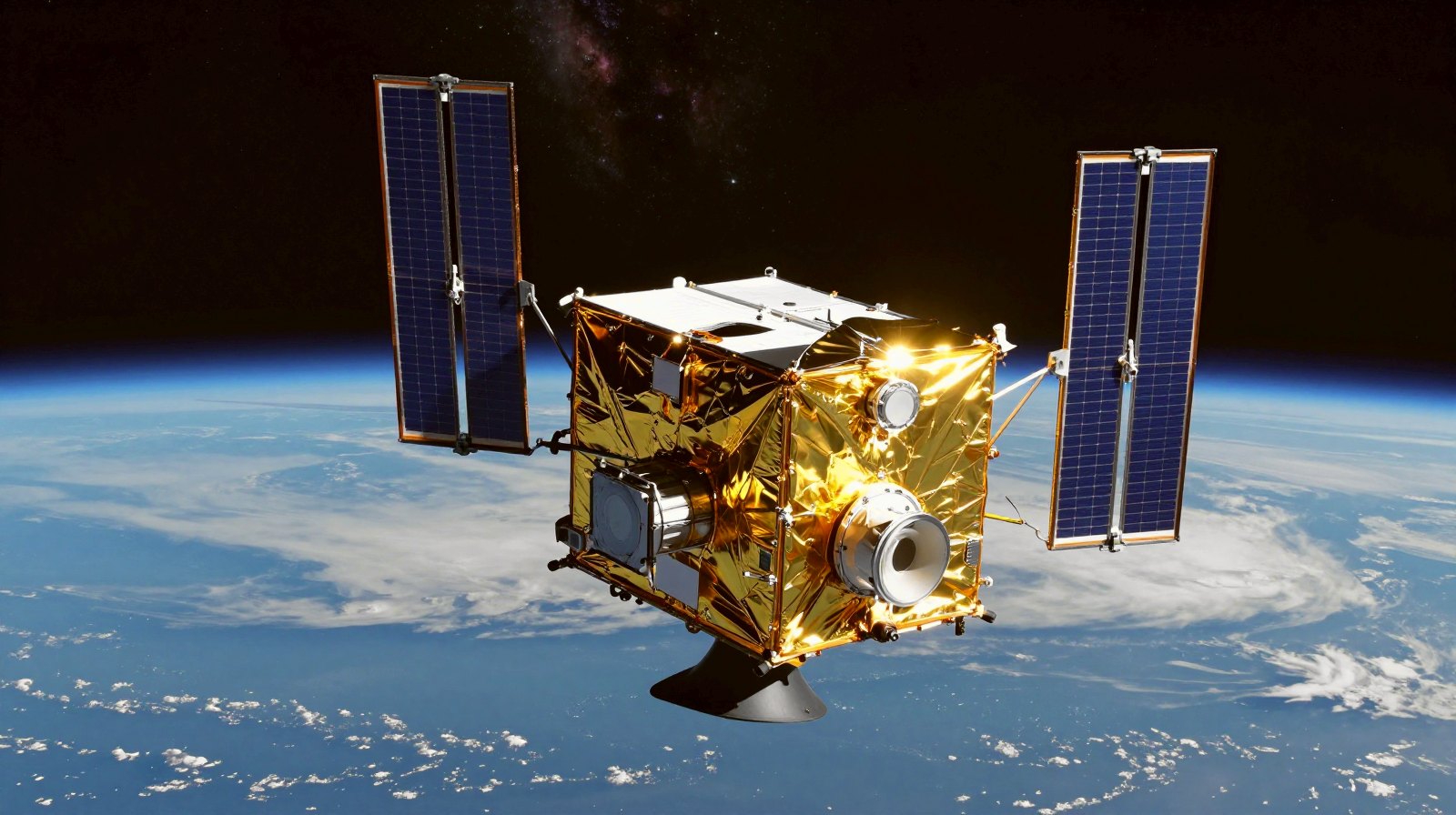
After nearly 22 years watching the most violent explosions in the universe, NASA’s Swift observatory has come home. It fell back into Earth’s atmosphere on Wednesday, 4 November 2026, at 7:39 a.m. EST, over North Sumatra in Indonesia, NASA reports. Most of it burned up, though some parts may have survived.
Why it matters: Swift was built for a two-year mission and worked for more than ten times that long. It also leaves behind a story of a daring rescue that almost happened.
What Swift did
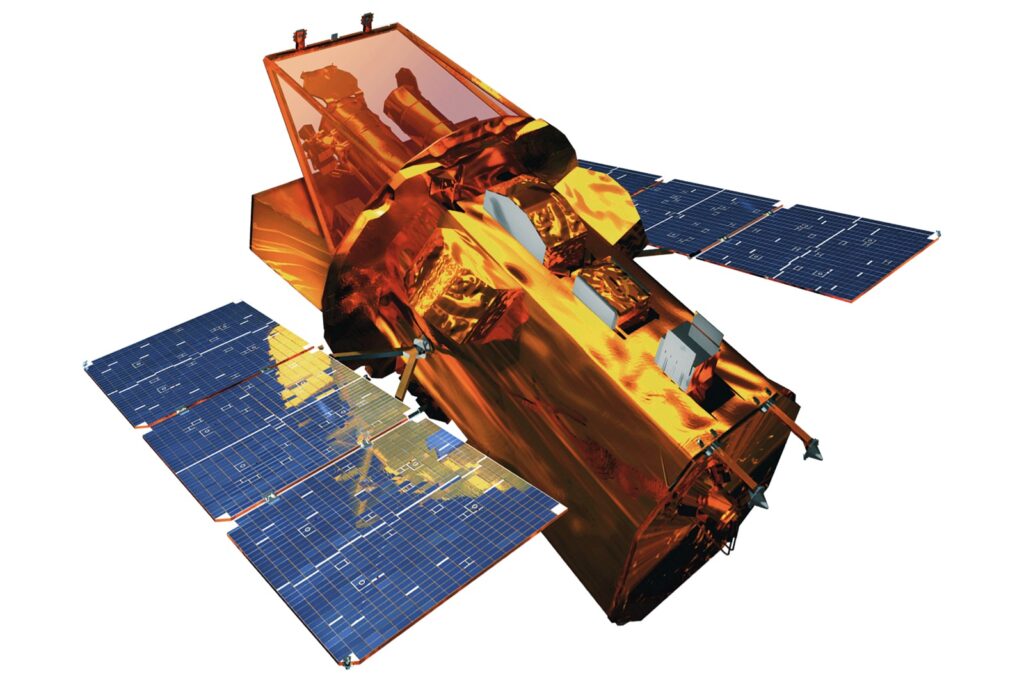
Swift launched on 20 November 2004 to hunt gamma-ray bursts, the brightest explosions known, made when giant stars collapse or dead stars collide. Its trick was speed. When a burst flashed somewhere in the sky, Swift swung round within minutes and alerted telescopes around the world.
- More than 2,000 gamma-ray bursts and more than 1,400 supernovas studied, Spaceflight Now reports.
- 2005: the first afterglow ever seen from a short gamma-ray burst, a flash lasting just 0.03 seconds.
- 2008: a burst 7.5 billion light-years away briefly became bright enough to see with the naked eye.
- 2017: bright ultraviolet light from the wreckage of two merging neutron stars, after gravitational-wave detectors felt the crash.
Why it fell
Swift had no engine of its own. Thin air at the edge of space slowly dragged it down, and NASA said strong solar activity heated and puffed up the upper atmosphere, creating more drag than expected. From February to August, the team even angled the spacecraft to slow its fall and buy time.
The rescue that didn’t happen
NASA paid the company Katalyst Space $30 million to send a robotic spacecraft to grab Swift and push it higher. It launched on 3 July. About a week later, a power switch for its steering wheels failed and the craft began to tumble. NASA called off the capture on 19 August. Swift made its last observation on 20 October.
NASA put the chance of the falling pieces harming anyone at about 1 in 2,100.
What happens next
Swift is gone, but its science isn’t. Its data, about 12 terabytes used in roughly 7,000 research papers, stays open to anyone in NASA’s archive. And the failed rescue was still a first try at servicing an old science satellite in orbit, something engineers will want to get right for the next one.
Read next
- Voyager 1 will be one light-day from Earth on 18 November
- Hubble twist: supernova winds may not have cleared the cosmic fog
The week's best tech stories, free
One email a week with the stories that matter, explained simply. No spam.
Sources
- NASA’s Swift Observatory Re-Entered Atmosphere – NASA Science, 4 November 2026
- NASA’s Neil Gehrels Swift Observatory to burn up this week after more than two decades in space – Spaceflight Now, 3 November 2026
- NASA space telescope crashes back to Earth after two decades – BBC Sky at Night Magazine, November 2026
- NASA’s Swift telescope falls to Earth after nearly 22 years in space – ScienceDaily, 6 November 2026