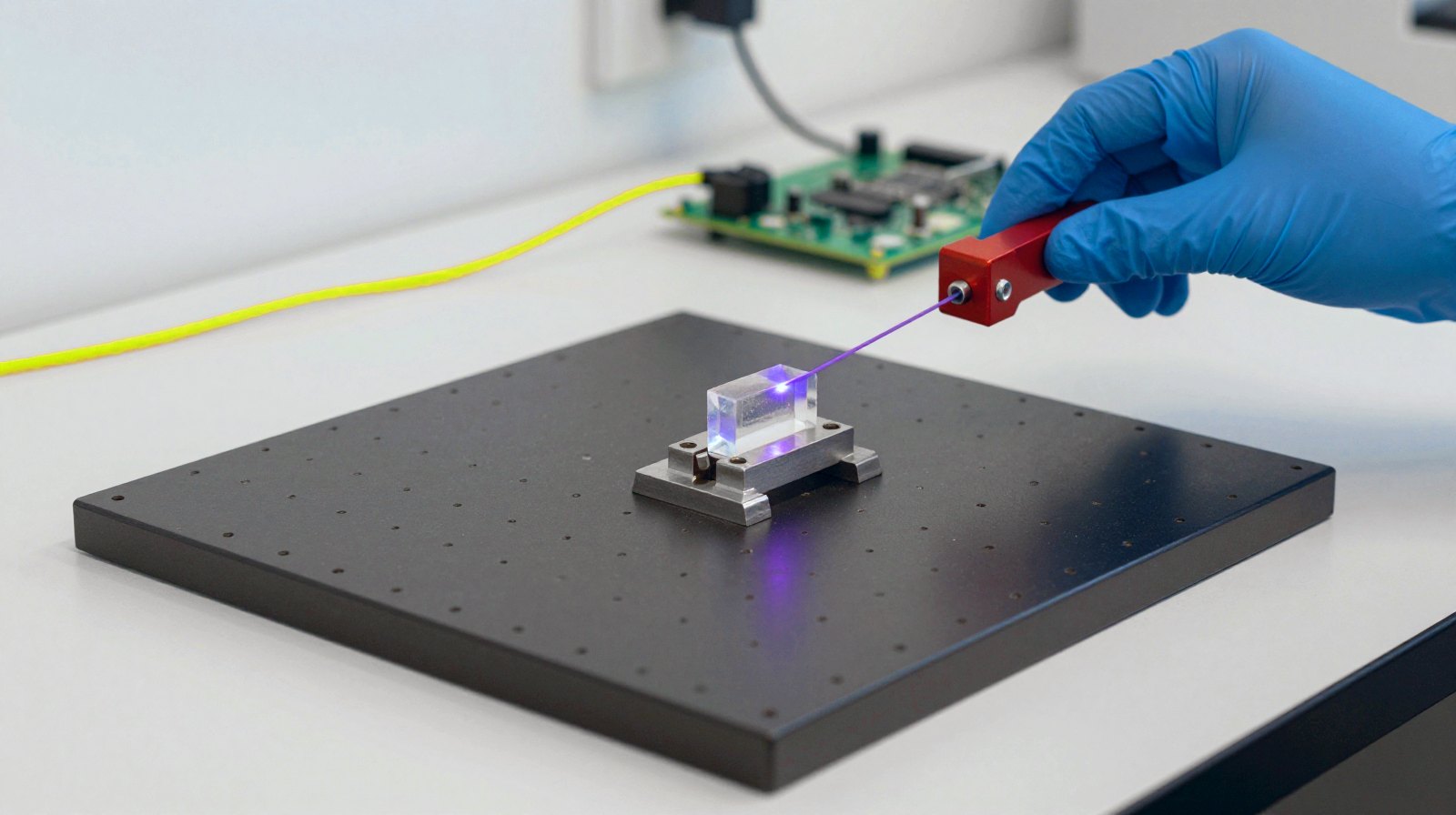
For more than 70 years the world’s best clocks have counted time by watching electrons jump inside atoms. This week, two research teams showed that the heart of the atom can do it too. Physicists in Vienna and Beijing each built a working nuclear clock, one that ticks to the rhythm of the tiny nucleus of a thorium atom. The two studies were published side by side in Nature on 7 October.
Why it matters: ultra-precise time is the invisible backbone of modern life, from satellite navigation to phone networks. A nucleus is far better shielded from the outside world than the electrons around it, so a clock built on it could one day beat today’s champions. And the Vienna machine did something no nuclear clock had done before: it kept itself on time, with no help from an ordinary atomic clock, for more than 24 hours.
How do you build a clock out of an atom’s nucleus?
Every clock needs something that swings back and forth at a perfectly steady rate: a pendulum, a quartz crystal, or, in an atomic clock, the light that atoms absorb at one exact frequency. A nuclear clock uses the same trick one level deeper, inside the nucleus itself.
Most nuclei need enormous energy to change state, far beyond what a laser can deliver. Thorium-229 is the famous exception: two of its energy states sit unusually close together, so a laser can nudge the nucleus from one to the other. Scientists proposed using this for a clock back in 2003, according to the Nature press release. It took until April 2024 for the TU Wien team in Vienna and Germany’s national metrology institute PTB to finally excite those nuclei with a laser, ScienceDaily reports.
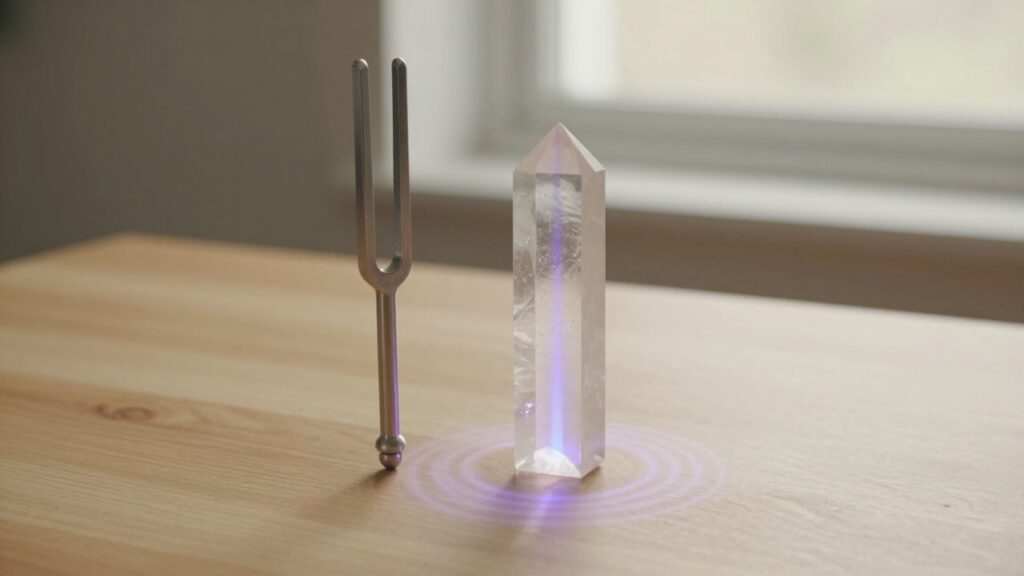
Both new clocks hide the thorium nuclei inside small calcium fluoride crystals. Here is the idea behind the Vienna design, as the TU Wien release describes it: shine an ultraviolet laser at the crystal. The nuclei absorb the light only when its frequency is exactly right. If the laser drifts even slightly, less light is absorbed, the system notices, and it nudges the laser back. Think of a singer holding a note against a tuning fork, correcting the moment they slip off pitch.
What the two teams achieved
Vienna (TU Wien with PTB): the first self-stabilising nuclear clock. Until now, thorium experiments needed a conventional atomic clock to keep the laser steady. The new setup ran on its own for more than 24 hours. Over one day it reached a precision of about 10-15. If it could keep that up forever, that would mean an error of roughly one second in 30 million years. That figure is extrapolated from a day of measurement, not from a 30-million-year test, as ScienceDaily points out. The team also used the clock for a real physics experiment, a search for signs of dark matter, with a sensitivity that competes with the best atomic clocks, according to the Nature press release.
Beijing (Tsinghua University): a team led by physicist Shiqian Ding locked its own ultraviolet laser to the thorium transition. Two separately grown crystals kept almost exactly the same time, and early results suggest the Beijing clock is about six times more stable than the Vienna one, the South China Morning Post reports. That matters because a clock is only useful if copies built in different labs agree with each other.
Not the world’s best clock, yet
Let’s be clear about where this stands. “This is not yet at the level of the world’s best optical atomic clocks,” Thorsten Schumm, who leads the Vienna group, said in the ScienceDaily report, while calling it a fantastic result for a first prototype. The best optical atomic clocks are still far ahead. What changed this week is that the nuclear clock went from an idea to working machines in two countries. According to the Nature press release, the Vienna authors estimate that further work could make it about 10,000 times more stable.
Why bother, if atomic clocks are already so good? Because a nucleus is tens of thousands of times smaller than the atom around it, and much less bothered by stray electric and magnetic fields. “Much higher precision is possible in principle,” Schumm says in the Interesting Engineering coverage. And because the nuclei sit in a solid crystal rather than in a cloud of atoms trapped in a vacuum, nuclear clocks could one day become more compact.
What happens next
The Vienna team plans stronger lasers and better thorium crystals. Further ahead, Interesting Engineering lists portable clocks that sense tiny gravity differences underground, better navigation for deep-space probes, and tests of whether the constants of nature are truly constant. For now, the headline is simpler, and rather wonderful: humanity has learned to tell time with the heart of an atom.
The week's best tech stories, free
One email a week with the stories that matter, explained simply. No spam.
Sources
- Physics: New nuclear clocks on the block – Nature press release, 8 October 2026 (papers: L. Toscani De Col et al., “A thorium-229 optical nuclear clock with feedback loop”, and B. Huang et al., “A nuclear clock synchronized to 229Th”, Nature, 7 October 2026)
- A thorium-229 optical nuclear clock with feedback loop – L. Toscani De Col et al., Nature, 7 October 2026
- The first self-stabilising nuclear clock ticks in Vienna – TU Wien press release (idw), 7 October 2026
- Scientists build a nuclear clock that could make atomic clocks obsolete – ScienceDaily, 10 October 2026
- New thorium-based nuclear clock operates continuously for 24 hours – Interesting Engineering, 7 October 2026
- China’s thorium-229 nuclear clock beats Vienna’s on stability, studies show – South China Morning Post (via The Star), 9 October 2026