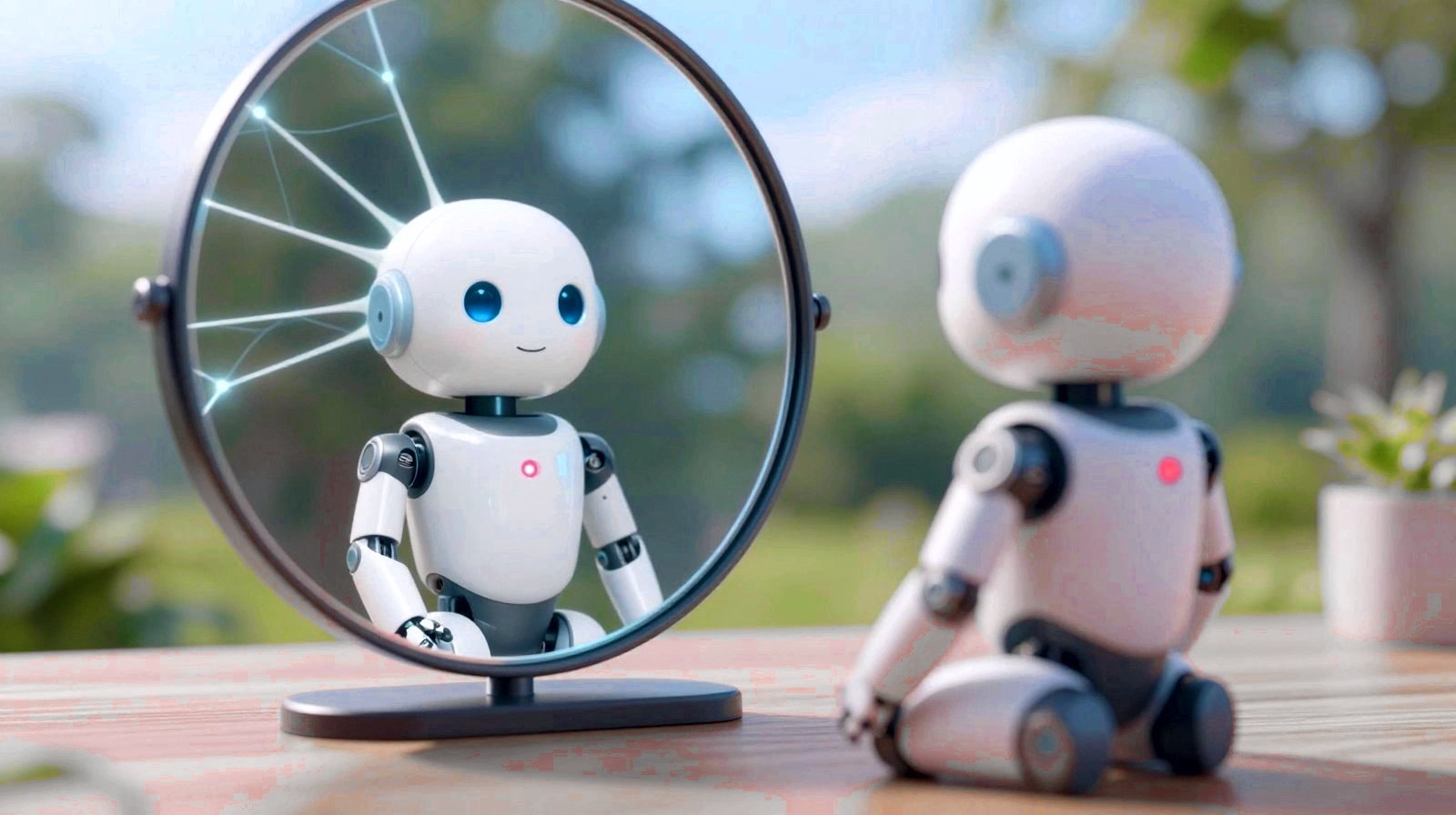
Can an AI be conscious? It sounds like a question for a late-night chat, but a growing group of neuroscientists, philosophers and computer scientists now treats it as a scientific problem with a method. And a new study from LMU Munich, published in the journal Cognition this month, adds a twist: even when an AI behaves exactly like a human, most of us still refuse to call it conscious.
Why it matters: millions of people now chat with AI assistants every day, some of them as friends or partners. Whether those systems could ever feel anything changes how we should design them, regulate them and treat them. Getting it wrong in either direction has a cost.
First, what do scientists mean by “conscious”?
In this debate, consciousness does not mean being clever or being awake. It means having experiences: there is something it is like to be you, tasting coffee or feeling a headache. Philosophers call this “phenomenal consciousness”. A calculator can add numbers brilliantly and, as far as anyone knows, feels nothing at all.
That is what makes the question so hard. Intelligence can be measured with tests. Experience happens on the inside, and nobody has a meter for it, not even for other humans. We assume other people are conscious because they are built like us.
Why “just ask it” does not work
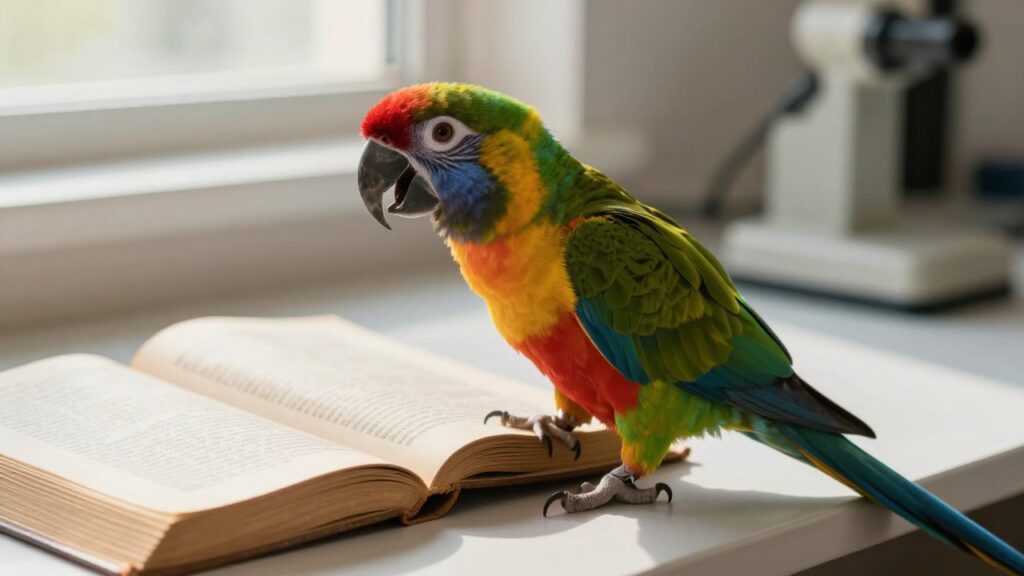
The obvious test is to ask the chatbot whether it has feelings. The problem: today’s AI models learn from enormous amounts of human writing, so they are excellent at sounding like a person who has feelings. As Nature reported (republished by Scientific American) when researchers first proposed a checklist in 2023, behaviour-based tests are weak evidence for AI, because these systems are so good at mimicking us.
It is a bit like judging whether a parrot understands a poem because it can recite it perfectly. The performance is real; what is going on inside is a separate question.
The scientists’ approach: a checklist from brain theories
In August 2023, 19 researchers published a report with a different idea. Instead of looking at what an AI says, look at how it processes information, and compare that with the leading scientific theories of how consciousness arises in brains. They drew on five families of theories:
- Global workspace theory: the brain has many specialised modules working in parallel, and consciousness is what happens when information is broadcast to all of them at once, like a message on a shared noticeboard.
- Recurrent processing theory: information that loops back and forth, rather than flowing one way only, is key.
- Higher-order theories: a system is conscious of something when it also represents its own mental state (“I am seeing red”).
- Predictive processing: the brain constantly predicts what comes next and corrects itself.
- Attention schema theory: the brain keeps a simplified model of its own attention.
From each theory they extracted “indicator properties”: features that, if a theory is right, should make consciousness more likely. You can check an AI’s architecture for these features, much as Robert Long, one of the authors, told Nature: by looking at the system’s design and how information flows through it.
The approach rests on one big assumption called computational functionalism: that what matters for consciousness is the pattern of information processing, not whether it runs on neurons or silicon. Not everyone accepts it, and the authors say so openly.
The verdict so far: no, but no wall either
The 2023 report concluded that current AI systems do not appear to be conscious, but it found no obvious technical barriers to building systems that tick the indicator boxes. Large language models arguably show a few of the global-workspace features, according to Nature’s summary, but nothing makes them a strong candidate.
In late 2025 a peer-reviewed version of the method appeared in Trends in Cognitive Sciences, signed by Patrick Butlin, Robert Long and colleagues including AI pioneer Yoshua Bengio and philosopher David Chalmers. It argues there is an urgent need for rigorous ways to assess AI for consciousness, and proposes using the theories to set degrees of belief, rather than a yes-or-no answer. Semafor’s coverage summed up the bottom line: no current AI system is conscious, but future ones may be.
Critics point out that the checklist sidesteps the “hard problem”: even if a machine ticks every box, that does not prove it feels anything. The authors’ answer is essentially that imperfect evidence beats no evidence.
The new twist: we judge AI differently
The LMU study looks at the other side of the screen: us. Led by Louis Longin of LMU’s Chair of Philosophy of Mind, with Jurgis Karpus, Nadine Meertens, Bahador Bahrami and Ophelia Deroy, the team asked nearly 1,100 people in the UK, across five experiments, to read short scenarios, according to the university and Neuroscience News.
In each scenario an agent reacted more or less to its surroundings, for example to a sound or to someone’s emotions. Half the participants read about an AI, the other half about a human doing exactly the same things. Then they rated how conscious and how aware the agent was.
- More responsive agents were rated higher on both, whether AI or human.
- For consciousness, there was a clear gap: even the most responsive AI was judged less conscious than the least responsive human.
- For awareness, AI and humans were rated in much the same way.
“People consistently attribute less consciousness to AI than humans – even when their behaviour is identical,” Longin said in the university’s announcement. The researchers think the word “consciousness” carries a deep sense of inner experience that people reserve for living beings, while “awareness” sounds more technical. The paper’s title calls this a kind of essentialism: the belief that being human, not behaviour, is what counts.
Why both sides of the story matter
Put the two lines of research together and you get a useful picture. Scientists say today’s AI is not conscious but cannot rule out future systems. Ordinary people, meanwhile, happily say an AI “notices” or “knows” things while drawing a line at feelings.
That gap matters in two directions. If people start treating chatbots as beings with feelings, they may trust them too much or form one-sided attachments; some industry leaders, Semafor notes, have warned against building “seemingly conscious” AI for that reason. And if a future system ever did meet the scientific bar, our instinct to dismiss it could lead us to ignore a real moral question.
Key takeaways
- Consciousness here means having experiences, not being smart.
- Asking a chatbot is weak evidence: it is trained to sound human.
- Scientists check architecture against brain theories; current AI does not qualify, future AI might.
- People draw a line: AI can be “aware” in their eyes, but rarely “conscious”, even when it behaves like us.
What happens next
The indicator method is still being debated in scientific journals, especially the tricky question of how to tell a real indicator from clever mimicry. Expect the question to keep coming up as AI agents become more capable. A good habit in the meantime: enjoy your AI assistant, but remember that sounding caring and being able to care are not the same thing. For a look at how AI agents behave in the real world, read our story on OpenAI’s apology to Australia.
The week's best tech stories, free
One email a week with the stories that matter, explained simply. No spam.
Sources
- When AI behaves like us, we still don’t think it is conscious – LMU Munich, 2 October 2026
- Can an AI ever truly be “conscious” in the eyes of humans? – Neuroscience News, 2 October 2026
- AI is not as conscious as humans: Essentialism in mental state attributions to artificial systems – Longin et al., Cognition, 2026
- Identifying indicators of consciousness in AI systems – Butlin, Long et al., Trends in Cognitive Sciences, 2025 (doi:10.1016/j.tics.2025.10.011)
- No AI is conscious yet, but future systems may be, new study finds – Semafor, 26 November 2025
- If AI becomes conscious, here’s how we can tell – Nature / Scientific American, 24 August 2023
- Consciousness in Artificial Intelligence: Insights from the Science of Consciousness – Butlin, Long et al., arXiv, 17 August 2023