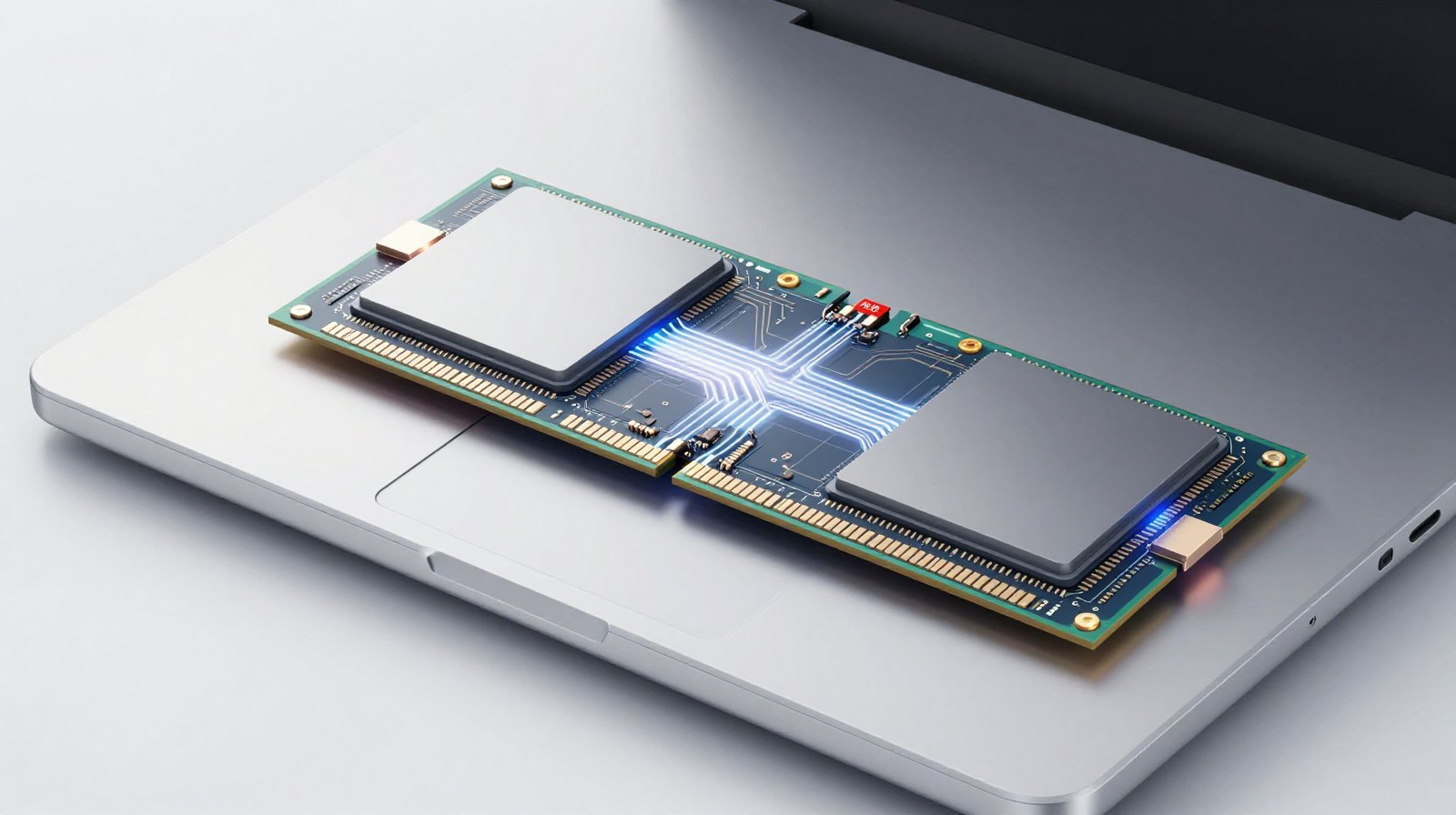
Until now, the most powerful AI models lived in data centres: you typed a question, it travelled to a server, and the answer came back. A new kind of laptop changes that. Nvidia’s RTX Spark chip, launching in Microsoft’s Surface Laptop Ultra and in machines from Dell, Lenovo, MSI, HP and ASUS, is built to run large AI models on the laptop itself, even with no internet connection.
Why it matters: running AI locally means your documents never leave the machine, there is no waiting for a server, and it keeps working on a plane or in a basement. The catch, for now, is the price.
What was announced
On 7 October Microsoft opened pre-orders for the Surface Laptop Ultra, its first laptop built on RTX Spark, with prices from $2,599 and availability starting 16 October, according to Microsoft’s announcement. The chip combines two parts on one package:
- an Nvidia Grace processor (CPU) with up to 20 cores, the general-purpose “brain” that runs Windows and your apps;
- an Nvidia Blackwell graphics chip (GPU) with up to 6,144 cores, the part that does the heavy maths AI needs.
Both share up to 128 GB of “unified” memory. Microsoft says the top versions reach up to one petaflop of AI performance and can run models with more than 120 billion parameters locally. It also notes that the one-petaflop figure is a theoretical peak measured in a very compact number format (FP4), so real-world speed will be lower.
Parameters and memory, explained
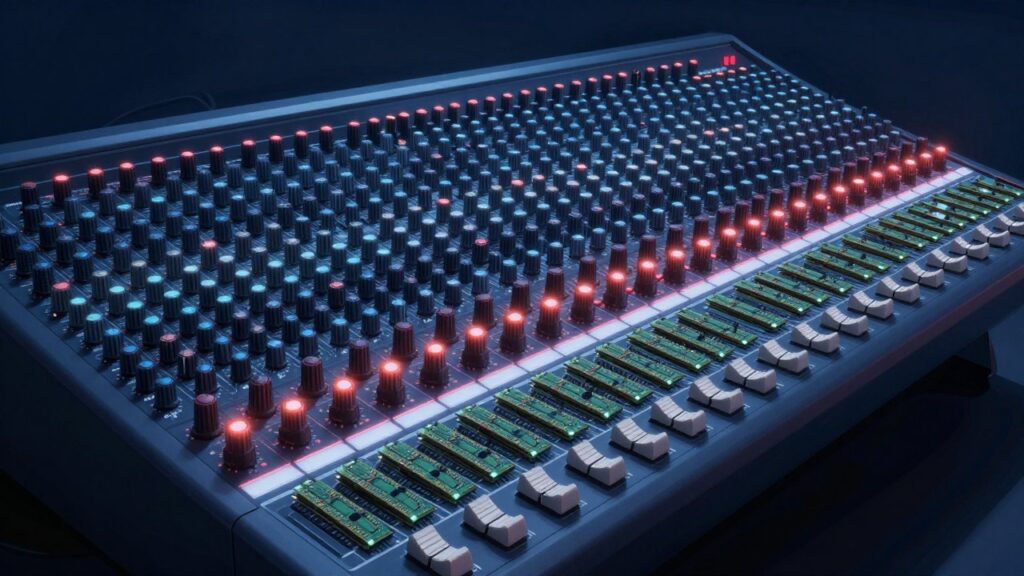
An AI model’s “parameters” are its learned settings, a bit like the millions of tiny knobs on a giant mixing desk. More parameters usually means a more capable model, but every one of them has to sit in memory while the model runs.
Here is a useful rule of thumb. When a model is compressed to 4 bits per parameter, a common trick for running it on personal computers, each parameter takes about half a byte. A 120-billion-parameter model then needs roughly 60 GB of memory just for itself, before your browser, documents and Windows get their share. That is why the 128 GB versions matter for the biggest models.
The memory you get depends on what you pay
This is the detail to check before buying. TrendForce reports that the entry Surface Laptop Ultra at $2,599 has 24 GB of memory, while the top configuration, with a 20-core processor, 128 GB of memory and 1 TB of storage, costs $5,899. Following the rule of thumb above, 24 GB is plenty for smaller models but nowhere near enough for a 120-billion-parameter one.
Other brands are in the same price band. Citing The Verge, TrendForce says RTX Spark laptops from Dell, Lenovo, MSI, HP and ASUS start at around $2,599 and reach nearly $7,000. It links the high prices to a shortage of memory chips, and notes that when Microsoft first pitched AI PCs about two years ago, they mostly cost under $2,000.
Will your AI assistant run offline?
Not always. TrendForce reports that Microsoft’s Copilot will keep the most demanding tasks in the cloud and use local models where cost or privacy matter more. In practice, the laptop gives you the option of running AI locally rather than replacing online services entirely. Microsoft’s own examples focus on developers: running and testing models on the machine, and using local models with GitHub Copilot for coding.
Who should care
- Developers and researchers who test AI models and want privacy or no cloud bills: this is the clearest audience.
- Creators and gamers with a big budget: Microsoft says games run locally with ray tracing and DLSS, Nvidia’s AI upscaling, in supported titles.
- Everyone else: wait. Prices are high, European prices have not been announced, and independent tests will show whether the performance claims hold up.
What happens next
The first machines arrive on 16 October, and independent reviews should follow soon after. The key questions are how fast large models really run, how hot and loud the laptops get, and whether memory prices come down.
Sources
- Pre-order our most powerful Surface devices ever – Microsoft, 7 October 2026
- Microsoft Expands Local AI Push With NVIDIA RTX Spark; Surface Ultra Priced Up to $5,899 as Memory Costs Rise – TrendForce, 8 October 2026