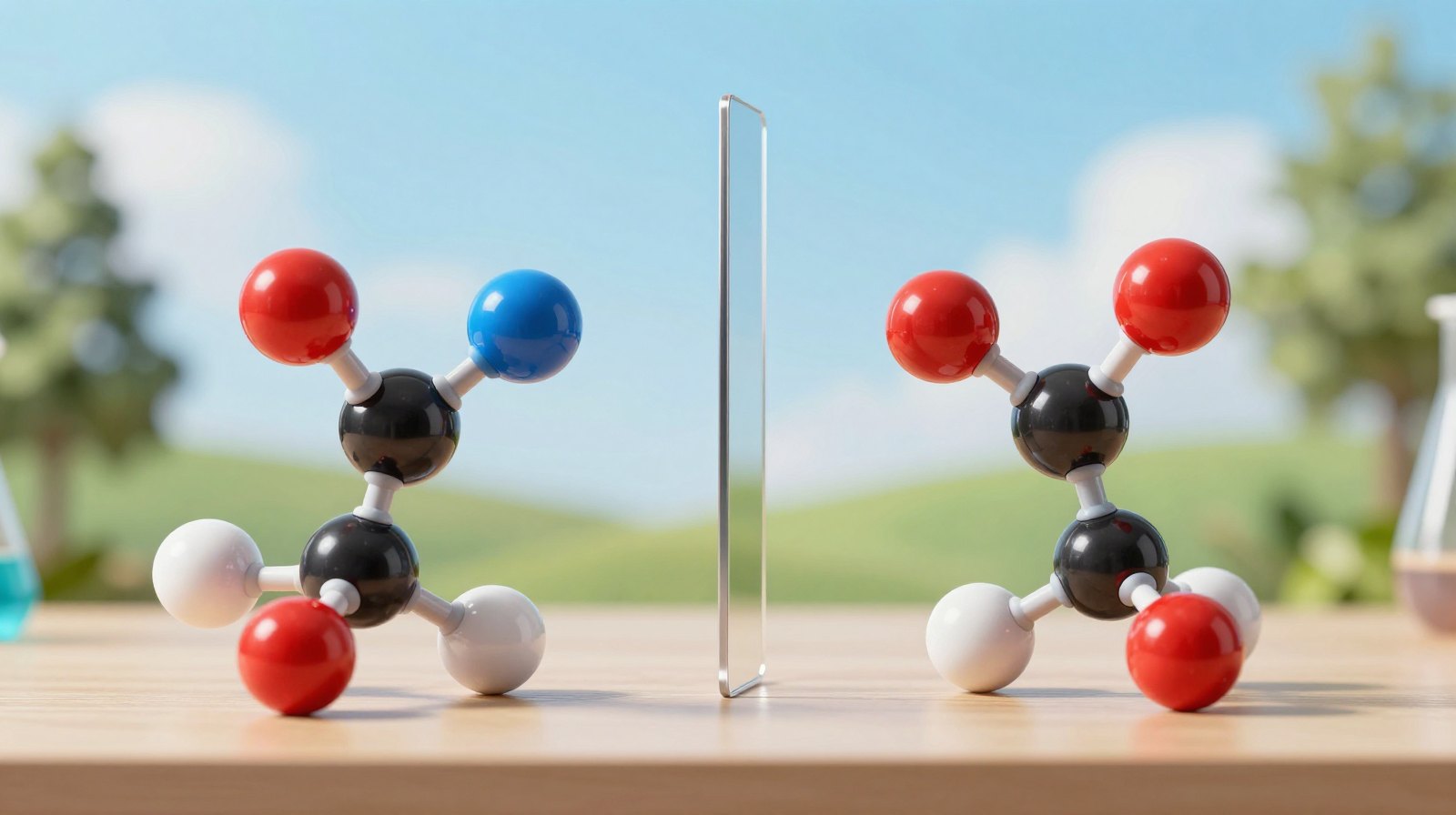
Hold your two hands up in front of you. They look the same, yet you can never stack one perfectly on top of the other: one is the mirror image of the other. Many molecules work exactly like that, and the two chemists who taught us how to make just one “hand” on purpose have won the 2026 Nobel Prize in Chemistry.
The prize goes to Henri B. Kagan of France and Kenso Soai of Japan “for the discovery of non-linear effects and autocatalysis in asymmetric organic synthesis”, according to the Royal Swedish Academy of Sciences. That mouthful has a wonderfully simple heart, so let’s unpack it.
Left-handed and right-handed molecules
Chemists call this handedness chirality. Life is very picky about it. As Scientific American explains, almost all the amino acids in living things are left-handed, while sugars are generally right-handed. Living organisms use only one form of each, the Academy notes.
That’s a puzzle, because ordinary chemistry in a flask usually makes both hands in equal amounts, a fifty-fifty mix. And for medicines, the difference matters: drug developers often need just one of the two forms.
What Kagan discovered
In 1986, Henri Kagan found a new way to steer chemical reactions so they produce a bigger surplus of one mirror image than anyone thought possible, the Academy says. The surprise was that a slightly lopsided starting point could be amplified into a much more lopsided result. That is the “non-linear effect” in the prize citation: the output is not just a faithful copy of the input, it can be boosted.
What Soai discovered
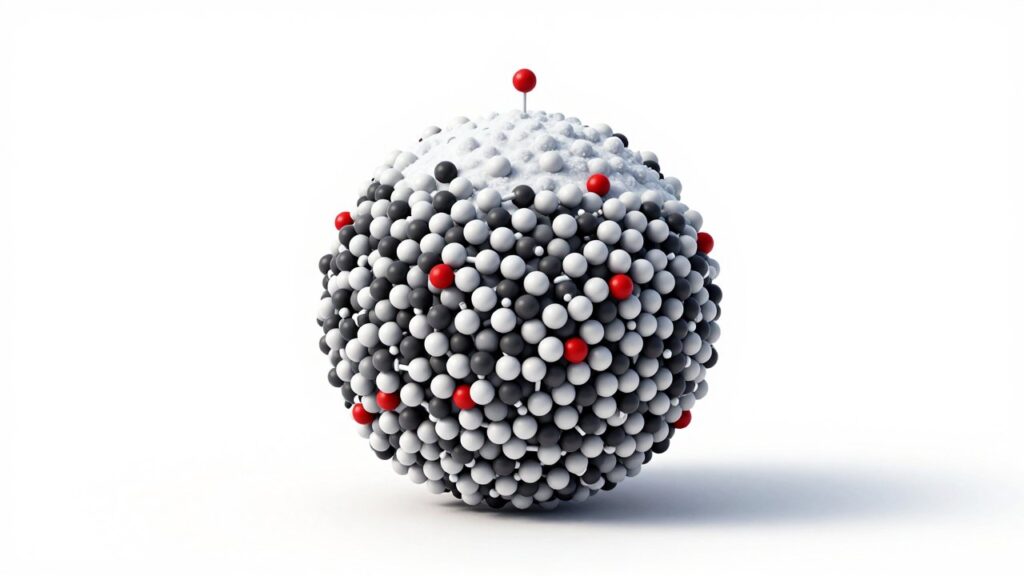
Kenso Soai went a step further. In 1995 he published the design of the first reaction that could, in principle, produce a single mirror image. In 2003 he achieved it, making only one of the two forms, something nobody had done outside living things, according to the Academy.
His trick is called autocatalysis: the product of the reaction helps make more of itself, in the same hand. Scientific American describes it as a chiral product acting as its own catalyst, so a tiny head start snowballs into an army of identical “hands”.
Why it matters
- Better medicines: the Academy says the work has been decisive for chemists designing reactions to manufacture pharmaceuticals.
- The origin of life: it shows how this one-handedness of life could appear on its own, which may help explain how life first arose on Earth, as Scientific American reports.
- A healthy dose of humility: “This is not the final answer,” Soai said, according to Scientific American.
The winners and what happens next
Kagan was born in 1930 near Paris and is professor emeritus at the former Université Paris-Sud. Soai was born in 1950 in Hiroshima and is professor emeritus at the Tokyo University of Science. They share the prize of 12 million Swedish kronor equally, says the Academy. Soai called the day he heard the news “one of the most exciting days in my life”, Scientific American reports. The prizes are presented in Stockholm on 10 December.
Sources
- The Nobel Prize in Chemistry 2026 – Royal Swedish Academy of Sciences, 7 October 2026
- 2026 Nobel Prize in Chemistry awarded to pioneers in ‘mirror’ chemistry – Scientific American, 7 October 2026