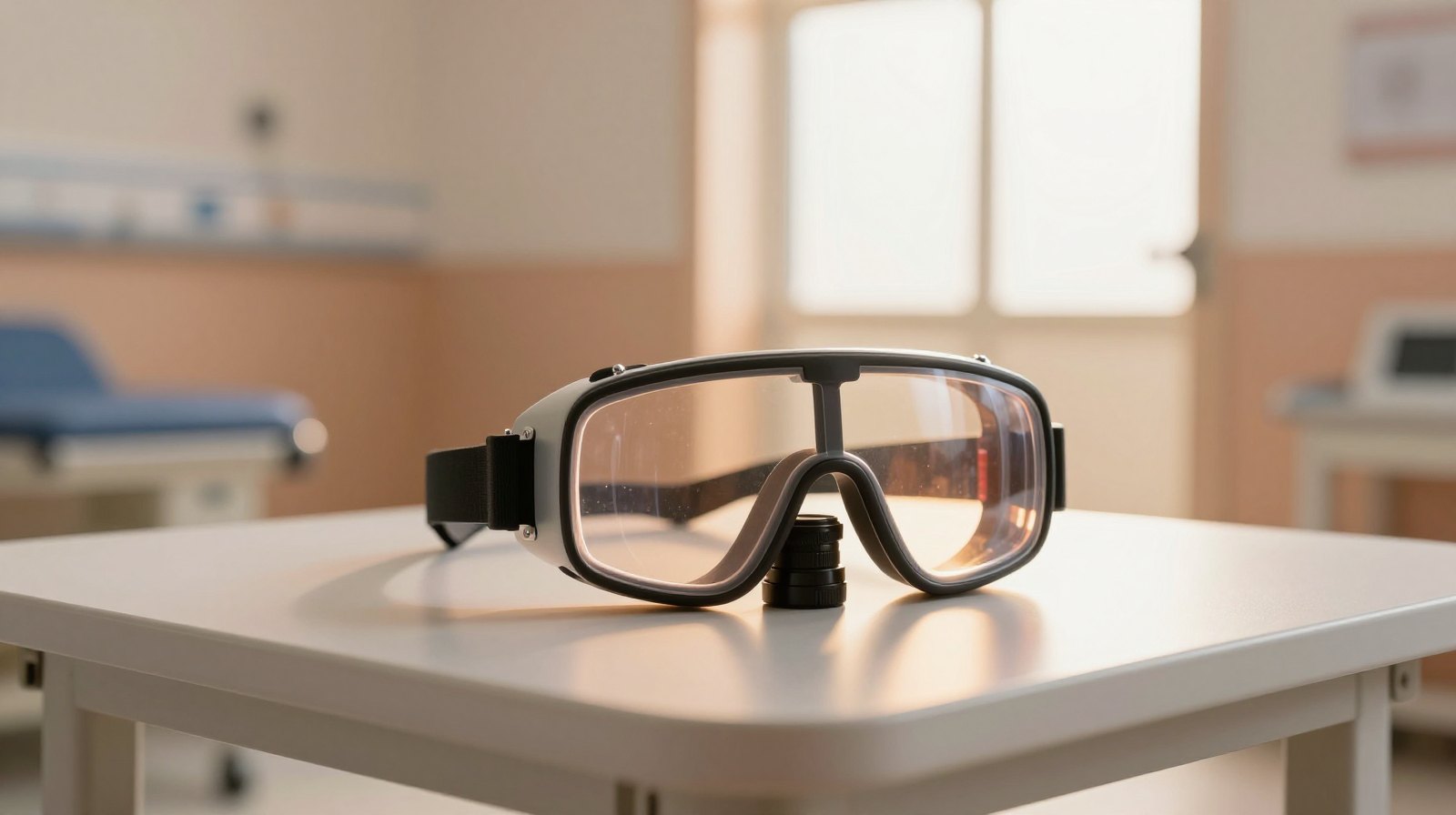
Here is a surprising idea: teach the eye a brand-new trick using a protein borrowed from algae. On 7 October, researchers reported in the New England Journal of Medicine that a one-off optogenetic therapy, paired with camera goggles, made 7 of 10 blind people with an inherited eye disease more sensitive to light. Some also got better at finding objects, or even a doorway, with the goggles on.
Why it matters: the results are modest and early. Nobody got normal sight back, and nobody could read or recognise faces. But it is the first time this “teach other cells to see” approach has worked in more than one person, and it does not depend on which faulty gene caused the blindness. That could one day help many people who have no treatment today.
What the study found
The trial treated 10 people with advanced retinitis pigmentosa (RP), an inherited disease that slowly destroys the retina’s light-sensing cells, the photoreceptors. RP can be caused by faults in more than 100 different genes, so fixing it one gene at a time is hard.
Each person received a single injection into their worse-seeing eye. According to the Institute of Molecular and Clinical Ophthalmology Basel (IOB) and Science News:
- 7 of 10 became more sensitive to light, and 6 of them improved enough to pass a “clinically meaningful” bar the team had set in advance.
- 8 people completed tests of everyday visual tasks, and 4 of them improved at things like detecting or locating objects, finding a doorway or following a line, all while wearing the goggles.
- Brain recordings (EEG, small sensors on the scalp) showed signals consistent with visual information reaching the brain’s visual areas.
The work was led by José-Alain Sahel of the University of Pittsburgh and Botond Roska of IOB, together with the French company GenSight Biologics, which develops the treatment under the name GS030, and the 15-20 National Eye Hospital in Paris. It builds on a 2021 report in which a single patient could locate and count objects with the same method.
Optogenetics in one minute
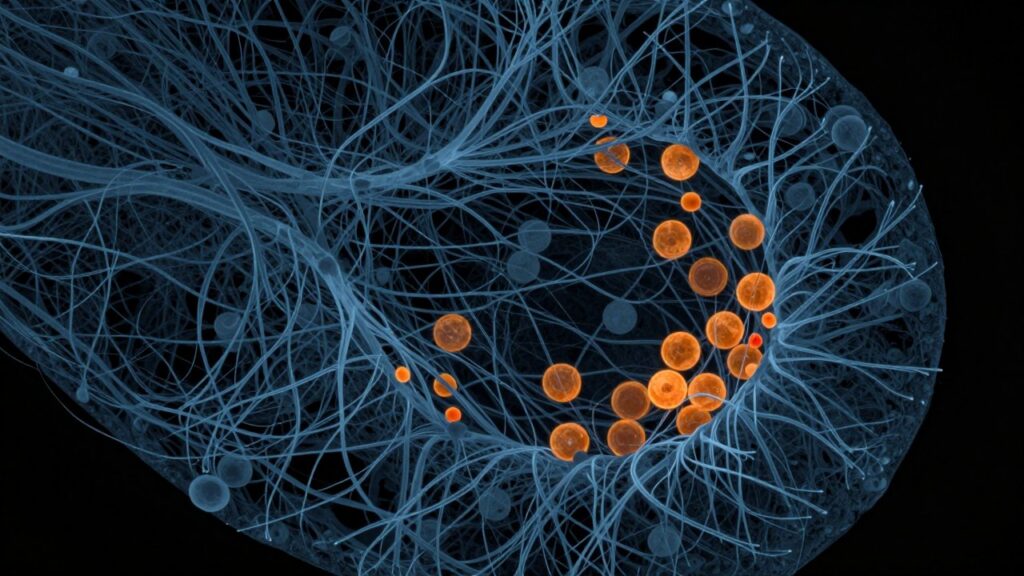
Think of your retina as a layered camera sensor. At the back sit the photoreceptors, which turn light into electrical signals. In front of them are the retinal ganglion cells, the “cables” that collect those signals and send them along the optic nerve to the brain. In RP the photoreceptors die, but many ganglion cells survive: healthy cables with nothing plugged into them.
Optogenetics plugs something in. The injection uses a harmless virus as a delivery van (called an AAV) to carry genetic instructions into the surviving ganglion cells. Those instructions tell the cells to build ChrimsonR, a light-sensitive protein originally found in algae that responds to amber light. It is like fitting tiny solar-powered switches onto the cables, so they can react to light by themselves.
Nice timing: two days before the study appeared, the 2026 Nobel Prize in Physiology or Medicine went to Karl Deisseroth, Peter Hegemann and Georg Nagel, the pioneers of optogenetics.
How the goggles work, step by step
The new switches answer to amber light, so the goggles act as a translator. Here is the chain, one link at a time:
- Watch. A camera on the goggles looks at the scene and picks out changes in brightness, such as an edge or something moving.
- Translate. A small portable processor turns those changes into a light pattern.
- Project. The goggles shine that pattern into the treated eye as pulses of amber light.
- Fire. Ganglion cells carrying ChrimsonR react to the pulses and send signals down the optic nerve.
- Learn. The brain has to work out what this new, unfamiliar signal means.
That last step is the one to underline. Participants who spent more time practising with the goggles tended to do better on object-detection tests, and the authors suggest that rehabilitation is an important part of the therapy. Like a new instrument, the hardware is only half the story.
What it can and can’t do
The paper’s own title is careful: it talks about restoring “aspects” of visual function. The everyday-task gains were measured with the goggles on, and nobody could read or recognise faces. Sahel told Science News the approach also needs a working optic nerve, so it cannot help when the connection between eye and brain is damaged.
Is it safe?
Safety was the study’s main question, and within its limits the treatment was considered safe. Most eye-related side effects were mild or moderate; Inside Precision Medicine reports they were mostly temporary inflammation and short-lived rises in eye pressure. One severe event happened right after an injection and cleared up within minutes.
Keep the limits in view. The trial was small and open-label (everyone knew they were getting the treatment, and there was no placebo group), and it was not designed to prove that the therapy works. As Retinal Physician notes, GS030 is not approved anywhere.
What happens next
The team sees this as a foundation for more sensitive and effective optogenetic therapies, and Science News reports that reading words and recognising faces are the next goals. Larger, controlled trials will be needed before any approval. If you or someone close to you lives with RP, ask an eye specialist about clinical trials; registries such as ClinicalTrials.gov list open studies.
This is not medical advice.
Sources
- Optogenetic Therapy for Restoring Aspects of Visual Function – New England Journal of Medicine (Sahel et al.), 7 October 2026
- Optogenetic therapy is safe and allows blind people to detect objects – Institute of Molecular and Clinical Ophthalmology Basel via EurekAlert!, 7 October 2026
- Gene therapy and special goggles give some blind people limited sight – Science News, 7 October 2026
- Optogenetic Therapy Shows Early Promise for Retinitis Pigmentosa-Associated Blindness – Inside Precision Medicine, 7 October 2026
- Optogenetic therapy improves light sensitivity in people with retinitis pigmentosa – News-Medical, 7 October 2026
- GS030 Shows Potential to Restore Visual Function in Retinitis Pigmentosa – Retinal Physician, 8 October 2026
- Nobel medicine prize honours US and German scientists for optogenetics work – Al Jazeera, 5 October 2026