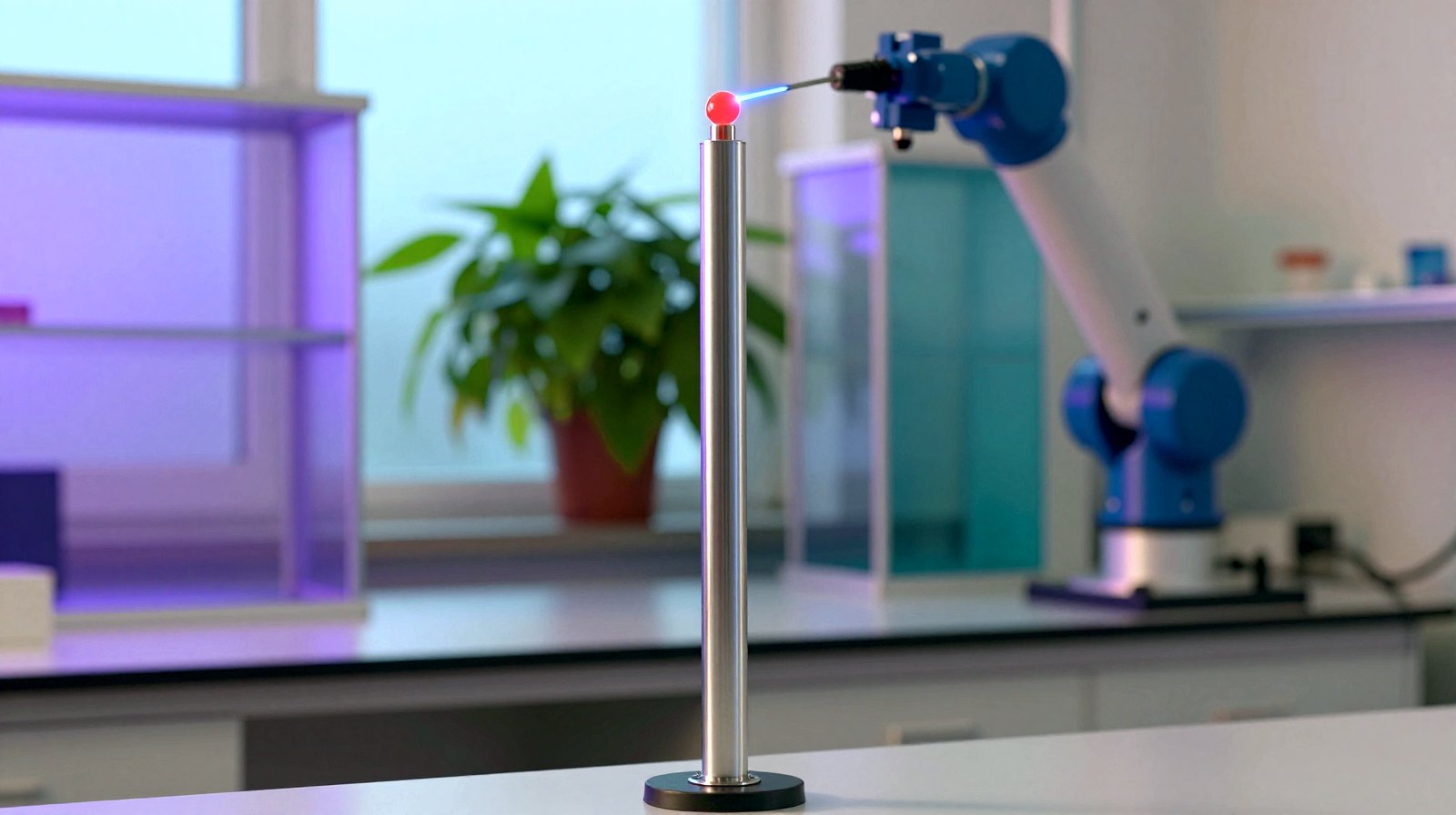
Here is a 3D-printing record that sounds impossible: a bar of titanium alloy up to one metre tall that is a single, unbroken crystal from bottom to top. A team from Beijing Institute of Technology, Tsinghua University, Xi’an Jiaotong University and UCLA describes how they printed it, plus single-crystal lattices with zigzag struts, in a paper published on 21 October in Nature. In an accompanying News & Views commentary, materials scientist Gregory Rohrer of Carnegie Mellon University calls the result a newsworthy breakthrough.
Why it matters: single crystals are behind some of the toughest jobs in technology, from the silicon wafers inside every computer chip to the turbine blades in jet engines. They are rare in nature and hard or expensive to make for most materials, Rohrer explains. A way to print them, in shapes that classic crystal-growing methods can’t produce, using readily available additive-manufacturing equipment, could open a new toolbox for parts that must survive heat and stress.
First, what is a single crystal?
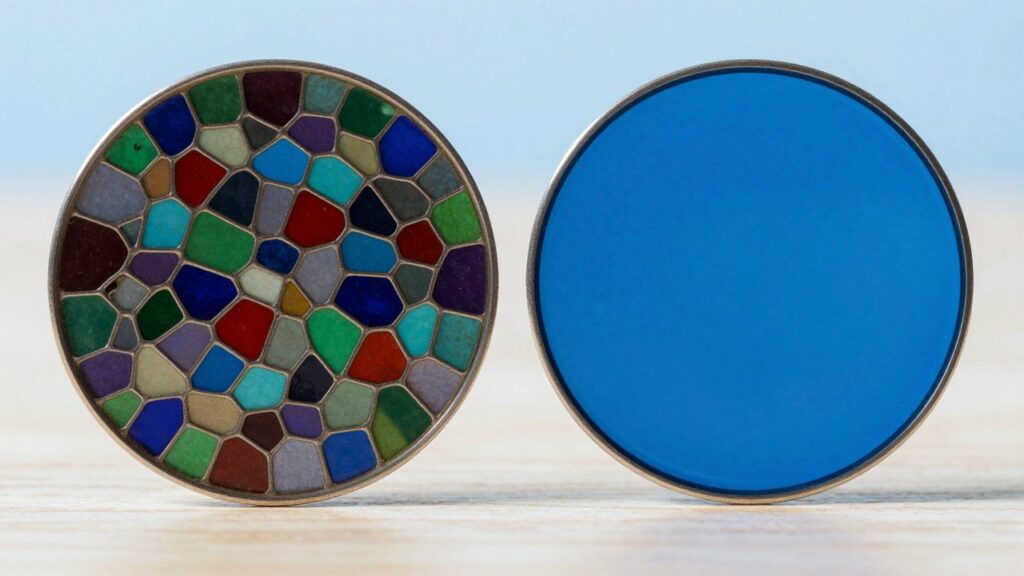
Almost every metal object around you, from a spoon to a bike frame, is made of countless tiny crystals called grains, packed together like the pieces of a mosaic. Inside each grain the atoms line up neatly in rows; at the borders between grains (the grain boundaries), the rows meet at odd angles.
Those borders are fine at room temperature. But when a metal works hot and under load for a long time, the boundaries become weak spots where it slowly stretches and sags, a bit like candle wax leaning in a warm room. Engineers call that slow sag creep. A single crystal has no grain boundaries at all: the atomic rows run unbroken through the whole piece.
Why 3D printers usually can’t do it
Growing a single crystal normally needs calm, steady conditions: slow, controlled cooling with a stable temperature front. A metal 3D printer is the opposite. It melts a tiny pool of metal, moves on, melts the next spot, and the material heats and cools over and over. The authors write that these intense, repeated temperature swings have historically prevented printing large or complex single crystals, because new grains keep starting.
The trick: a pulsing arc
The team used wire-arc additive manufacturing, which works a bit like a very precise welding robot: an electric arc melts a metal wire, drop by drop, building the part up in thin layers. The key change, according to the paper, is a carefully controlled pulsed heat input. The current jumps between a strong peak (200 amps in their simulations of the titanium alloy) and a gentle base (20 amps), ten times weaker.
That rhythm keeps the melt pool shallow and wide, with a rounded bottom edge. The authors show that this shape lets one crystal grow upward and squeezes out stray grains, and each thin layer (about 0.15 millimetres) remelts any small strays left on top before they can take hold. Keep the current fixed instead, and their simulations and infrared tests show it fails: stuck at the peak, the hot structure collapses; stuck at the base, the wire won’t even melt properly.
What they printed
- Metre-tall single crystals of Ti-6Al-4V, the workhorse titanium alloy, with a diameter measured in centimetres. The team also shows bars from 6 to 20 millimetres in diameter.
- What the authors describe as the first single-crystal lattice structures with complex zigzag struts, including struts tilted at 45 degrees without supports.
- Single crystals of hard-to-process refractory metals (metals with very high melting points): tungsten, molybdenum, niobium and a molybdenum-niobium alloy. The authors note that tungsten is especially tough to print without cracks.
Stronger where it counts: in the heat
The printed single-crystal titanium resisted creep about ten times better than standard grain-size rules would predict, according to the paper. The authors credit two things: the missing grain boundaries, and a fine internal structure that the printing process itself creates. They tested creep at 600 and 700 °C.
There is an honest twist. Below about 500 °C, ordinary forged titanium with many grains was actually stronger in the team’s tensile tests; above that, the single crystal took the lead. So this is not a better material for everything. It is a better material for parts that live hot.
What happens next
This is a laboratory result, not a factory product yet. The open questions are speed, cost and how big and complex the shapes can get in practice, although the authors argue there is no theoretical limit on size. If it scales, printed single crystals could join the kind of high-temperature, high-stress parts where metallurgy matters most. For another way scientists are tuning metals at the atomic level, read our story on alloys that stay tough at -253 °C.
Read next
- Cold-resistant alloys stay tough at -253°C, where metals snap
- How to make 3D models with ChatGPT and AI tools (2026 guide)
- Washable circuit fibres: threads that glow, compute and sense
The week's best tech stories, free
One email a week with the stories that matter, explained simply. No spam.
Sources
- Additive manufacturing of ultralong and architected single crystals – C. Liu, Y. Cui, … J. Marian, … D. Fang, Y. M. Wang, Nature, 21 October 2026
- Large-scale single crystals printed layer by layer – G. S. Rohrer (Carnegie Mellon University), Nature News & Views, 21 October 2026